Ukraine's Military Engineers New Air Defense Weapon: FPV Drones Now Intercept Missiles and UAVs

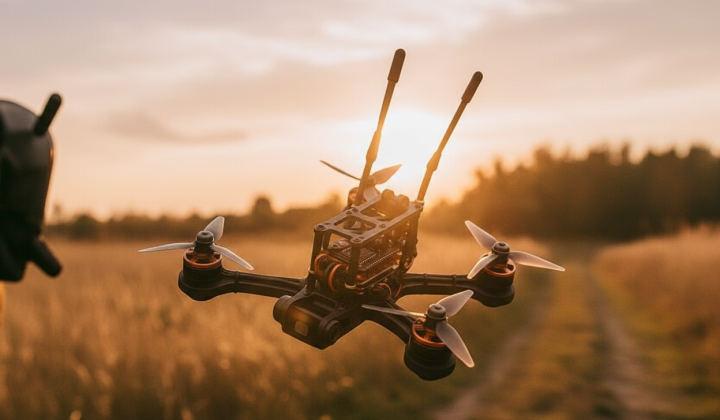
FPV Drones Repurposed for Air Defense Missions
According to ХВИЛЯ: In response to a severe shortage of traditional air defense systems during mass attacks, Ukraine's Defense Forces have successfully modified standard First-Person-View (FPV) drones to perform air defense roles. This innovative shift was reported by Ukrainian serviceman Illia Shpolianskyi during an interview with political analyst Yurii Romanenko. This development highlights Ukraine's ability to create asymmetric solutions to critical battlefield challenges.
The concept was first raised over a year ago by activists Serhii Sternenko and Serhii Prytula, as attacks by Iranian-made 'Shahed' drones intensified and Ukraine lacked sufficient means to counter them. This spurred the rapid development of new technologies. Shpolianskyi noted that Ukraine has since made significant progress in this area, even surpassing its adversaries in certain aspects.
Challenges and Successes
Illia Shpolianskyi described the initial difficulties in forming interceptor drone units:
'I was undergoing training at the time, and they even brought in a certain number of soldiers to take accelerated exams, just to launch new air defense interceptor groups as fast as possible. Back then, these were very isolated cases; the first groups operated with great difficulty and rarely managed to shoot down targets.' - Illia Shpolianskyi
He stated that the situation has now substantially improved.
Shpolianskyi also emphasized the technical complexity: 'It's an incredibly difficult thing. When your FPV drone flies at a ground target, it's a two-dimensional plane. But to hit an aerial target is three-dimensional. Accordingly, it's just an order of magnitude more difficult. However, we have very serious computing systems and electronic systems that help us do this.'
These efforts have provided significant relief on the front lines. Shpolianskyi stressed: 'We felt colossal relief on the front thanks to the fact that a very large number of Russian reconnaissance UAVs are being shot down. A very large number used to fly deep into the rear, like the Poltava region, and just hover over training centers.'
In his view, the professional organization of air defense is already yielding results, with Ukrainians noticing that many 'Shaheds' now fail to reach their targets. The adaptation of FPV drones for air defense demonstrates the innovative approach of the Ukrainian military to solving problems encountered in wartime conditions. The use of new technologies allows for a more effective response to aerial threats and reduces risks to the civilian population. This advancement could become a key element in Ukraine's overall military strategy, enhancing the country's defensive capabilities and mitigating the impact of hostile actions on its territory.
As military strategies evolve, the integration of advanced technologies like drones is becoming increasingly vital. This shift is not just limited to Ukraine; it reflects a broader trend in modern warfare where drones and AI are reshaping combat dynamics. Understanding these developments provides crucial insights into how nations adapt to new threats on the battlefield.

Read also