China vs the 'New Yalta': Why Beijing Does Not Want to Discuss Ukraine with Trump and Putin
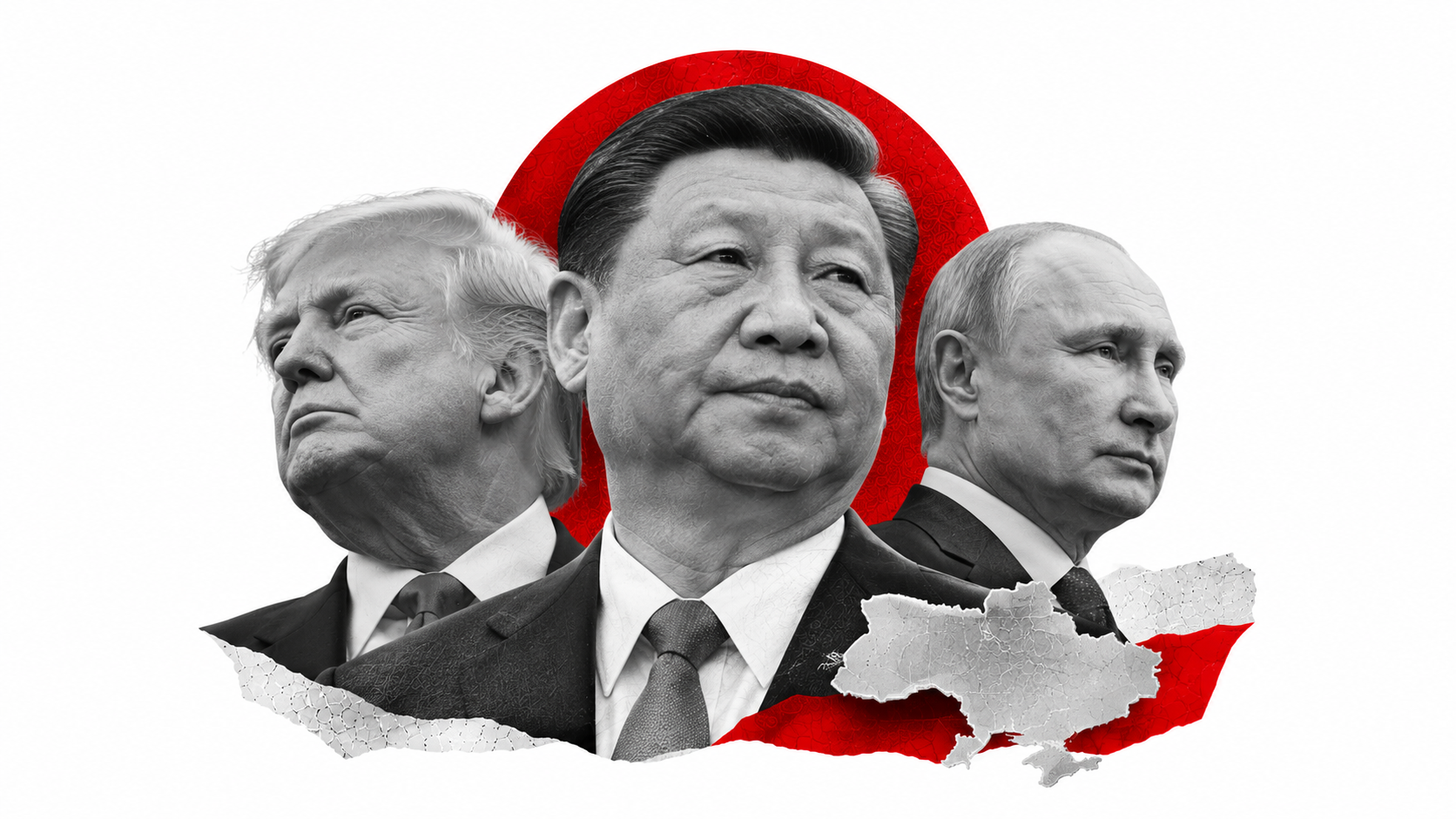
On the eve of the first trilateral meeting between Donald Trump, Xi Jinping, and Vladimir Putin, China made it clear that it is not interested in turning the Ukrainian war into a topic for negotiation among the three great powers. At first glance, this seems to contradict Beijing's desire to influence the global order. In reality, this stance may reflect a much more pragmatic calculation: China wants to engage in strategic dialogue with the United States without taking on the responsibility for the agreements between Washington and Moscow.
The Asia-Pacific Economic Cooperation summit, which will take place on November 18-19 in Shenzhen, China, may serve as a platform for an unusual diplomatic experiment. For the first time, the leaders of the United States, China, and Russia are set to meet at the same table in a trilateral format.
However, the biggest intrigue lies not only in what the three presidents will discuss but also in which issues will remain off the official agenda.
According to Reuters reports, Beijing opposes including the Ukrainian war in the trilateral negotiations. American officials also do not expect this topic to be up for discussion.
Meanwhile, the final agenda of the meeting has not been publicly detailed. Therefore, it is more about declared intentions for negotiations rather than guaranteed exclusion of the topic of Ukraine from any contacts.
For China, this position is strategically significant. Beijing does not necessarily seek to turn the meeting of the three leaders into a mechanism for jointly managing global crises.
China may be interested in the trilateral summit, but that does not mean it is ready for a three-way distribution of global power.
Why Moscow is Interested in a Three-Power Format
For the Kremlin, the mere possibility of a meeting with the presidents of the United States and China holds political value.
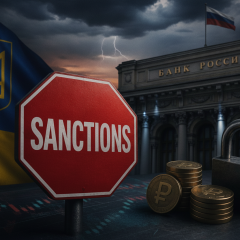
Despite sanctions, international isolation, and a prolonged war against Ukraine, Moscow seeks to maintain its status as one of the main centers of global politics.
The trilateral format allows Russia to be presented not only as a participant in a regional conflict but also as a state without which global security cannot be discussed.
In this context, the Ukrainian issue takes on special significance.
If Washington, Moscow, and Beijing were to start discussing conditions for ending the war together, it might create the impression that the future of European security is determined by agreements among the three great powers.
Such scenarios evoke associations with the Yalta Conference of 1945, where the leaders of the allied nations discussed the post-war order of Europe.
However, the historical analogy has significant limitations. The modern international system includes independent European states, the European Union, NATO, and other institutions, the interests of which cannot be automatically subordinated to agreements among the three capitals.
For Russia, trilateral diplomacy could serve as a way to cement its own role in the future security architecture.
But for China, such a construct holds considerably fewer obvious advantages.
G2 Instead of G3: The Chinese Hierarchy of World Politics
The G2 concept envisions a special role for two of the largest economic and strategic competitors- the U.S. and China- in addressing global issues.
This is not an official international institution nor an agreed-upon system of global governance. Rather, it is an analytical model reflecting the scale of American-Chinese rivalry and interdependence.
For Beijing, direct dialogue with Washington holds special importance.
The global trade, technological chains, access to semiconductors, critical materials markets, and security in the Indo-Pacific region largely depend on the relations between the two states.
Russia remains an important partner for China, especially in energy, diplomacy, and countering American influence. However, its economic weight and structure of international ties significantly differ from those of the U.S. and China.
This leads to the assumption: Beijing is not interested in formalizing an equal global triangle that would grant Moscow the same status in global governance as Washington and Beijing.
This does not mean that China is rejecting cooperation with Russia. On the contrary, maintaining strategic relations with Moscow allows Beijing to strengthen its own negotiating positions.
However, partnership does not necessarily imply readiness to share political influence on equal terms.
In a potential Chinese model of world order, Russia remains an important strategic partner, but not necessarily a third equal center of global governance.
The Ukrainian War: Responsibility Without Obvious Dividends
For China, participation in negotiations regarding Ukraine creates a complex dilemma.
On one hand, Beijing has repeatedly stated the need for a political settlement of the war and has supported diplomatic initiatives.
On the other hand, formal entry into the mechanism for agreeing on a peace agreement could signify additional political obligations.
If China becomes one of the guarantors of the agreements, the question of its responsibility for their implementation arises.
What will Beijing do in case of a ceasefire violation? Will it be prepared to apply economic pressure? Will it agree to participate in financing reconstruction? And how will such obligations affect its relations with Russia?
These questions do not have simple answers.
For the Chinese leadership, the position of a state that supports diplomatic settlement but does not take on direct guarantees for its implementation may be more advantageous.
This strategy allows maintaining relations with Moscow, supporting economic contacts with Europe, and avoiding additional conflicts with Washington.
At the same time, it does not exclude the possibility of future Chinese involvement in Ukraine's reconstruction or in specific diplomatic mechanisms.
The issue lies not in the absence of Chinese interests but in what price Beijing is willing to pay for direct involvement in the settlement.
Real Negotiations Will Occur Between Trump and Xi
For the Chinese leadership, bilateral dialogue with the United States may be significantly more important.
Washington and Beijing have a wide range of unresolved issues, each of which directly affects the global economy.
Trade tariffs, restrictions on the supply of advanced semiconductors, access to rare earth materials, and the situation regarding Taiwan remain central topics in American-Chinese relations.
The significance of negotiations increases after the midterm elections in the U.S. Congress, where Democrats gained a majority in the House of Representatives and the Senate.
This alters the domestic political conditions for the Trump administration, although it does not automatically mean a loss of power in foreign policy for the president.
For Beijing, the new balance of power in Washington may create additional opportunities for negotiations. At the same time, American policy towards China largely remains a matter of bipartisan consensus, especially regarding issues of technological security.
Therefore, the Chinese leadership is unlikely to rely solely on Trump’s political difficulties.
Far more important will be specific economic concessions, conditions for access to technology, and prospects for stabilizing trade relations.
In this context, the Ukrainian war may be perceived by Beijing as an issue that distracts from the primary bilateral agenda.
Why China Does Not Want to Participate in the 'New Yalta'
There is another reason why Beijing may avoid the format of jointly resolving the Ukrainian issue.
China traditionally emphasizes the principles of state sovereignty and non-interference, although its practical foreign policy is not always free of contradictions.
Open discussion about Ukraine's future among the three states without the full participation of Kyiv and European capitals could put Beijing in an uncomfortable diplomatic position.
According to reports from international media, Xi Jinping emphasized during contacts with European representatives that Ukraine is a European conflict and that Europeans should participate in the corresponding negotiations.
This does not necessarily mean a convergence of Chinese and European positions.
Rather, it reflects a desire to avoid taking on the role of co-organizer of agreements whose political consequences will primarily be felt by Ukraine, Russia, and Europe.
Moreover, Beijing has its own contradictions with Washington regarding control over nuclear weapons.
China has repeatedly emphasized the significant difference between the sizes of American, Russian, and Chinese nuclear arsenals. Therefore, trilateral negotiations regarding strategic weapons may also prove to be complicated.
Thus, the mere presence of three leaders at the same table does not guarantee the formation of a new international decision-making mechanism.
Three Presidents, But Not Three Equal Architects of the World
The upcoming meeting in Shenzhen may demonstrate a fundamental contradiction of modern geopolitics.
The U.S. seeks to maintain global leadership and control key strategic risks. China aims to enhance its own international influence without taking on excessive obligations. Russia seeks to cement its status as a great power capable of participating in defining the rules of international security.
These interests partially intersect but do not always coincide.
For Moscow, the trilateral format may serve as diplomatic confirmation of its global role. For Washington, it is an instrument of negotiation with two nuclear powers. For Beijing, it is an opportunity to strengthen its positions in relations with the U.S. without becoming a guarantor of settling the Ukrainian war.
That is why the absence of Ukraine from the official agenda does not necessarily mean a decrease in Chinese interest in European security.
It may indicate Beijing's desire to delineate bilateral competition with the United States from responsibility for regional conflicts.
The main paradox of the meeting lies in the fact that the trilateral summit may not bring the world closer to G3 but rather highlight the special significance of American-Chinese relations.
For Ukraine, this means that the diplomatic agreements of great powers should not be automatically perceived as the sole decision-making center for ending the war.
Kyiv, European capitals, and international institutions remain independent participants in the process, without whom sustainable settlement will be difficult to achieve.
Ultimately, the most important outcome of Shenzhen may not be a joint declaration by the three presidents but rather an understanding of how different their visions of the future world order remain.
Russia seeks a place among its main architects. Washington tries to manage strategic risks. Meanwhile, Beijing may believe that its interests are better served by a system where key global agreements are primarily reached between the U.S. and China.
If this assumption is confirmed, the meeting in Shenzhen will not mark the beginning of a 'new Yalta' but will instead demonstrate the limits of trilateral diplomacy.

Read also