March 1st: A Day for Civil Defense, Immunity, and Saint Eudokia

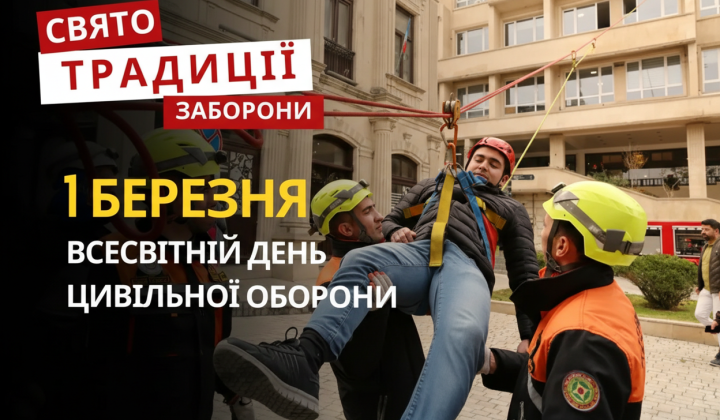
Observances and Events on March 1st
According to Главком: March 1st is a date marked by several significant observances. It is recognized as both World Civil Defense Day and World Immunity Day, highlighting the importance of public safety and health. Furthermore, according to the new church calendar, this day honors the memory of Saint Eudokia, a revered martyr who lived in the 2nd century. In Ukrainian folk tradition, various weather-related signs and omens for the coming harvest are associated with this date.
Folk Traditions and Signs
In folk custom, March 1st is traditionally considered the day of Saint Eudokia. According to popular beliefs, sunshine on this day promises a warm and pleasant summer. If a strong thaw begins, a good honey harvest is expected. Other signs indicate that:
- hearing a yellowhammer sing means spring will arrive soon;
- falling snow foretells a bountiful grain harvest.
Name days are celebrated on this date by individuals named Eudokia, Anton, Antonina, Vasyl, Veniamin, Nadiya, and Oleksandr.
Historically, March 1st has also been a witness to numerous pivotal events. In 86 BC, the Roman general Sulla stormed and sacked Athens. In 1360, England's King Edward III paid a ransom of 16 pounds to secure the release of the 19-year-old Geoffrey Chaucer from French captivity. In 1420, Pope Martin V called for Christian crusades against the Czech Hussites. In 1498, Vasco da Gama arrived in Mozambique, and in 1504, a lunar eclipse occurred.
Significant events continued in later centuries. In 1562, in Vassy, Champagne, French Catholics massacred Huguenots, sparking the French Wars of Religion. In 1692, the Salem witch trials began in New England. In 1767, Spain's King Charles III expelled the Jesuit order from the country, and in 1780, Pennsylvania became the first U.S. state to abolish slavery.
Notable occurrences include Napoleon Bonaparte's landing near Cannes with his supporters in 1815, and in 1845, U.S. President John Tyler signing a bill to annex Texas. In 1872, the U.S. Congress established Yellowstone as the world's first national park. In 1912, Albert Berry performed the first parachute jump from a moving airplane in St. Louis, leaping from a height of 460 meters.
In 1928, Dr. Herbert Evans in the U.S. discovered the sixth vitamin, named vitamin F, and in 1941, the first commercial FM radio station began broadcasting. In 1943, a mass demonstration in support of European Jews was held in New York City. The year 1947 marked the beginning of operations for the International Monetary Fund, and in 1961, U.S. President John F. Kennedy announced the creation of the Peace Corps.
In 1976, the British Parliament approved new traffic regulations making seatbelt use mandatory. In 1977, a monument to the Ukrainian philosopher Hryhorii Skovoroda was unveiled in Kyiv, and in 1988, Apple Computer announced it would include a new CD-ROM drive in its computers.
March 1st is also remembered for events in 1991, when Donbas miners began a strike with political demands, and in 1995, when Austria, Sweden, and Finland joined the European Union. In 1998, the Partnership and Cooperation Agreement between the European Union and Ukraine came into force, and in 2000, the companies Confinity and X.com agreed to merge, forming the payment system PayPal.
Thus, March 1st is a day commemorated not only by observances but also by significant historical events that have influenced the development of various nations and cultures. For a global audience, this day underscores how local traditions and worldwide historical currents often intersect on the same calendar date.
The significance of March 1st extends beyond mere festive traditions, as this date has been a witness to crucial historical moments that shaped political, cultural, and social aspects across the globe. The observance of World Civil Defense Day and World Immunity Day highlights the enduring relevance of safety and health in the modern world, a universal concern amid global challenges. The historical events that occurred on this day demonstrate the dynamic evolution of societies and their interactions over centuries.

Read also