From Data to Strategy: 15 Essential HR Reports for Informed Decision-Making

From Data to Strategy: 15 Essential HR Reports for Informed Decision-Making
According to AIHR: Human Resources (HR) is vital for organizational effectiveness, and reporting is a key tool in this domain. This article outlines 15 types of HR reports, detailing their purpose and core components. These reports are categorized as general and specialized, all aimed at transforming raw data into actionable insights for decision-makers. According to SHRM research, 71% of HR directors who utilize people analytics consider it crucial for their organization's HR strategy. In today's data-driven business environment, leveraging these reports is fundamental for aligning human capital with strategic goals.
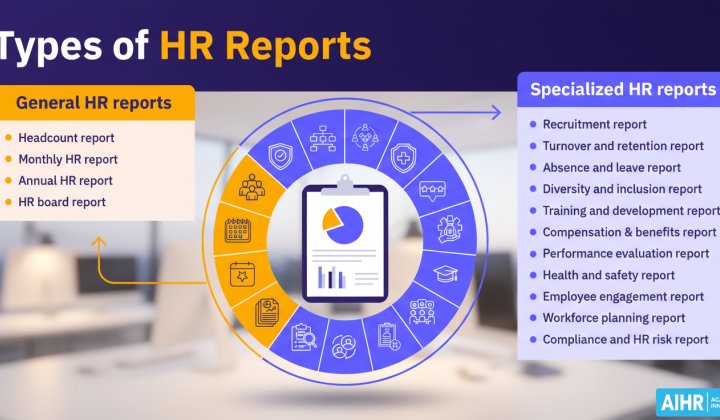
Types of HR Reports
General HR reports typically include:
- Headcount report
- Monthly HR report
- Annual HR report
- Board of Directors report
A monthly HR report should contain an executive summary, key metrics and KPIs, significant HR activities, challenges and risks, as well as emerging trends and issues. An annual HR report, conversely, needs to include an executive summary, HR initiatives and policies, key metrics, workforce demographics, major achievements, challenges and lessons learned, future plans, and visual elements. A report for the Board of Directors must feature an executive summary, a workforce profile, key metrics, updates on strategic initiatives, risks and mitigation strategies, discussion topics, and a focus for the next period.
Specialized HR reports cover a range of critical areas, including:
- Recruitment report
- Turnover and retention report
- Absence and leave report
- Diversity and inclusion report
- Training and development report
- Compensation and benefits report
- Performance appraisal report
- Health, safety, and occupational report
- Employee engagement report
- Workforce planning report
- Compliance and HR risk report
Recommendations for creating effective HR reports involve clarifying the report's purpose, understanding the audience, utilizing data visualization and storytelling, applying templates for consistency, verifying accuracy, focusing on actionable insights, considering automation, and developing reporting skills within the team. The systematic use of these reports enables organizations to make well-informed strategic decisions based on workforce data analysis.
In the modern, dynamic business landscape where competition is increasingly intense, effective people management through data analytics has become critically important. Utilizing HR reports not only provides organizations with a clear overview of their resource status but also helps identify risks and opportunities for improvement. Well-crafted reports can form the foundation for strategic planning, which in turn fosters productivity growth and the retention of talented employees.

Read also