ADP Research Reveals 40% of Employees Experience Payroll Errors

The Critical Role of Payroll Metrics
According to AIHR: Payroll metrics serve as essential tools for identifying payroll issues and assessing the efficiency of salary processing systems. According to a global study by the ADP Research Institute, 40% of employees report receiving incorrect paychecks at least occasionally, highlighting the necessity for stringent accuracy and compliance controls within payroll operations. Despite this, a PayrollOrg survey found that 38% of organizations do not track the effectiveness of their payroll processes, while 62% actively monitor these metrics.
Major Challenges and Key Performance Indicators
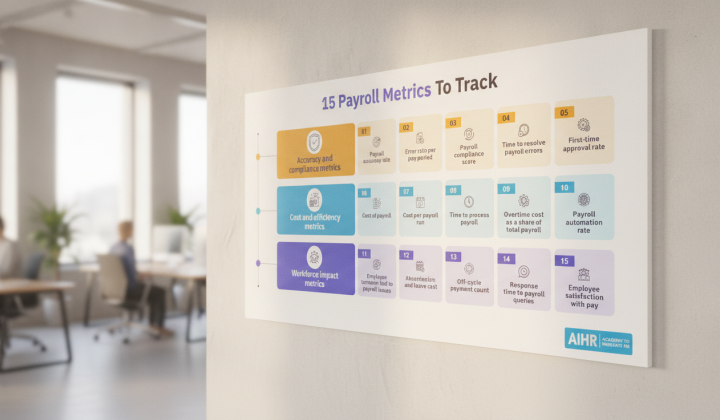
The survey identified that 57% of respondents consider local regulatory compliance the biggest hurdle in managing payroll globally. To evaluate payroll performance, 15 key metrics have been categorized into three core areas:
- Accuracy and Compliance
- Cost and Efficiency
- Employee Impact
The accuracy and compliance metrics include:
- Payroll accuracy rate
- Error frequency over time
- Compliance score
- Time taken to resolve errors
- First-time approval rate
Cost and efficiency are measured by:
- Total payroll function cost
- Cost per payroll cycle
- Payroll processing time
- Overtime cost as a percentage of total payroll
- Degree of payroll automation
Metrics related to employee impact encompass:
- Turnover rate due to payroll issues
- Costs associated with absenteeism and leave
- Number of off-cycle payments
- Response time to payroll inquiries
- Employee satisfaction with payroll
To effectively implement a payroll metrics dashboard, it is recommended to:
- Select 4-6 metrics aligned with organizational priorities
- Automate metric updates by integrating with payroll or HRIS systems
- Set clear targets, assign accountability, and conduct regular reviews
Best practices also suggest:
- Separating payroll processing from reporting functions
- Validating source data before report generation
- Benchmarking results against recent periods and industry standards
In summary, leveraging payroll metrics is vital for refining payroll accuracy, boosting employee satisfaction, and minimizing risks linked to payment errors.
Payroll inaccuracies pose a significant challenge for many companies, often leading to lower employee morale and increased turnover.
Therefore, it is crucial for businesses to adopt robust monitoring and analysis systems for payroll metrics. Such initiatives not only help identify problems early but also enable timely resolution. In an increasingly globalized and competitive environment, the ability to process payroll accurately and promptly is key to retaining top talent and maintaining business stability.
As organizations strive to enhance their payroll efficiency, understanding the broader context of workplace dynamics is essential. For instance, the representation of women in leadership roles significantly impacts organizational culture and performance. A recent report indicates that women occupy 29% of leadership positions in S&P 100 companies in 2024, suggesting that diversity at the top can influence how payroll practices are perceived and managed. This connection further underscores the importance of accurate payroll metrics in fostering an equitable workplace.

Read also