How to Obtain Icelandic Citizenship: Requirements, Methods, Registration


Iceland can be a haven for many Europeans, including Ukrainians. However, there are reasons why this is not the most popular option: a complicated bureaucratic system and high requirements for those seeking to obtain legal status in this country.
What Icelandic Citizenship Provides

Icelandic citizenship is one of the legal statuses that opens the possibility of full participation in the country's social and political life. For foreigners, obtaining an Icelandic passport is usually the final stage of prolonged residence and integration into the state. Merely staying in Iceland for a certain period does not automatically confer citizenship. The applicant must meet the legally established conditions, confirm their identity, legality of residence, knowledge of the Icelandic language, and financial independence. Separate rules apply to individuals with Icelandic heritage, those married to an Icelandic citizen, refugees, or those belonging to other legislatively specified categories. The main authority responsible for examining citizenship applications is the Directorate of Immigration of Iceland.
The general rule for naturalization is seven years of continuous legal residence and a registered place of residence in Iceland. At the same time, the law provides for shortened terms for certain categories of applicants. For instance, the husband or wife of an Icelandic citizen can apply after four years of residence following marriage, provided that the other spouse has held Icelandic citizenship for at least five years. Different timeframes may apply for individuals with special statuses.
It is important to consider that citizenship rules are related not only to the duration of residence. Factors include the absence of unmet financial obligations, the ability to support oneself, the absence of unresolved criminal proceedings, and compliance with language requirements. In 2026, the official monthly benchmark for financial independence for a single person is 259,951 Icelandic króna, while for a couple it is 415,922 króna.
Thus, the procedure involves a comprehensive verification of the individual, not just a formal confirmation of the length of residence. It is crucial for future applicants to check their documents, residence history, language proficiency, tax obligations, and financial status in advance.
Icelandic citizenship means acquiring a full legal bond with the state. An Icelandic citizen receives a status that differs from that of a foreigner or a residence permit holder. Specifically, the Constitution of Iceland states that a citizen cannot be deprived of the right to enter the country or be expelled from it.
One of the significant advantages is political rights. Citizenship allows participation in the political life of the country according to the requirements of electoral legislation, while a mere residence permit does not provide such rights in full. A citizen also gains access to rights that Icelandic legislation specifically links to citizenship status.
Iceland is part of Nordic cooperation, and its citizens have a special legal status within the Nordic region. At the same time, Iceland is a participant in the European Economic Area, so citizenship of the country is linked to broad opportunities for travel and residence in the European space under the provisions set by the relevant norms.
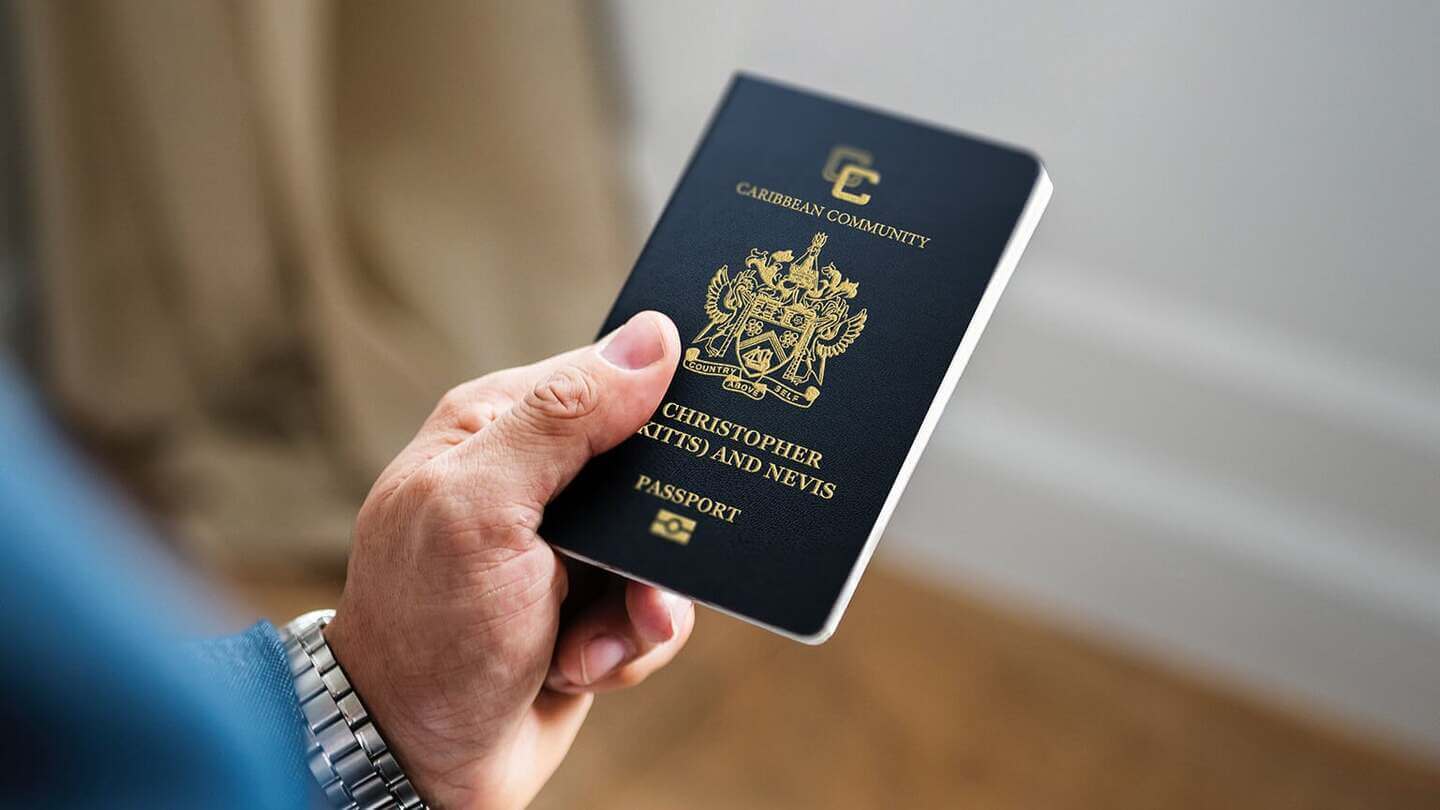
Another significant advantage is the stability of legal status. A residence permit may depend on the reason for being, such as work, study, or family circumstances. Citizenship does not have such a temporary migratory character. At the same time, obtaining a passport should not be seen only as a way to simplify travel. For many, it is the completion of a prolonged integration process, which involves living in the country, knowledge of the language, financial independence, and compliance with the law.
Main Ways to Obtain Citizenship
Icelandic legislation provides several mechanisms for acquiring citizenship. The most common path for foreigners is naturalization after a legally established period of residence. The general requirement is seven years of registered residence and continuous living in Iceland.
However, the seven-year term is not universal for all categories. A shortened period is provided, in particular, for the spouses of Icelandic citizens, citizens of other Nordic countries, children of Icelandic citizens, refugees, and some other categories. For example, the husband or wife of an Icelandic citizen can apply after four years of residence following marriage, provided that the other spouse has held Icelandic citizenship for no less than five years.
A separate basis is descent. Children of Icelandic citizens can acquire citizenship under special rules, and for certain categories of children residing in Iceland, the law provides for simplified conditions. Special provisions apply to individuals with refugee status or residence permits on humanitarian grounds. For them, a five-year residence period is applicable after acquiring the relevant status or permit.
Former Icelandic citizens may also have the possibility to regain their citizenship through a special procedure. The law allows for a significantly shorter residence requirement for them-that is, one year in relevant cases. Hence, it is crucial to determine the specific legal basis before submitting an application. This affects not only the residence period but also the list of additional conditions.
Naturalization: Requirements for Residence and Integration

Naturalization is the main path for a foreigner not of Icelandic descent. The general rule provides for seven years of legal residence and a registered place of residence in Iceland. At the time of applying and its consideration, the individual must have a permanent residence permit or not fall under the requirement for such a permit according to the legislation.
Continuity of residence is an important concept. To maintain continuity, the applicant generally should not be outside of Iceland for more than 90 days within a relevant 12-month period. The law provides for certain exceptions, such as for studying, temporary work abroad, or circumstances beyond the applicant's control. However, even in the presence of an exception, the overall qualifying residence period must be met.
Another essential condition is knowledge of the Icelandic language. To obtain citizenship, it is necessary to pass a corresponding language test, although the law allows for certain exemptions. For instance, the possibility of exemption from the test may be considered for individuals over 65 years who have resided in Iceland for seven years, as well as for people who cannot sit for the test due to serious physical or mental reasons.
As of May 18, 2026, there is a separate practical circumstance: the Ministry of Justice of Iceland is seeking a new provider of language testing services, so the date of the next testing was not determined at the time of this notification. This means that before planning to submit documents, it is essential to check the current testing schedule.
The applicant must also demonstrate financial independence. Sufficient funds, income, or other acceptable financial resources for self-sufficiency must be shown. It is separately checked whether the individual has received financial aid from the municipality in the past three years and whether they had a legal source of income during this period.
As of May 18, 2026, the minimum benchmark is 259,951 ISK per month for one adult and 415,922 ISK for a married couple. Confirmation can be provided through an employment contract, salary statements, self-employment documentation, guaranteed regular payments, scholarships, or student loans in specified cases. Financial discipline is also reviewed. Citizenship is not granted in the presence of tax debts, certain asset enforcement procedures, or an open liquidation procedure. Thus, integration in Iceland is viewed holistically: residence, language, financial independence, and law compliance are taken into account.
Citizenship by Descent and Family Circumstances
Icelandic citizenship may be associated with descent from an Icelandic citizen. Special rules apply for children of Icelandic citizens, making the process for them different from the standard naturalization process for foreigners.

The child's age, family status, place of residence, and who exercises parental custody are of special importance. For example, to acquire citizenship together with a father or mother, the child must be under 18 years old, unmarried, residing in Iceland, and under the care of the respective parent.
Children of Icelandic citizens may also apply after a shorter residence period. If the applicant is a child of an Icelandic citizen, they may claim citizenship after two years of residence, provided that the parent has held Icelandic citizenship for at least five years.
Family ties are also significant for adult applicants. The spouse of an Icelandic citizen may apply for a shortened residence period. In this case, it is required to have lived in Iceland for four years after marriage, with the spouse holding Icelandic citizenship for no less than five years.
A similar but separate mechanism exists for registered cohabitation with an Icelandic citizen. In this instance, a five-year legal residence period is applied from the date of registration of cohabitation, and the partner must have been an Icelandic citizen for at least five years.
Specific shortened rules apply to citizens of Nordic countries. They have a four-year residence requirement. Refugees and individuals with humanitarian permits may apply after five years of residence following the acquisition of the relevant status.
Thus, family ties with Iceland can significantly shorten the standard naturalization period, but marriage or family connection does not automatically grant a passport. Other legislative conditions must also be verified.
Documents for Citizenship Application
The list of documents depends on the specific basis for acquiring citizenship. The basic document for confirming identity is a passport or another acceptable document, and the applicant must provide materials confirming compliance with legislatively established conditions.
Special attention is given to foreign documents. Official documents issued outside of Iceland generally must be provided in their original or duly certified copy. Foreign originals may require legalization through apostille or another procedure to confirm authenticity.
If the document is not in English or one of the Nordic languages, a certified translation must be provided. The translation can be submitted in Icelandic, English, or another language accepted under the established procedure. The applicant may also need documents confirming residence, family status, descent, financial security, and the absence of circumstances that prevent acquiring citizenship.
Criminal record certificates play a crucial role. The applicant must provide criminal record certificates from countries where they resided after reaching the age of 15, according to the requirements of the Directorate of Immigration.
Financial status can be confirmed through an employment contract, salary statements, tax documents, self-employment documentation, regular payments, or educational grants.
Before submission, it is advisable to check each document separately, as improperly executed translations, lack of legalization, or non-compliance with the form may lead to delays in processing.
Application Review Process
The process begins with determining the basis for acquiring citizenship and checking compliance with requirements. The applicant must ensure that the necessary residence period has been fulfilled, the required residential status is present, the language test has been taken in cases where it is mandatory, and there are no financial or criminal circumstances that could hinder a positive decision.
Following this, a document package is formed. Foreign documents need to be prepared in accordance with the authentication and translation requirements. The Directorate of Immigration explicitly states that documents must be submitted in the established form and be verified as required by the agency.
The application is submitted through the state-prescribed procedure. Necessary confirmations are attached and a state fee is paid. As of January 1, 2026, the fee for an adult citizenship application is 60,000 ISK, while for a child's citizenship application it is 30,000 ISK. If an adult simultaneously submits applications for themselves and their children, separate rules regarding the fee apply. After the application is accepted, the agency verifies the applicant's compliance with established requirements. Documents, residence, financial status, criminal history, and other circumstances relevant for the decision are checked.
In case of a positive decision, citizenship is processed according to the prescribed legal procedure. After registering an individual as an Icelandic citizen, one can proceed to apply for a passport. The Directorate of Immigration notes that after granting citizenship, it may take some time for the information to be entered into the National Register; only after the proper registration can an individual apply for an Icelandic passport. Thus, the passport is not the first document received by the applicant after a positive decision. First, the legal status of citizenship must be formally established and the relevant registration completed.
Reasons for Citizenship Denial
Denial may be related to failure to meet at least one of the mandatory requirements. One of the most obvious reasons is insufficient length of residence. If the applicant submits documents before the right arises to apply based on the relevant grounds, the application may be rejected.
A lack of the required residential status may also pose a problem. For the standard procedure, the applicant must have a permanent residence permit or belong to a category of individuals exempt from such a requirement. Failure to meet the language requirement could also lead to a negative decision. If the applicant does not have a legally provided exemption from testing and does not confirm the required level of knowledge of the Icelandic language, the citizenship requirement is considered unmet.
Financial issues are also significant. The applicant must demonstrate sufficient legal means for self-sufficiency and meet the corresponding financial requirements. Tax debt, specific enforcement procedures, or receiving municipal financial aid during the established period may hinder obtaining citizenship. A serious factor is criminal history. The presence of unresolved criminal proceedings may be a reason for denial. If an individual has had fines or served sentences involving deprivation of liberty, the law may establish a special waiting period. The duration of this period depends on the type and severity of the punishment.
For instance, for certain fines, waiting periods of one to five years are established depending on the amount. For criminal sentences involving deprivation of liberty, significantly longer periods may apply, which can last up to 25 years in the case of the most severe punishments. Delays may also result from improperly prepared documents. If foreign documents are not properly legalized, translations do not meet the requirements, or necessary confirmations are absent, the agency may request additional materials.
Therefore, before submitting an application, it is advisable to check not only the basic condition regarding the number of years of residence, but the entire set of criteria: residence status, continuity of stay, language, financial independence, tax status, criminal history, and document accuracy. Overall, Iceland may prove to be a favorable option for every Ukrainian. However, to obtain stable status, one must make considerable effort.

Read also