Five-Thousand-Year-Old Charred Loaves Unearthed in Turkey Reveal Ancient Food Practices

Discoveries at the Seyitomer-Hüyük Mound
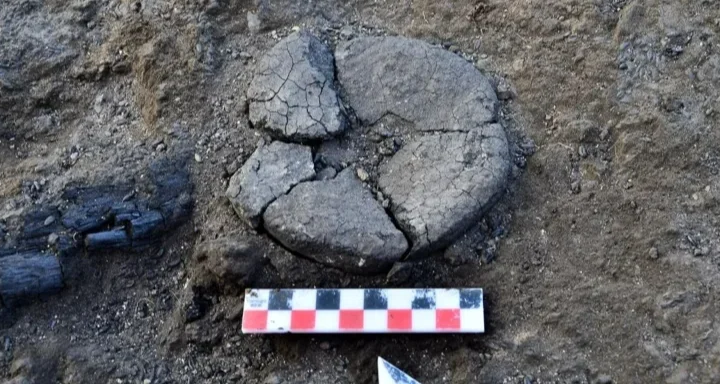
According to НВ — Техно: Near Kütahya in Turkey, archaeologists uncovered eight charred loaves of bread dating back approximately 5000 years at the Seyitomer-Hüyük mound. These remarkable remains were preserved through carbonization caused by an ancient fire, offering valuable insights into early Bronze Age dietary habits and food storage techniques.
The Seyitomer mound ranks among Anatolia's oldest archaeological sites, with origins tracing to the 3rd millennium BCE. Excavations revealed not only the bread but also remnants of wheat and lentils, alongside fragments of an ancient oven and a collapsed shelf within a room. The shelf’s collapse during the fire scattered the stored goods, enabling detailed study of their contents.
“Before the fire, bread and various agricultural products were kept on a shelf along the wall,” explained Dr. Sevgi Gurdali.
These ancient bread and grain remains are now exhibited at the Kütahya Museum of Archaeology and Mining, underscoring their archaeological significance. In a related discovery from 2025, a 5000-year-old 12 cm diameter bread resembling a flat cake was found beneath the threshold of a Bronze Age house dated to around 3300 BCE. A piece had been deliberately broken off, possibly as part of a ritual linked to abundance.
Exploring Architecture and Cultural Heritage
Research led by Semra Kağızıs in 2026 examined the middle Bronze Age architecture at Seyitomer, shedding further light on the lifestyle of its ancient inhabitants. The mound’s layers span multiple historical periods, including:
- Early Bronze Age
- Middle Bronze Age
- Achaemenid Period
- Hellenistic Period
- Roman Period
This sequence highlights the rich tapestry of cultures and traditions that have shaped the area now known as modern Turkey.
These findings emphasize the critical role of archaeological research in deepening our understanding of ancient civilizations and their daily lives. The preserved bread remnants not only reveal culinary practices but also reflect social and economic dimensions of the time. Displaying such artifacts in museums ensures the protection and transmission of cultural heritage for future generations.
The significance of archaeological finds in Turkey continues to grow, with another recent discovery highlighting the region's rich history. Researchers unveiled ancient dog paw prints on clay bricks dating back 4,000 years, providing further insights into the daily lives of past civilizations. Such findings complement the recent unearthing of charred bread loaves, illustrating the diverse aspects of life during the Bronze Age.

Read also