How Kherson Plans to Protect Public Transport from Drones


After a series of attacks by Russian drones on public transport in Kherson, municipal workers began looking for new ways to protect drivers and passengers. The city is already testing the first bus with a metal frame for an anti-drone net, and there are plans to purchase armored film for the transport. This was reported by the publication Vgoru.
Public Transport in Kherson has Become a Target for Drones
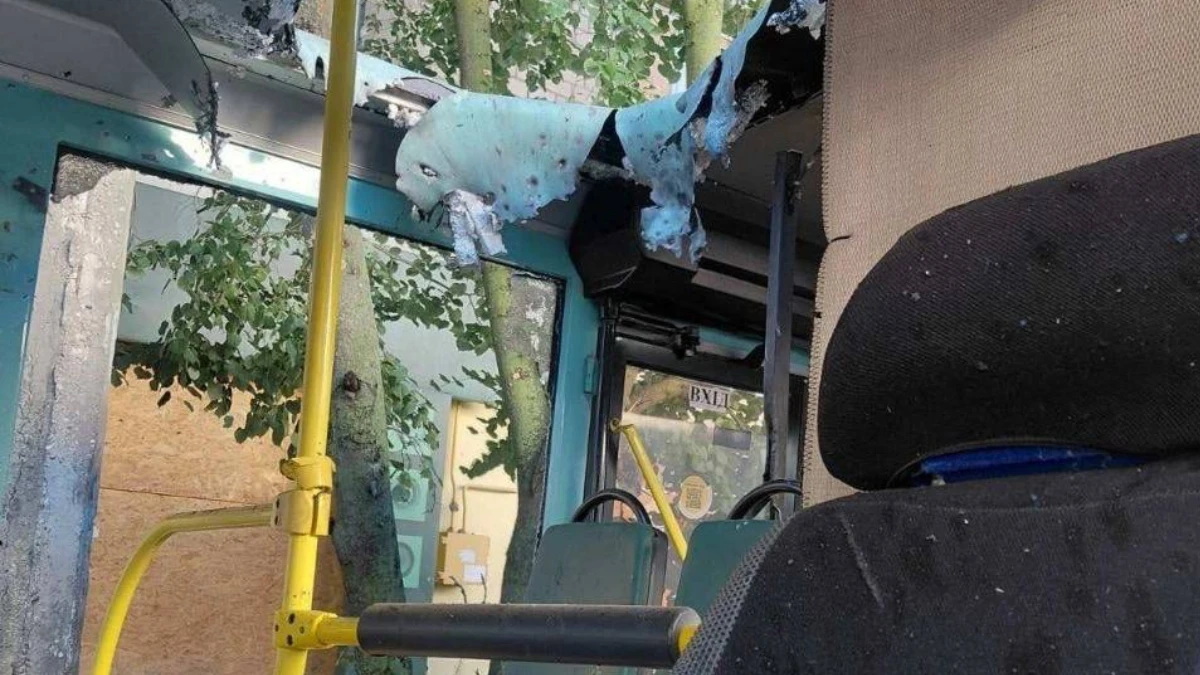
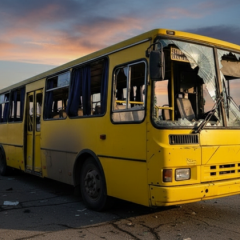
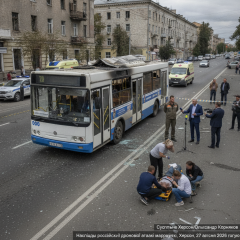
In early April, Russian military forces dropped explosives from a drone onto a trolleybus in Kherson. The driver suffered severe injuries and later died in the hospital.
Due to constant attacks, some routes in the city have been reduced or completely stopped. Public transport no longer operates to the Ostriv microdistrict, Antonivka, and several coastal areas.
The head of the communal enterprise 'Khersoncomuntransservice,' Vadim Melnik, stated that about 80% of the trolleybus fleet was damaged after the city's de-occupation.
How Kherson Plans to Protect Buses
The communal enterprise has already installed an experimental metal frame for an anti-drone net on one of the buses.
«We want to test how the driver feels behind the wheel, whether it is comfortable for him to drive such transport,» Melnik explained.
According to him, the bus is expected to be on the route by the end of May.
Kherson also plans to purchase armored film for windows, which reduces the risk of injury from shrapnel and shockwaves. About 100 meters of such film is needed for one bus.
Drivers Have Received Bulletproof Vests and Drone Detectors
The communal enterprise states that crews have been provided with helmets, bulletproof vests, and drone analyzers. However, journalists have noted that detectors are not available in every vehicle.
According to Melnik, some drivers have already managed to save passengers thanks to the signals from the detectors. However, such systems do not detect drones on fiber optics.
It should be noted that the day before, a massive failure in the energy system was recorded in the temporarily occupied territory of the Kherson region.

Read also