Axolotls Prefer Wider Openings Even in Darkness, Study Reveals Their Size Discrimination Ability

Understanding Axolotl Spatial Awareness
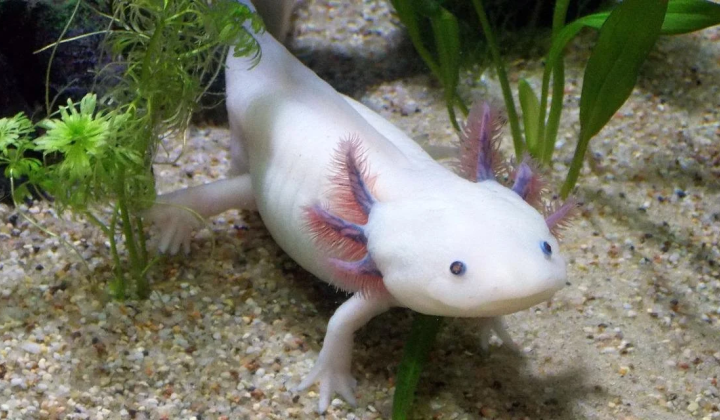
According to НВ — Техно: Mexican axolotls demonstrate a clear preference for wider openings, even when navigating in complete darkness. This conclusion comes from an 18-day behavioral study involving 24 juvenile amphibians. Researchers placed a divider with two circular holes of different diameters inside an aquarium and tested six different size combinations to observe the axolotls' choices.
To eliminate any positional bias, the holes were swapped during trials. Data from 22 axolotls were sufficient for analysis. The findings revealed that these amphibians significantly favored the larger passage, with their preference intensifying as the size difference between the holes increased. When both holes were relatively large, the preference for the wider opening became less distinct.
Axolotl Behavior During Nighttime
Although axolotls moved less frequently at night, they still showed a clear tendency to select the wider hole. The exact sensory process behind this ability remains unclear. Scientists suggest that the lateral line system-a sensory organ detecting water movement and pressure changes-may help axolotls discern differences in opening sizes.
It is important to clarify that these results do not imply axolotls can count or perform mathematical tasks. These amphibians are better known for their remarkable capacity to regenerate lost or damaged body parts, such as limbs. However, their cognitive abilities have been far less studied. Gaining deeper insight into axolotl behavior could improve conservation efforts, optimize captive care, and advance research on regeneration.
Studying axolotl behavior is crucial for expanding our understanding of their cognitive functions, which remain largely unexplored. This research may pave the way for future investigations into the neurobiology and behavior of these extraordinary amphibians. Given that axolotls face the threat of extinction, uncovering their behavioral patterns can contribute to developing more effective strategies for their protection both in the wild and captivity.
Understanding the cognitive abilities of aquatic species is essential for both conservation and research. For instance, a recent study uncovered how blacktip sharks can detect sounds from considerable distances, highlighting the diverse adaptations in marine life. Delving into these findings can further inform our knowledge of sensory perception across different species.

Read also