How Drones Transformed the US-Iran War and Why an Invasion Is Now Unlikely

The US-Iran Confrontation
According to ХВИЛЯ: The military conflict between the United States and Iran has entered its second month, primarily driven by Washington's concerns over Iran's nuclear ambitions. Analysts note the situation is complicated by the fact that no Iranian nuclear arsenal has been confirmed, which influences the strategic calculations of both sides. The closure of the Strait of Hormuz, a critical global trade route, has triggered severe economic repercussions, including causing a regional fertilizer shortage.
Negotiations and Escalating Challenges
Talks aimed at resolving the crisis are being held in Pakistan, with China, Saudi Arabia, Egypt, and Turkey participating. According to geopolitical analyst George Friedman,
“The US went to war because it feared nuclear weapons in Iran’s hands.”
He further contrasted the situation, noting,
“Iran is a massive country, two and a half times the size of Texas,”
and that this scale makes a large-scale ground invasion impractical, as “precisely these mass assaults have become impossible.” This conflict is unfolding against a backdrop of long-standing regional tensions and a stalled nuclear deal.
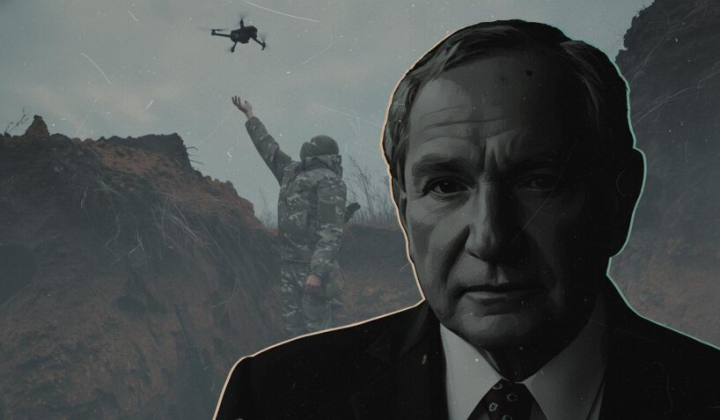
Experts point out that drones have fundamentally altered the nature of combat, a transformation also witnessed in the war in Ukraine. George Friedman observed that
“one reason Ukraine held on and Russia fought so poorly is that the advent of drones made mass infantry movement prohibitively expensive.”
This calls into question the viability of traditional military tactics in the modern battlefield.
Furthermore, Russia appears to be providing Iran with satellite intelligence, which could significantly impact the conflict's trajectory.
“The only way to end this war is to physically destroy the weapons,”
Friedman stated. Amid these developments, the regional economic climate grows increasingly strained, particularly due to the Hormuz blockade, which threatens to cause serious fertilizer supply issues in the Northern Hemisphere.
For now, Friedman suggests,
“the US is getting what it wants, the regime gets survival, and Israel is not getting everything it wanted.”
This underscores the complex, multi-faceted nature of the conflict and the necessity for continued diplomacy to achieve regional stability.
The US-Iran war carries implications far beyond their bilateral relations, affecting the global economy through the threat to vital shipping lanes. A prolonged blockade of the Strait of Hormuz could have severe consequences for worldwide energy and agricultural markets, as this chokepoint is crucial for oil and fertilizer shipments. The outcome of ongoing negotiations will therefore be pivotal for stabilizing not only the Middle East but also key aspects of the international order.
As the conflict continues to unfold, the implications of the ongoing blockade of the Strait of Hormuz are becoming increasingly significant. This vital route not only serves as a conduit for global trade but also plays a crucial role in the military strategies of the involved nations. For a deeper understanding of how this blockade is affecting both the global economy and the military landscape, explore our article on the ramifications of Iran's actions in the Strait of Hormuz.

Read also