Taiwan’s undersea drone drive gains an American startup partner

With U.S. startup help, Taiwan aims to master the seafloor
According to НВ — Техно: On August 20 at 10:45, Taiwan’s state-run Chungshan Institute of Science and Technology signed a memorandum of understanding with American defense startup Vatn Systems to co-develop autonomous underwater vehicles. The agreement covers AI-driven command systems and building a local supply chain plus servicing capacity for the equipment. For Taiwan, such platforms offer a way to monitor its waters while keeping crews out of danger.
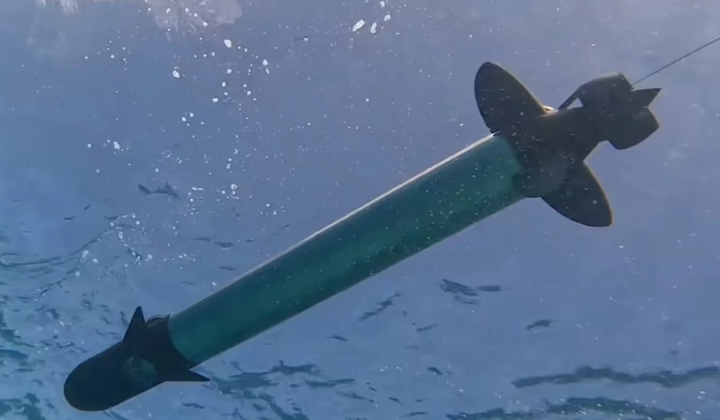
Vatn Systems builds low-cost underwater systems for the United States and allied forces, with an emphasis on deploying them in large numbers. The core of the deal is the modular Skelmir S12, which can be configured for a mission based on range, sensor payload, and accuracy. The two parties are also discussing fielding the Skelmir S12 in Taiwan. The vehicle is intended for tasks that would otherwise place crews at risk, including seabed mapping, infrastructure inspections, maritime surveillance, and mine countermeasures.
Vatn is also at work on SIGURD, an autonomous mine-clearing system, and an inexpensive inertial navigation unit designed for operations where GPS is unavailable. Separately, the Chungshan Institute has been working with U.S. firm Anduril Industries, purchasing its Dive-LD vehicle, which can reach depths of 6,000 meters and stay underwater for around ten days.
Taiwan’s homegrown undersea technology push
Domestically, Taiwan is moving forward with its Huilong program, which has already produced a 30-meter prototype weighing 100 tons. The Chungshan Institute is following a two-track strategy: using foreign systems and expertise while also developing critical technologies such as underwater sensors locally.
The Vatn Systems partnership shows how maritime security and regional threats have become central to Taiwan’s defense planning. Autonomous underwater capabilities could significantly strengthen the island’s military position amid growing geopolitical tensions in Asia. Artificial-intelligence-enabled vehicles open up new ways to conduct complex missions without risking human life, a development that may change how naval forces protect sea lanes and respond to threats in the water.
As Taiwan enhances its undersea capabilities, the advancements in AI technology are also making waves in the maritime domain. For instance, a recent development reveals how Chinese AI can identify sunken vessels using sonar, showcasing the potential of artificial intelligence in underwater exploration and safety. This highlights the growing significance of innovative technologies in ensuring maritime security in the region.

Read also