The Economist Analysts Declare the End of America's Unchallenged Global Supremacy

America’s Shrinking Edge on the World Stage
According to ХВИЛЯ: According to analysts at The Economist, the United States has hit its peak of absolute power, and its relative dominance worldwide is now in decline. This conclusion is backed by comparative data across economics, military strength, science, and immigration-all pointing to a narrowing American advantage as China and other nations rise.
Currently, the U.S. GDP at market exchange rates stands at $32.4 trillion, which is 55% higher than China’s. However, it is worth noting that the U.S. economy reached its zenith in 1945, when it controlled roughly one-third of global output with only 6% of the world’s population. By 2024, America’s share of global manufacturing had dropped from about half to 15%, while China’s share is now double that of the U.S.
Military and Scientific Domains
In military terms, the U.S. operates 11 aircraft carriers compared to China’s 3. Yet last year, for the first time, the combined defense spending of U.S. allies-adjusted for local prices-surpassed that of the United States itself. The White House has proposed a defense budget of $1.5 trillion for fiscal year 2027, a 44% increase from the previous year. At the same time, the USAID agency has been effectively dismantled, with its annual aid slashed to roughly $29 billion-half of its former level.
China’s spending on research and development overtook that of the U.S. in 2024. Moreover, over a third of articles in top-tier scientific journals are now authored by Chinese researchers. During Trump’s second term, more than 7,800 scientific grants were frozen or canceled, and approximately 25,000 employees left federal science agencies. Net migration to the U.S. could approach zero in 2025 and 2026, while only 15% of adults worldwide who wish to emigrate permanently name America as their dream destination-down from 24% in 2007–2009.
These figures highlight a diminishing American edge across multiple fronts, raising concerns among experts.
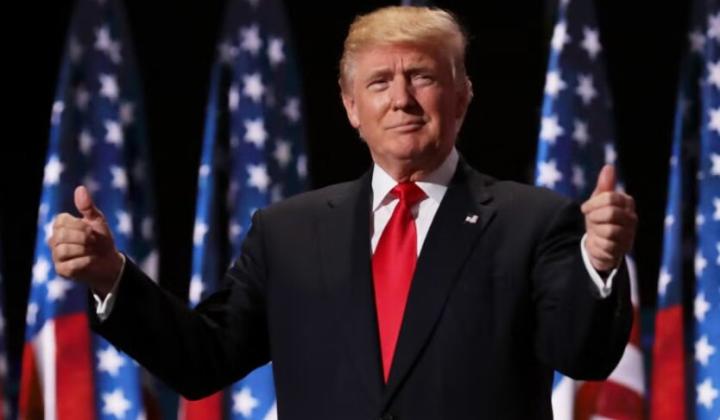
As Donald Trump stated, 'America will reclaim its rightful place as the greatest, most powerful, and most respected nation on earth.'
Meanwhile, Elon Musk emphasized that a significant portion of scientific achievements and research has been 'fed into the shredder,' which could have serious consequences for America’s future on the global stage.
The findings from The Economist underscore a shifting global balance of power. While the U.S. remains strong, it is losing ground to the growing influence of China and other nations. This trend could reshape strategic decisions across areas from economics to international relations, forcing the United States to rethink its approaches to policy and power. Reduced U.S. investment in science and immigration may also hinder the country’s ability to sustain its innovative edge-an increasingly critical factor in a globalized world.
As the U.S. navigates its shifting global influence, it is crucial to examine how technological advancements-or the lack thereof-affect the geopolitical landscape. In this regard, Europe faces significant challenges that could render it vulnerable to both American and Chinese ambitions. For a deeper understanding of this precarious position, you can read more about Europe's technological challenges in the current global context.

Read also