39% of Key Skills to Change in Five Years: WEF’s Warning to HR Teams

According to AIHR: HR leaders are facing a major shift: according to the World Economic Forum's "Future of Jobs Report 2025," employers expect 39% of core workforce skills to change within the next five years. In a new article, AIHR examines skills intelligence-a practice that continuously maps employee capabilities against business needs-as a key way to address this challenge.
Skills intelligence goes beyond traditional skills management. While skills management refers to the broad HR processes for organizing, developing, tracking, and applying skills, skills intelligence is a more targeted approach focused on comparing what employees can do with what the company actually requires. The OECD Survey of Adult Skills also highlights the challenge of aligning skills with evolving work, reinforcing the need for adaptable HR processes.
Implementing Skills Intelligence
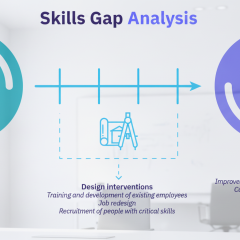
Adopting skills intelligence typically involves four steps: collecting skill data, organizing that data into a taxonomy, comparing current skills with business requirements, and regularly updating the information to prevent it from becoming obsolete.
The article also clarifies the difference between a skills taxonomy and a skills ontology. A taxonomy provides a common structure for grouping skills into categories and subcategories, whereas an ontology maps the relationships between skills and job roles.
Tools and Metrics
Several platforms support skills intelligence, including Eightfold Talent Intelligence, Gloat Skills Foundation, Beamery Skills Intelligence, TalentGuard Skills Intelligence, Degreed Skills+, Workday Skills Cloud, Skillsoft Percipio, and iMocha Skills Intelligence.
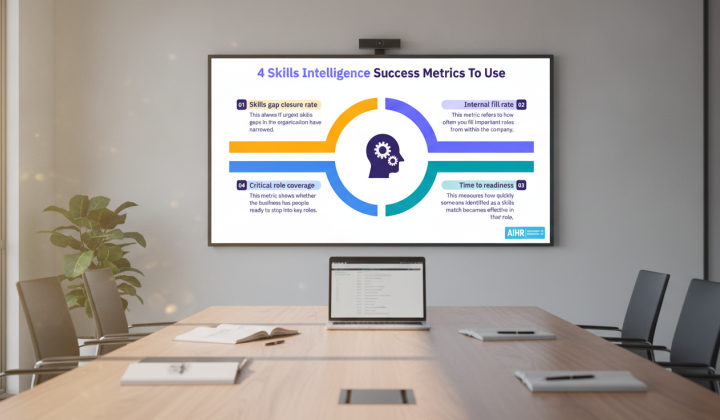
To measure how well skills intelligence is working, HR teams can use four key metrics: skill gap closure rate, internal fill rate, time to readiness, and critical role coverage.
Additional research from DDI reveals a concerning gap: only 20% of HR professionals feel confident about their leadership pipeline, and internal candidates can fill just 49% of critical leadership roles.
“Skills intelligence is becoming an essential tool for HR professionals because it provides current visibility into workforce capabilities and ties skill data directly to business priorities.” – AIHR
With rapid labor market changes and rising demand for new competencies, skills intelligence is becoming critical for effective human resource management. By implementing this approach, organizations can respond to shifting conditions, shorten time-to-hire, and ensure their employees' skills align with current business needs-ultimately strengthening competitiveness in today's dynamic environment.
As the landscape of HR continues to evolve, understanding the anticipated changes in skills is crucial for organizations. A related article discusses how nearly 40% of HR competencies are projected to transform by 2030, emphasizing the urgent need for proactive strategies in workforce development. To explore this further, read about the upcoming shifts and how they might impact your HR practices in the near future.

Read also