4000-Year-Old Stone Tomb Unearthed in Southeastern Norway Alongside Rare Artifacts and Burials

Remarkable Discovery of an Ancient Tomb in Norway
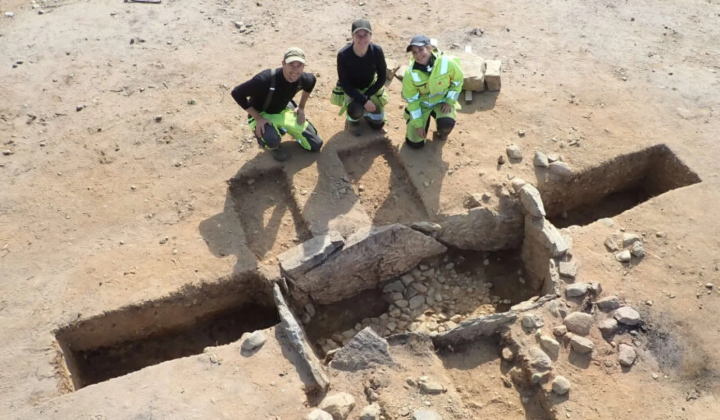
According to НВ — Техно: Near the town of Halden in southeastern Norway, archaeologists have uncovered a stone tomb dating back approximately 4000 years to the Late Neolithic period. This rare burial site stands out as a significant historical monument in the region. Excavations took place just before construction began on a large industrial development, highlighting the crucial role of archaeological surveys ahead of modern infrastructure projects.
The tomb is situated on the Svinesund plateau and measures about 70 centimeters deep. It is constructed from massive upright stone slabs, some weighing several hundred kilograms. Fewer than 20 similar stone tombs are known in eastern Norway, making this find particularly noteworthy. Inside the burial chamber, researchers discovered several artifacts including:
- a flint arrowhead
- a bead made of amber
- ceramics marked with cord impressions
- charred bone fragments
These items provide valuable insights into the funerary customs of early farming communities in Norway.
Insights into Social Practices and Traditions
The ceramic pieces share similarities with those found in a stone tomb at Fange in the Østfold region. However, unlike many comparable sites, the Halden tomb did not contain a flint dagger, a weapon commonly discovered in other burials of this type. Archaeologist Karin Rosenvinge noted:
“While flint daggers have appeared in similar Norwegian tombs, none were present in the Halden burial chamber.”
This discovery sheds light not only on the material culture but also on the social organization of early agricultural communities who lived in wooden homes near cultivated fields and raised livestock. Research indicates that population movements and contact with continental Europe introduced new burial rites and religious customs to Scandinavia. Archaeologist Morten Ramstad explained:
“Some stone chamber tombs served as collective burial monuments rather than graves designated for individual warriors.”
Earlier, in 2026, archaeologists found a necropolis on the Spitsbergen archipelago containing 45 stone-lined graves and remnants of wooden boats. These investigations employed non-invasive methods covering western Spitsbergen and the northern edge of Prins Karls Forland. The recent Halden tomb discovery represents a significant advancement in understanding Norway’s ancient cultures and traditions.
This tomb unearthed near Halden emphasizes archaeology’s vital role in preserving cultural heritage and deepening our knowledge of human history. It also illustrates how contemporary construction activities can impact archaeological research, underscoring the importance of thorough investigations before development begins. Studying such finds enhances our comprehension of how early societies interacted with their environment and each other, as well as how their traditions shaped their cultural identities.
This remarkable find in Norway adds to the growing body of archaeological discoveries that enhance our understanding of ancient burial practices. For instance, in 2026, archaeologists uncovered a necropolis containing 45 graves and remnants of wooden ships on Spitsbergen, revealing further complexities of historical societies. Such excavations not only provide insights into funerary customs but also highlight the interconnectedness of ancient cultures. To learn more about this significant discovery, visit the recent findings on Spitsbergen.

Read also