Unique Iron Age Celtic Spear and Shield Unearthed in Northeastern Hungary

Celtic Weaponry Unearthed
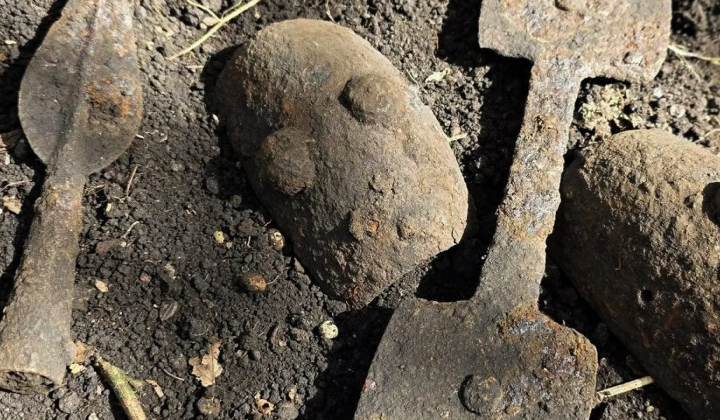
According to НВ — Техно: Near the Hungarian town of Érd, archaeologists have uncovered rare Iron Age Celtic artifacts, including a spear and a complete shield. These finds provide compelling evidence of Celtic communities inhabiting northeastern Hungary during the 4th to 3rd centuries BCE. This marks the first time such artifacts have been discovered in the Érd area, shedding new light on the region’s ancient past.
The artifacts date back to the Iron Age, a period notable across Europe for widespread migrations, warfare, and territorial expansion. Previous excavations in this part of Hungary have revealed Celtic burial sites and other relics from the 4th and 3rd centuries BCE. The Celtic groups responsible belonged to the La Tène culture, which spread into the Carpathian Basin during the 4th century BCE. They settled in areas bordering the Greek and Roman worlds and were known to participate in military campaigns and serve as mercenaries.
Importance of the Discoveries
Found together, the spear and shield require further archaeological study to fully understand their significance. Researchers are employing metal detectors to precisely map the site and context, which will help reconstruct aspects of Celtic life and culture in the region.
In addition to the Hungarian finds, a remarkable Iron Age wooden structure over 2,400 years old was recently uncovered near the Main River in Aschaffenburg, Germany. Dendrochronological analysis dates its oak beams between 372 and 352 BCE. This structure is considered exceptionally well-preserved and unique within Bavaria and Germany. It was discovered in March during construction work on a stormwater drainage system close to the Willigis Bridge.
These archaeological discoveries highlight the vibrant presence and influence of Celtic societies across Central Europe during the Iron Age. They underscore the crucial role of archaeology in piecing together the historical and cultural legacy of the Celts, who played a significant part in shaping European civilizations.
Ongoing excavations in Hungary and Germany promise to deepen our understanding of the social, economic, and cultural dynamics of Celtic communities during this formative era.
These recent discoveries in Hungary echo similar archaeological finds across Europe, such as the remarkable Roman coin hoard unearthed on Gotland, which also sheds light on the diverse cultures that thrived during antiquity. Such artifacts not only enrich our understanding of the past but also illustrate the interconnectedness of ancient societies.

Read also