A Roman Coin Hoard and Gold Ring Dating to Around 450 AD Unearthed on Gotland

Remarkable Treasure Found on Gotland Island
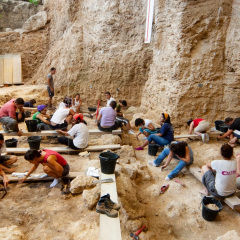
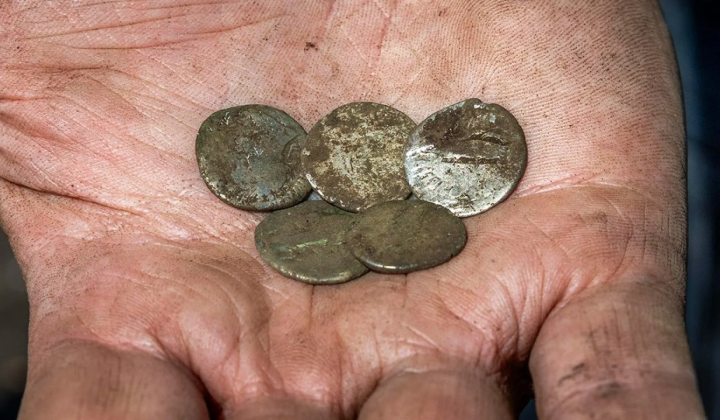
According to НВ — Техно: During excavations near the Tofta shooting range on Sweden’s Gotland Island, archaeologists uncovered a rare hoard containing 45 Roman silver coins alongside a gold ring. Buried approximately in 450 AD, this find emerged from the remains of an ancient farm as part of the expansion of the Gotland Regiment.
The coins span a period from 98 to 192 AD and were minted under the rule of five Roman emperors:
- Trajan
- Hadrian
- Antoninus Pius
- Marcus Aurelius
- Commodus
Additionally, these coins are linked to four empresses:
- Sabina
- Faustina I
- Faustina II
- Lucilla
Experts believe the coins likely arrived on Gotland during the 4th century and remained in use through the 5th century.
The gold ring discovered alongside the coins is dated to around the mid-5th century. Excavations revealed remnants of six buildings at the ancient farmstead, presumably the Bara farm. Radiocarbon dating of bones found in one of these structures confirms the farm’s occupation during the 5th century. Archaeologist Per Widerström described the find as:
“A deposit of silver, commonly referred to as a silver treasure.” Per Widerström
Related Discoveries in Germany
In a related find, a Celtic silver hoard dating back to the 1st century BC was uncovered in the Ilm district of Thuringia, Germany. This treasure was found beneath a former sports field near the Zinger-Berg hill during archaeological work linked to a fire station’s construction. Such discoveries highlight the extensive cultural exchange and trade networks that flourished across Europe in ancient times, offering fresh insights into the interactions among different peoples.
The Gotland find emphasizes the crucial role archaeological research plays in unraveling the region’s historical and cultural evolution. Items like Roman coins and gold rings not only reveal economic connections across Europe but also open new avenues for exploring social and political relationships of the past. The simultaneous discovery of a Celtic hoard in Germany further underscores the interconnected trade routes and cultural links that characterized this era, spotlighting the significance of these regions in shaping European history.
This recent discovery on Gotland is not an isolated event; it aligns with other significant archaeological finds across Europe. For instance, the recent uncovering of a substantial Celtic silver hoard in Germany further illustrates the rich tapestry of trade and cultural exchange that existed during ancient times. Such treasures not only enhance our understanding of historical economies but also reveal the interconnectedness of various civilizations.

Read also