Artemis II Crew Completes Historic Lunar Flyby, Begins Journey Home

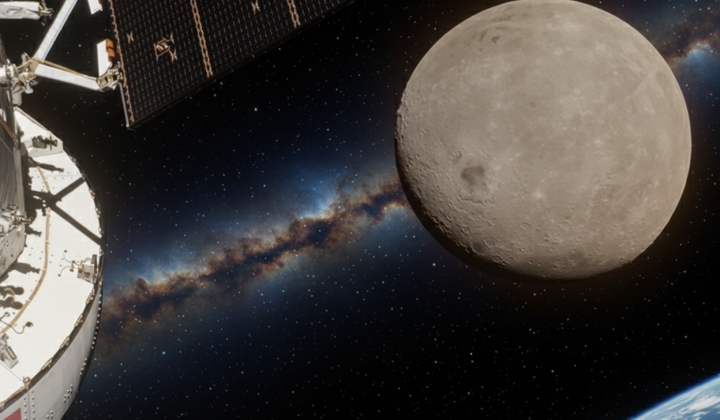
Orion Spacecraft Successfully Loops Around the Moon
According to Главком: NASA's Orion spacecraft, carrying a crew of four astronauts, has successfully completed a lunar flyby and is now on its return trajectory to Earth. During this mission, the vessel traveled more than 400,000 kilometers from our planet, setting a new record for the farthest distance humans have ever flown in space. This milestone flight is a critical test for the systems that will support future long-duration missions.
Homecoming and Mission Objectives
Orion has begun its journey back to Earth, with the return trip expected to take approximately four days. The capsule is scheduled to splash down in the Pacific Ocean off the coast of California on April 10, 2026. As the first crewed mission to deep space since the 1970s, Artemis II's primary goal is to thoroughly test the Orion spacecraft's systems and life support capabilities in preparation for a future lunar landing.
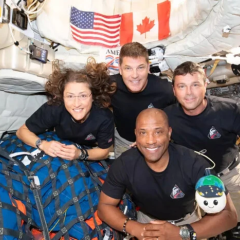
The crew for this historic mission consists of:
- Reid Wiseman (Commander, USA)
- Victor Glover (Pilot, USA)
- Christina Koch (Mission Specialist, USA)
- Jeremy Hansen (Mission Specialist, Canada)
'When we began this flight to the Moon, I said we are not leaving Earth, we are choosing it. And that's true. We will explore. We will build. We will build ships. We will revisit Earth. We will build scientific outposts. We will drive rovers. We will do radio astronomy. We will start companies. We will grow industry. We will inspire. But in the end, we will always choose Earth. We will always choose each other.' - Christina Koch
This mission represents a pivotal step toward landing humans on the lunar surface, which is planned for 2028. The success of Artemis II stands in contrast to recent challenges in other NASA programs, such as the reduction of planned Starliner missions due to technical issues, with its next flight to the International Space Station slated to be uncrewed. Artemis II heralds a new era of space exploration and underscores the importance of international collaboration.
The successful lunar flyby not only demonstrates new technologies but also creates opportunities for future exploration and missions to other planets. The Artemis II mission is critically important for NASA as it provides essential data and experience to prepare for more ambitious projects, such as establishing a lunar base and exploring Mars. The cooperation among international astronauts highlights the global effort in space research, which could lead to new scientific achievements and technological innovations.
As the Artemis II mission marks a significant milestone in lunar exploration, it also builds on the foundation laid by previous missions. For a deeper understanding of the challenges and achievements that have led to this historic journey, read more about how the launch of Artemis 2 initiated this new era of space travel.

Read also