TEMPOS Project Unveils the Secrets of Massive, Metal-Poor Stars in Nearby Dwarf Galaxies

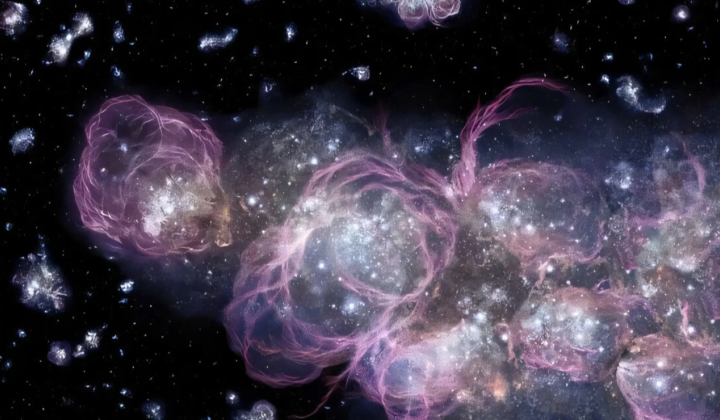
Exploring Massive Stars in Dwarf Galaxies
According to НВ — Техно: Using the Hubble Space Telescope, astronomers involved in the TEMPOS project are investigating massive stars with extremely low metal content in nearby dwarf galaxies. These stars, which formed roughly 100 million years after the Big Bang, offer vital clues about the stellar processes shaping the early Universe and the evolution of galaxies.
The TEMPOS team examined 29 massive stars across six neighboring dwarf galaxies, where metal levels are less than one-fifth of the Sun's. Each of these stars has a mass at least ten times greater than our Sun. Observations were conducted with Hubble's COS spectrograph, requiring dozens of hours of telescope time to gather detailed spectral data.
Significance of Low Metallicity in Stellar Evolution
Stars with metal abundances below 10% of solar levels show a much sharper decline in stellar wind speeds than previously expected from older models. This suggests these stars retain significantly more mass throughout their lifetimes, which profoundly affects their evolution and the impact they have on their host galaxies. Additionally, stars in galaxies with higher oxygen content exhibit stronger iron absorption in the ultraviolet spectrum.
This extensive dataset represents the first large-scale statistical study of stellar physics under conditions of extremely low metallicity. The research team combines Hubble's observations with ground-based data from the Keck Observatory in Hawaii to develop advanced computer models. These models are crucial for interpreting images and spectra captured by the James Webb Space Telescope, opening new pathways to study the Universe’s earliest epochs.
The findings from TEMPOS emphasize the critical role that massive, metal-poor stars play in galaxy formation and evolution, as their unique characteristics significantly influence their surroundings. Integrating these new insights with ongoing observations promises to reshape current understanding of stellar astrophysics and cosmic evolution. Moreover, studying these ancient stars enhances our grasp of the fundamental processes that governed the Universe’s infancy.
In addition to the groundbreaking insights from TEMPOS, recent discoveries have also highlighted the role of ultra-bright galaxies undergoing intense star formation in the early Universe. These findings further illuminate the complex processes that shaped cosmic structures and the evolution of stellar populations in various environments.

Read also