390 Black Hole Collision Signals Detected by Astronomers in New Gravitational Wave Catalog

LIGO-Virgo-KAGRA Unveils Latest Observation Catalog
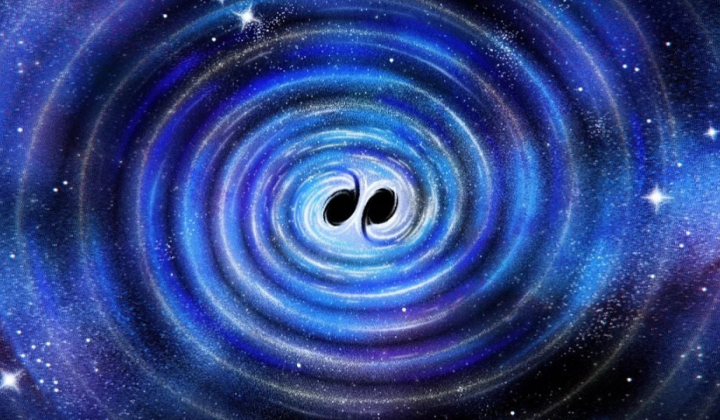
According to НВ — Техно: On May 29 at 2:00 PM, the LIGO-Virgo-KAGRA collaboration released a new catalog of observations, documenting 390 gravitational wave signals originating from black hole mergers. This dataset highlights major advances in the study of these cosmic objects, with data analysis revealing two primary mass clusters among black holes-one centered around 10 solar masses and another around 35 solar masses. The breakthrough in detecting gravitational waves first occurred in 2015, and since then, the average detection rate has reached nearly 40 events per year.
Observatory Activity and New Discoveries
The signal GW 250114 stands out as the clearest ever recorded, while GW 240615dg provided the most precise localization of an event on the sky. During the latest observing run, the observatories detected between three and four events each week, reflecting increased activity in black hole research.
'The new dataset shows that binary black holes form through different pathways.' - Sharan Banagiri, Monash University and OzGrav Center
Moreover, the accumulated data now allow scientists to determine black hole properties and trace their origins.
'This has enabled researchers to move from studying individual cases to analyzing the entire population of such objects.' - Maximiliano Isi, Flatiron Institute
Early LIGO observations yielded just three detections over four months, but with the new data, researchers now have the tools to deepen their understanding of how black holes form and evolve in space.
The release of this new LIGO-Virgo-KAGRA observation catalog marks a significant milestone in astronomy and astrophysics, providing scientists with fresh data to analyze and interpret black holes. In-depth study of these cosmic objects could open new frontiers in exploring fundamental questions about the Universe's structure and evolution. The growing number of detected signals points to increased observatory sensitivity and their ability to identify novel astronomical phenomena, which may in turn lead to further breakthroughs in physics and cosmology.

Read also