Gravitational wave background may carry echoes of dark stars, researchers say

Pulsar Timing and the Dark Matter Link
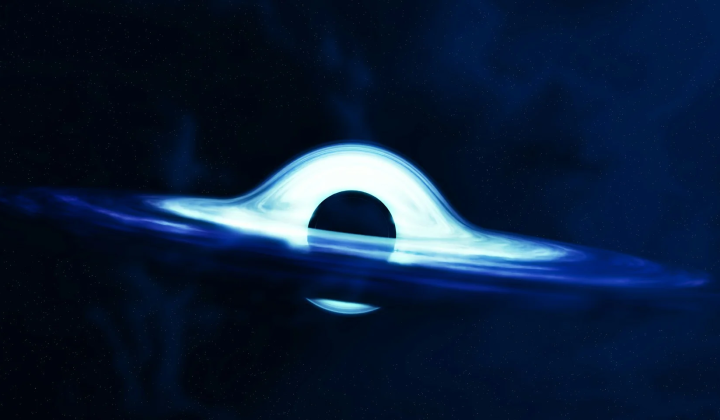
According to НВ — Техно: A new source of gravitational noise has been identified by researchers. Colgate University scientists Sohan Godla and Cosmin Ilie propose that the ultra-low-frequency gravitational-wave background could result from collisions of black holes that originated from primordial dark stars more than 13 billion years ago. Their study, published in the journal Physical Review D, offers evidence that might reshape how astronomers understand the Universe's earliest stages.
How Black Hole Seeds Could Form
To investigate, the team modeled two possible paths for the formation of supermassive black hole seeds:
- the direct collapse of gas clouds; and
- the collapse of hypothetical primordial dark stars.
Dark stars are believed to have been powered by dark-matter annihilation, enabling them to reach masses around one million times that of the Sun while remaining relatively cool.
Their calculations show that a density of about 0.001 dark-star seeds per cubic megaparsec could produce a gravitational-wave signal matching what is observed. A direct-collapse model, by contrast, would yield only about 0.000001 seeds per cubic megaparsec-too few to explain the measured emission. This finding, the authors note, creates a link between theories of dark matter, the first luminous objects, and contemporary gravitational-wave observations.
Cosmic Clocks Detecting the Background
Today, the gravitational-wave background is picked up by pulsar timing arrays (PTAs), networks of extremely precise neutron stars that act as cosmic clocks. Data from PTA systems can now be used to constrain how common the oldest black hole seeds may be, marking an important step in tracing the evolution of the Universe.
This research opens new avenues for exploring dark matter and its role in forming black holes in the early Universe. By understanding how dark stars interacted with the matter around them, scientists may gain deeper insight into the evolution of galaxies and their constituent parts.
Source: Physical Review D
Further observations and analysis could lead to additional cosmological breakthroughs, possibly even transforming our grasp of the fundamental physical laws that govern the Universe.
As researchers delve deeper into the origins of black holes, understanding the formation of these cosmic giants may also shed light on other phenomena in the universe. For instance, the recent discovery of a triple system of supermassive black holes in the early universe highlights the complex interactions that shaped the cosmos. This intersection of studies emphasizes the ongoing quest to unravel the mysteries of dark matter and its influence on the universe's evolution.

Read also