April Strikes on Russian Military Industry: Key Production Sites Hit

Industrial Facilities in Russia Targeted
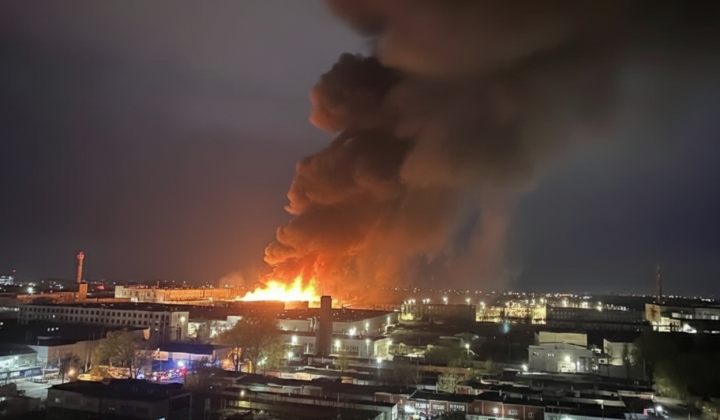
According to Главком: A series of attacks struck Russian industrial facilities in April 2024, targeting sites including the Taganrog Automobile Plant and locations in the Samara region and Ufa. On April 19, Taganrog was hit by a missile strike, with the likely target being the grounds of the former Taganrog Automobile Plant (TagAZ). While officially no longer assembling cars, the plant's facilities are now reportedly used for military purposes. The TagAZ industrial site houses Atlant Aero LLC, a company that manufactures Molniya strike-reconnaissance drones and components for Orion-type UAVs. These attacks highlight a focus on degrading Russia's domestic arms manufacturing capacity.
Furthermore, on April 18, the Samara region was also subjected to a mass drone attack. The main impact was felt in the city of Novokuybyshevsk, where local residents reported hearing 6 to 8 powerful explosions around 4:30 AM local time. This was not the first assault on the region; on the night of April 4, the Samara region also endured a mass attack by strike drones, with major industrial facilities in the city of Tolyatti being the primary targets.
Regional Tensions Escalate
Earlier in the month, on April 2, the Bashneft-Ufaneftekhim oil refinery in Ufa was targeted in a drone attack. This refinery is a key asset of Bashneft, which is part of the state-owned Rosneft conglomerate. The Bashneft-Ufaneftekhim plant processes a mix of West Siberian and local Bashkir crude oil, as well as gas condensate. These incidents point to rising tensions in the region and the expanding list of potential military-industrial targets, reflecting the broader conflict's spillover into Russian territory. Targeting energy infrastructure aims to disrupt both military logistics and economic output.
The strikes on Russian industrial sites, particularly critical factories, indicate an escalation in the conflict and a potential shift in strategic priorities for military operations. The role of industry in supplying military needs underscores the significance of these attacks within the overall security landscape. They may also represent attempts to degrade the military power and resources a nation can bring to bear in a conflict. The increasing frequency of such attacks suggests new challenges for Russia's defense industry and its economy as a whole.
The recent attacks on Russian military production facilities are part of a broader strategy to undermine the nation's defense capabilities. In a similar vein, significant drone strikes have targeted the country's oil infrastructure, aiming to disrupt critical energy resources essential for military operations. To understand the implications of these coordinated assaults on Russia's strategic assets, read more about the recent drone strikes on oil facilities.

Read also