Sanctions Drive Russia’s Banking System Into a Deep Crisis

Russia’s Economic Landscape
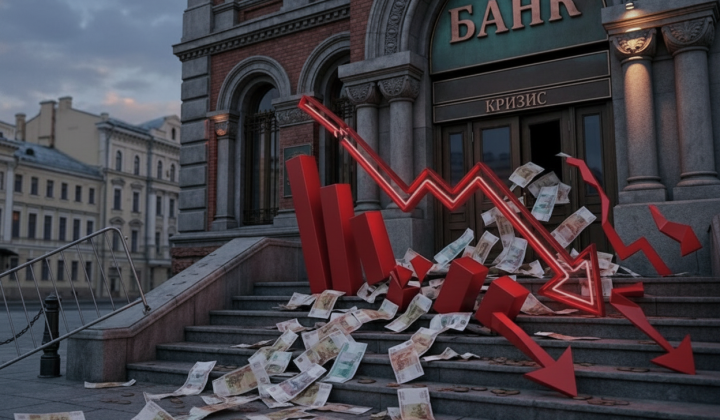
According to Главком: Russia’s economic model continues to show signs of a systemic crisis in the financial sector, driven largely by the impact of sanctions and the ongoing war. The share of non-performing assets in the banking system has now exceeded 10%, a threshold that the International Monetary Fund (IMF) considers a key indicator of crisis. These problems remain largely hidden, thanks to loan restructuring and financial injections that keep state-owned banks afloat. The real economy is also deteriorating: GDP growth has slowed to just 0.4%, while overdue inter-enterprise debt has ballooned to over 8 trillion rubles-roughly 3.8% of GDP. Additionally, the industrial sector faces a shortage of nearly 1.9 million workers.
State of the Banking System
Russia’s banking system has entered a phase of deep degradation, confirmed by a critical metric that has now officially crossed the 10% mark for problem and bad assets. This negative trend has been steadily recorded and deepening for three consecutive months. In the unsecured retail lending sector, the share of bad debts has risen to 13%, while default rates in small and medium business lending have hit 19%. In response, the Central Bank of Russia has allowed commercial banks to massively restructure overdue loans, effectively postponing losses.
The Kremlin’s monopoly control over the largest financial institutions-such as Sberbank and VTB-enables it to cover capital shortfalls with direct financial injections from the state budget and the National Welfare Fund. This persistent negative economic dynamic took shape throughout 2025 and continued into the early months of 2026. Overall, the situation in Russia’s economy points to serious challenges that demand urgent solutions.
Current economic trends in Russia reflect an escalating financial crisis fueled by external sanctions and deep-rooted internal structural issues. The rise in non-performing assets in the banking sector and the high level of overdue inter-enterprise debt indicate that the economy is grappling with severe difficulties, which could have far-reaching consequences for the country’s stability. In such conditions, it is crucial for the government and financial institutions to implement effective measures to stabilize the situation and restore confidence in the economic system.
In light of the ongoing financial turmoil, it's worth noting that the challenges facing the banking sector are mirrored in other areas of Russia's economy. The bond market, in particular, is grappling with a rising number of defaults, further complicating the fiscal landscape. To understand how these interconnected issues are shaping the country's financial stability, read more about the growing wave of defaults in the bond market.

Read also