A Rare WWII German Torpedo Boat Has Been Discovered Off the Coast of Greece

The LS 6 Discovery
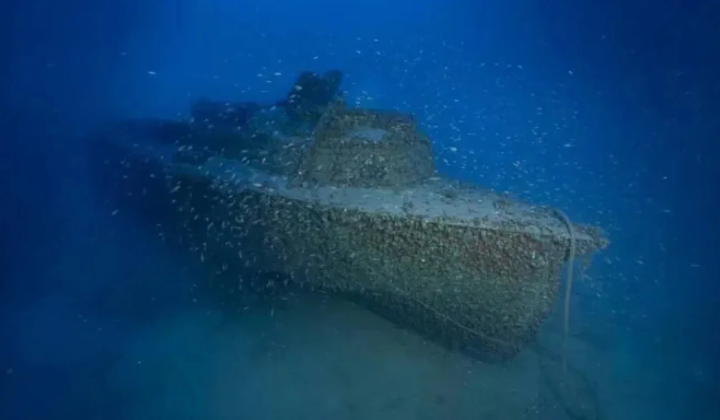
According to НВ — Техно: Off the western coast of Greece, near the town of Preveza, lies the wreck of a rare German torpedo boat from World War II: the LS 6. The 12.5-meter craft, a Leichte Schnellboot (light fast boat), stands upright on the seabed of the Ionian Sea at a depth of 96 meters, with its bow angled toward the northwest. Researchers believe it is the only known surviving example of this type of vessel.
Finding the wreck was the result of years of research by historian Giorgos Karelas and the technical dive team AegeanTec. Divers Marinos Giorgas and Vasilis Spiropoulos reached the site using closed-circuit rebreathers. The search for LS 6 began in 2013 after German naval historian Peter Schenk contacted diver and filmmaker Vasilis Mentogiannis with a lead. Karelas then pored over German military records, maps, and reference books, while Dimitrios Giannoulatos helped pinpoint the likely location.
Design and Wartime History of the LS 6
The LS 6's bow still has a tow cable attached, and its engine compartment reveals Junkers Jumo 205 diesel engines. A hatch in the stern was used to release depth charges. Unlike standard LS boats, LS 5 and LS 6 had been modified specifically for anti-submarine missions, carrying depth charges instead of aft torpedo tubes. Dornier built the LS 6's hull from a light aluminum alloy.
According to the team's reconstruction, the LS 6 came under attack on 24 September 1943 while en route to Corfu. The attackers were six Italian Reggiane Re.2002 fighter-bombers. After the assault, the Kriegsmarine attempted to tow the damaged boat from Corfu to Piraeus with the minesweeper R-194, escorted by the landing craft F-331, but the LS 6 sank near Mithikas, just off Preveza.
Vessels in the Leichte Schnellboote class, including the LS 5 and LS 6, could travel at roughly 37 to 40 knots, making them formidable in combat. Both boats reached Greece in 1943 and became part of the 21st Schnellboote Flotilla in the Aegean Sea.
“Some searches for hidden shipwrecks are measured in meters. Others in years.” - Giorgas
This find is a significant addition to the study of WWII naval history, since intact examples of these vessels are extremely rare. It also underscores the dedication of historians and divers working to document submerged cultural heritage. For maritime archaeologists and history enthusiasts alike, the wreck offers a rare window into a lesser-known class of German naval craft. Such discoveries not only provide deeper insight into wartime tactics and naval operations but also help preserve historical memory and could encourage underwater tourism and public education about the realities of conflict.
As the discovery of the LS 6 highlights the ongoing fascination with World War II naval history, it is worth noting that recent environmental changes have revealed more submerged relics from that era. For instance, the Danube River has receded to unprecedented levels, uncovering over 200 Nazi vessels that were sunk in 1944. This unexpected revelation not only sheds light on the past but also raises questions about the preservation of such historical artifacts. To learn more about these emerging ships and their significance, visit the recent report on the Danube's record low levels.

Read also