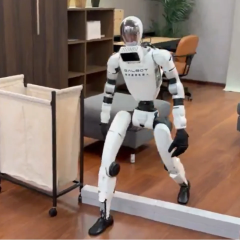
Bill Gates proposes taxes on robots and legal safeguards to keep 40% of human professions automation-free


A Levy on Tokens and Robots
According to НВ — Техно: His proposal joins an intensifying global debate about how artificial intelligence will reshape work. In an August 27 post on his website, Bill Gates argues that the current tax system pushes employers to shed human workers: companies pay social contributions for employees, while buying robots can be written off as a business expense. To fix this, he wants taxes on AI algorithms and robotic systems, plus a legal prohibition on automating 40% of human professions.
Gates specifically suggests taxing the algorithmic tokens used by language models and the mechanical units themselves. He calls for creating a reserved category of jobs that only humans can perform, including:
- medical caregivers,
- kindergarten teachers,
- court jurors.
For older employees, he recommends temporary preferential adjustment measures to ease the effects of automation.
Gates expects labor-market disruption to arrive within a decade across law, medicine, programming, and services. Anthropic CEO Dario Amodei predicts that up to half of entry-level office positions may vanish in the next five years. Researchers at Yale and the Brookings Institution, however, have yet to document a mass wave of layoffs.
Call to Action
Gates also urges world governments to move quickly in creating an international regulatory body for the labor market. He expressed his concern this way:
“I would be glad to find out that I am wrong about the labor market, but that is not the case. Artificial intelligence will either be the greatest equalizer in history or the worst source of injustice.” – Bill Gates
This appeal underscores the need to talk through what automation and AI mean for today's workforce.
Gates's proposals point to a broader anxiety about AI's effect on employment and social fairness. With technology advancing so rapidly, it is crucial for governments and societies to look closely at automation's possible consequences, particularly for vulnerable groups. New tax rules and regulatory mechanisms could be essential to achieving a fair transition into a tech-driven future.
As the debate around automation intensifies, it’s crucial to examine the real-world implications for those working in tech. For instance, despite the promise of AI to streamline workloads, some employees at OpenAI are facing grueling 90-hour weeks. This highlights a growing concern about whether automation truly leads to a better work-life balance or simply shifts the burden onto human workers. For more insights on this paradox, read about the challenges faced by OpenAI staff in the evolving landscape of AI.

Read also