Bulgaria Elects Euro-Skeptic Leader, Casting Doubt on Future Military Aid to Ukraine

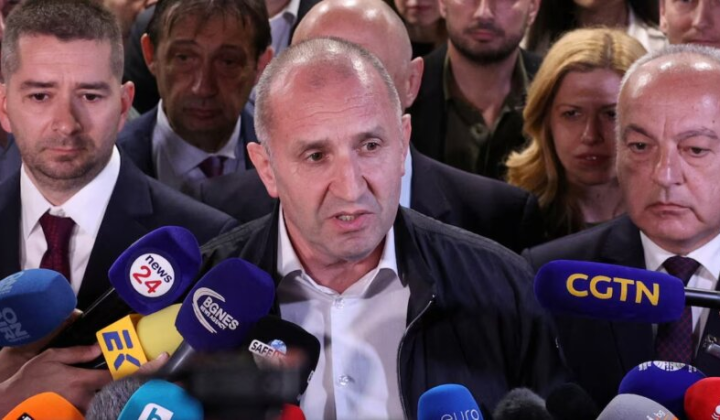
Rumen Radev's Party Wins Parliamentary Election
According to ХВИЛЯ: Former Bulgarian President Rumen Radev and his 'Progressive Bulgaria' party have won the parliamentary election, securing 44.7% of the vote. With 91.7% of ballots counted, the 'We Continue the Change - Democratic Bulgaria' coalition has received 13.2%, while the GERB party of ex-Prime Minister Boyko Borisov has 13.4%.
A former military pilot and a known Euro-skeptic, Radev opposes sending military aid to Ukraine in its war against Moscow and has criticized Bulgaria's planned transition to the Euro. His focus is on improving relations with Moscow and restoring the flow of Russian oil and gas to Europe. He has repeatedly criticized the European Union for what he sees as an excessive reliance on renewable energy.
Post-Election Landscape in Bulgaria
On Sunday, following the announcement of the results, Radev stated he was ready to work on judicial reform with the 'We Continue the Change - Democratic Bulgaria' coalition and emphasized that Bulgaria would 'make efforts to continue its European path.' It's important to note that the previous government resigned in December last year following mass protests over a budget that proposed tax and social contribution hikes.
Against this backdrop, Bulgaria's population of roughly 6.5 million is watching developments in a country that has now held eight elections in the past five years. Commenting on the situation, Radev stated:
This is a victory of hope over distrust, a victory of freedom over fear, and ultimately, if you will, a victory of morality. - Rumen Radev
Experts point to the major challenges facing the country, including economic and demographic crises. Tihomir Bezlov emphasized:
The main challenges for the country are the economic crisis and the demographic crisis. - Tihomir Bezlov
Despite these difficulties, Bulgaria maintains the lowest unemployment rate in the European Union.
Radev's victory signals a potential shift in Bulgaria's political direction, likely toward re-engagement with Russia and a reassessment of some aspects of Euro-integration. In the context of the nation's economic and demographic challenges, the new government may focus on finding ways to stabilize the economy and improve social conditions. The potential for cooperation with the 'We Continue the Change - Democratic Bulgaria' coalition could also open new prospects for judicial reform and European integration, though this may create internal tensions given Radev's stated positions.
The recent election victory of Rumen Radev has set the stage for significant political shifts in Bulgaria. As the country grapples with pressing issues like economic instability and demographic decline, the implications of Radev's Euro-skeptic stance are becoming increasingly crucial. For a deeper understanding of how his party's win impacts the political landscape, you can read more about the decisive election results and their consequences.

Read also