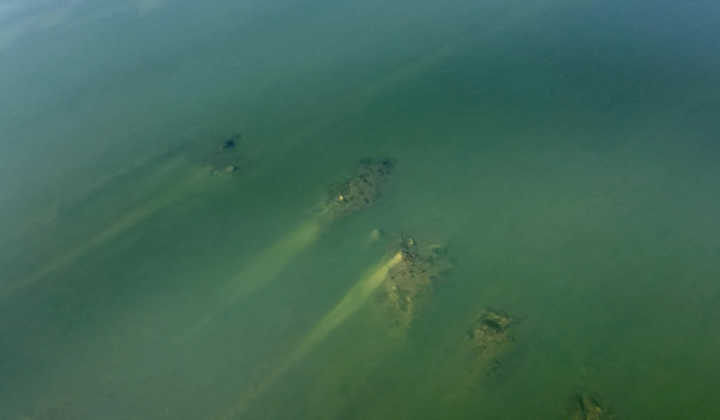
The ruins of the Constantine Bridge revealed by the Danube's low water levels

Engineering Marvel: The Ruins of a Roman Empire Bridge on the Danube
According to НВ — Техно: On August 12 at 09:30, information was published that due to the low water levels of the Danube near the ancient city of Ulpia Oescus, the ruins of the ancient Roman bridge of Constantine became visible. Archaeologists from the Regional Historical Museum in Pleven documented the supports of this significant structure, which was built under the orders of Emperor Constantine the Great.
Historical Significance of the Bridge
The bridge, which was over 2 kilometers long, was opened on July 5, 328, and is considered the first bridge in history to cross the Danube. It connected Ulpia Oescus with Sucidava in what is now modern Romania. The width of the bridge varied from 5 to 6 meters, and the supports were located approximately 30 meters apart. The bridge had a stone foundation and a wooden superstructure but was destroyed around 367 AD. There is a hypothesis that it was dismantled by the Romans to prevent the invasion of hostile tribes into the territory of the empire.
Archaeologists note that a significant portion of the supports is now on the Romanian bank due to changes in the riverbed. Pavel Popov, one of the archaeologists, stated:
'At the current low water level, these parts of the foundations have again become close to the water's surface and clearly outline the line along which the bridge ran.' Pavel Popov
He also added: 'A significant portion of the supports is now on the Romanian bank, as the riverbed has changed. The ancient bank nearly 1700 years ago was likely almost 400 meters further north.'
Furthermore, the record heat on the Danube revealed over 200 Nazi ships that were sunk in the fall of 1944. These ships were deliberately sunk to slow the advance of Soviet troops. The wreckage of the Nazi vessels has become the most exposed in over 80 years. 'Most likely, the Romans themselves dismantled the bridge to prevent the invasion of these barbarians into the territory of the empire,' concluded Pavel Popov.
Thus, the low water levels of the Danube not only open new opportunities for exploring history but also remind us of the significant architectural achievements of ancient Rome, which remain important for our understanding of the past. The discovery of the ruins of the Constantine Bridge is not just an intriguing archaeological find but also a testament to the complex historical processes that have taken place in these lands. This discovery may stimulate further research and draw attention to the preservation of cultural heritage in the region.

Read also