How Clear Work Objectives Boost Productivity and Empower HR to Make Smarter Staffing Decisions

The Crucial Role of Clear Work Goals in Business Success
According to AIHR: In today’s fast-paced business environment, having well-defined work objectives is essential for enhancing employee productivity, engagement, and retention. A Gallup study reveals that only 46% of U.S. employees fully understand what is expected of them at work, highlighting a widespread need for structured goal-setting systems that benefit both individuals and organizations.
A work goal is a precise, measurable outcome with a set deadline, agreed upon by both managers and employees. Research from McKinsey & Company shows that companies prioritizing employee performance are 4.2 times more likely to outperform their competitors. The widely recommended SMART framework guides effective goal-setting by emphasizing that goals should be Specific, Measurable, Achievable, Relevant, and Time-bound.
- Specific
- Measurable
- Achievable
- Relevant
- Time-bound
For example, a SMART goal could be to reduce the hiring time for engineers from 45 to 30 days by the end of Q2.
Streamlining the Goal-Setting Process
HR departments play a pivotal role in managing the goal-setting process by defining formats, timelines, and review schedules to ensure consistency and accountability. Tracking these objectives also supports HR in making informed decisions about compensation, promotions, and employee development. Examples of practical work goals include:
- Increasing qualified demos from 12 to 20 per month by the end of Q3
- Cutting monthly reporting time from 8 to 3 hours within 60 days through automation
- Raising customer satisfaction scores from 78% to 90% over 90 days
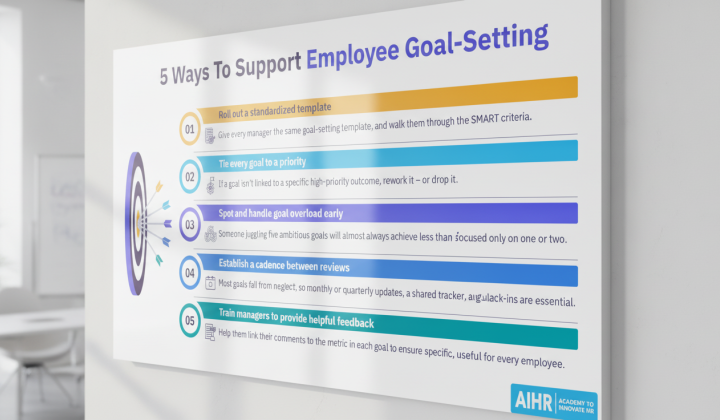
To assist managers in setting effective goals, HR should implement standardized templates, align objectives with business priorities, avoid overloading employees with too many targets, establish regular check-ins, and train managers to provide constructive feedback. Sample achievable goals include:
- Conducting bi-weekly one-on-one meetings with each team member for two quarters, documenting one development action per meeting
- Reducing voluntary employee turnover from 18% to below 10% by year-end
- Automating three repetitive manual tasks by the end of Q3, saving the team at least 10 hours monthly
- Decreasing onboarding time for new hires from 5 to 3 days within 90 days
In conclusion, clearly defined and regularly monitored work goals are fundamental to an organization’s success. Establishing a SMART-based goal-setting process and supporting HR with best practices significantly enhances employee performance and strengthens a company’s competitive edge. As market conditions continue to evolve rapidly, adapting through effective goal management becomes a critical challenge for businesses worldwide.
Understanding how to effectively address employee productivity challenges is crucial for any organization aiming for success. Implementing clear work objectives is just one aspect of a broader strategy. To explore additional methods that can enhance workforce efficiency, consider the seven actionable steps recommended by HR professionals to tackle productivity issues effectively.

Read also