Trust in Ukrainian Volunteers Reaches 80% as War Enters Its 12th Year

The State of Ukraine’s Civil Society
According to Главком: Ahead of the Ukraine Recovery Conference in Gdańsk, Poland, the executive director of the civic organization ISAR Ednannia gave an interview discussing the condition of Ukrainian civil society twelve years into the war. He noted that Ukrainians clearly understand what it means to rely on foreign aid, and that many services currently provided by organizations should actually fall under the state’s responsibility.
As of April 2025, nearly 107,000 civic organizations and about 33,000 charitable foundations were registered in Ukraine. The estimated total number of non-profit legal entities in the country is 140,000, but only about 5–7% of registered NGOs are active. The share of functioning non-profit organizations reaches a maximum of 30% (25,000–35,000). Trust in volunteer organizations rose from 64% in July 2021 to 80% in February–March 2025. Trust in civic organizations also improved over the same period, climbing from 47% to 61%.
Funding and the Role of the Third Sector
Support for the military and veterans is the primary focus for approximately 30% of civic organizations, while 20% work on assistance for vulnerable populations and educational initiatives. Psychological support, mental health, and recovery are addressed by 15% of NGOs, and youth issues and social services by 10%. Until 2022, 3,700–4,100 civic and 500–700 charitable entities were registered each year, but in 2023 that figure jumped to 8,000–9,000 organizations annually.
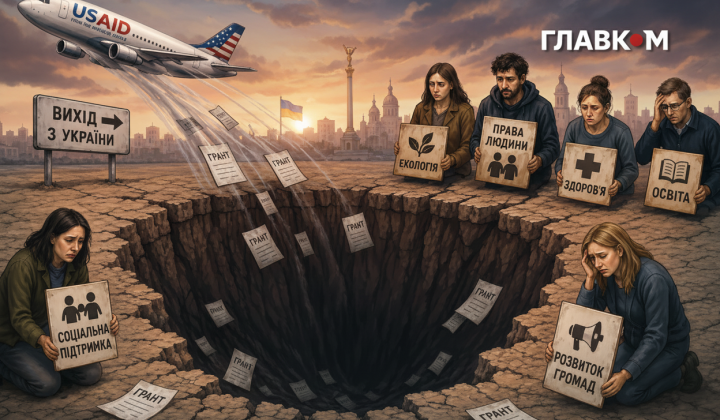
The funding landscape for non-governmental organizations shifted significantly after USAID suspended its support. By the end of 2024, USAID was financing 39 humanitarian and development programs totaling $4.28 billion, and in 2022 humanitarian aid alone exceeded $1 billion. Civil society losses due to USAID’s withdrawal are estimated at 30–35%, with some studies putting the figure as high as 57%. Between 40% and 45% of NGOs have felt negative effects from USAID’s exit.
In 2022–2023, donations were a funding source for 69% of organizations, but by 2025 that share had dropped to 46.1%. International technical assistance programs now account for 25.4% of civil society organizations’ budgets. The localization of aid in Ukraine stands at roughly 5–7%, although one study suggests it was as low as 0.07%.
The third sector also plays a vital role in reconstruction. In 2022–2023, 90% of civil society organizations (CSOs) wanted to take part in rebuilding efforts, and by 2025, 57% of CSOs considered themselves active participants in recovery. However, only 10–15% of that initial 90% had the necessary skills for reconstruction work. Up to 200 representatives from the civic sector are expected to attend the conference scheduled for 2026.
This analysis highlights shifts in the structure and functions of Ukraine’s civil society as it adapts to new challenges and realities shaped by the war and the provision of foreign aid.
The rise in new organizational registrations and growing public trust point to increased civic engagement and a societal readiness to contribute to the country’s recovery. Yet, with international donor funding declining, ensuring the sustainability and effectiveness of non-governmental organizations in Ukraine remains a key challenge.
As the trust in volunteer organizations continues to rise amidst ongoing challenges, the situation for fundraising efforts remains precarious. In light of recent warnings from experts like Serhiy Prytula, who highlighted the significant decline in volunteer fundraising in 2026, understanding the evolving dynamics of civic engagement is crucial. For more insights on this pressing issue, see how the landscape for volunteer support is changing in our detailed report on the future of volunteer fundraising.

Read also