Russia's Economy in a 'Negative Equilibrium': Why Military Spending Cannot Be Its Savior

The Russian Economy: Challenges and Prospects
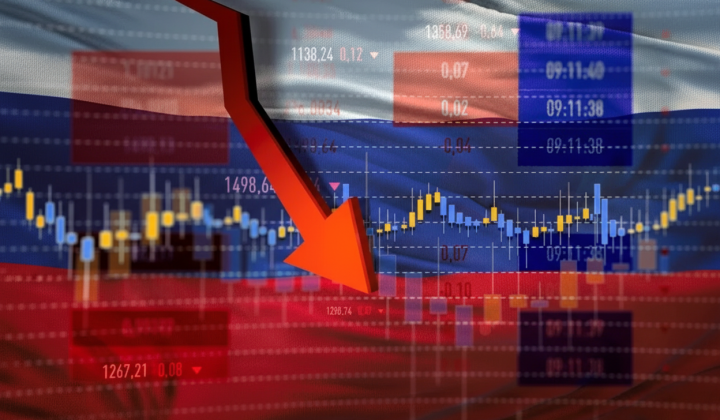
According to Главком: Experts warn that the Russian economy is stuck in a 'negative equilibrium,' a state resulting from its division into military and civilian sectors. This situation is characterized by falling export revenues, budget shortfalls, and the impending exhaustion of the military spending stimulus, which is projected to occur by 2026. Consequently, the defense sector is unlikely to rescue the nation from its mounting economic difficulties.
Data shows that Russia's economy grew by a mere 1% in 2025, a significant slowdown from previous years. While the country's total output has increased by 18.3% over the last three years, expert Oleksandra Prokopenko notes that this growth was almost entirely driven by the military-industrial complex. This lopsided development highlights the economy's deep structural problems. The primary factors now constraining economic development are:
- the collapse of oil prices
- a demographic crisis
- the ongoing impact of Western sanctions
The Economic Outlook for 2026
By 2026, signs began to emerge that the economic boost from military expenditures was running out, raising serious concerns about future growth. Prokopenko describes the situation as an economy that
“consumes its own muscle tissue for energy,”
and compares Russia's predicament to altitude sickness:
“the longer you stay at that height, the worse it gets, regardless of rest”
(Oleksandra Prokopenko).
Russia's economic structure is now split into two distinct 'metabolic systems.' The first encompasses military and related industries, while the second includes private businesses, small enterprises, and consumer sectors. This stark division is a direct consequence of the Kremlin's policy priorities. Given the current challenges, the state of these two systems requires urgent attention, as over-reliance on military spending risks severe future economic consequences.
Considering these factors, Russia's economic situation continues to deteriorate, with negative effects already being felt by the population and the business environment. Military expenditures, once a driver of growth, now threaten to stifle the development of the civilian sector, underscoring the urgent need to find new paths toward economic stabilization. This dynamic is a classic case of 'guns versus butter,' where prioritizing military production comes at a direct cost to living standards. Experts are calling for a fundamental rethinking of economic policy to avoid further decline and ensure more balanced development across all sectors.

Read also