Western Defense Industry’s Core Flaw, According to Former NATO Supreme Commander in Europe

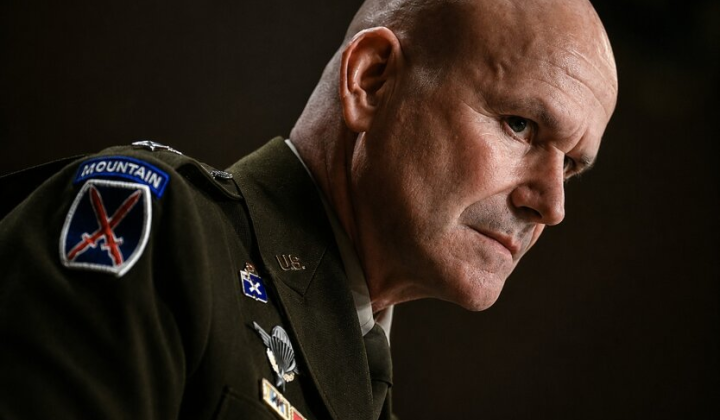
Interview with General Christopher Cavoli
According to ХВИЛЯ: General Christopher Cavoli, former Supreme Allied Commander Europe (SACEUR) and head of U.S. European Command (EUCOM), recently sat down with the podcast Boots on the Ground. He discussed the weaknesses of the Western defense industrial base, the scale of the war in Ukraine, Russian President Vladimir Putin’s objectives, nuclear risks, and his own shift into private equity.
Cavoli, who spent 38 years in the U.S. Army, served as the 20th SACEUR-the first being Dwight Eisenhower-and led EUCOM from 2022 to 2025. He took command just five days after the NATO summit in Madrid in June 2022, which was five months into Russia’s full-scale invasion of Ukraine. Under his leadership, the U.S. and NATO coordinated aid to Ukraine, including deliveries of ammunition and military equipment.
Defense Capabilities and Challenges
Cavoli stresses that U.S. and NATO production capacity was designed for peacetime, and 'we simply lacked the ability to produce the volume of equipment and ammunition that a major modern war demands.' He notes that forces were optimized for a different type of conflict, one 'literally the opposite of what is needed to fight a large-scale conventional war.' According to his calculations, rearming the alliance would require 3.7% of combined GDP over ten years-3.5% for baseline defense and an additional 1.5% for training, logistics, and infrastructure.
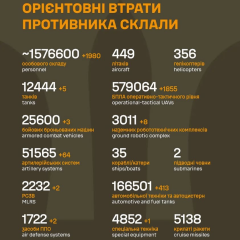
Regarding the war in Ukraine, Cavoli points out that Russia has lost over 4,000 main battle tanks. He argues, 'There is good reason to believe that in that war, our military skill was quite solid, but our industrial power was fantastic, and that’s why we won.' He also says, 'Our design philosophy gave us tremendous capabilities, but it didn’t give us the ability to produce in large quantities.' In his view, the arsenal was particularly short on cheap, mass-produced weapons.
Cavoli believes that in the short term, Russia’s goal is 'to subdue Ukraine and deny its existence as an independent nation.' He discusses Russia’s historical geography, noting that 'Russia historically has had no real natural borders-no major rivers or mountain ranges,' which creates open corridors like the Smolensk-Brest Gates. Additionally, he remarks that nuclear threats, which once caused serious concern, 'now sound almost naive.'
In his move to the private sector, Cavoli became a partner at Valor Equity Partners. He observes that the stigma around the defense industry is gradually fading, and 'rearming the alliance cannot wait.' Cavoli also highlights the importance of investing in defense technology, mentioning his experience with a Harvard and MIT incubator for young defense-tech startups, and notes that the European Union has eased restrictions on defense investments over the past year.
Cavoli’s insights underscore the need for the West to adapt its defense capabilities to new challenges posed by Russian aggression against Ukraine. He emphasizes the urgent need for rearmament, which could shift the battlefield dynamics and affect global security. These issues remain critical as the conflict escalates and risks to regional stability grow.
As the situation in Ukraine continues to evolve, the insights of military leaders like General Cavoli become increasingly relevant. His perspective on the defense industry's shortcomings resonates with comments made by other analysts, such as Kellogg, who has characterized Ukraine as a pivotal player in Europe’s defense landscape. To explore further the implications of this ongoing conflict and its impact on European security, read more about Ukraine's vital role in the region.

Read also