Why Putin’s Regime Is Far More Stable Than Many Think, According to a Former CIA Officer

Assessing the Resilience of Vladimir Putin’s Rule
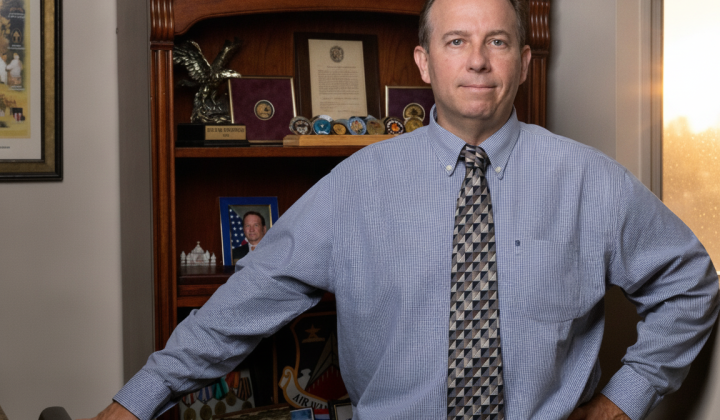
According to ХВИЛЯ: A former CIA officer, Sean Wiswesser, has challenged widespread assumptions about the fragility of Russian President Vladimir Putin’s regime. He argues that reports of its weakness and imminent collapse are misleading. According to Wiswesser, Putin’s grip on power rests on three security agencies-the FSB, Rosgvardia, and the FSO-whose loyalty is directly tied to him personally. In his view, the June 2023 mutiny led by Yevgeny Prigozhin was not an attempt to overthrow the government, but rather a symptom of infighting among Kremlin elites.
Wiswesser points out that Putin faces no real threat due to the absence of mass protests, combined with the total control exercised by intelligence services and state propaganda. He notes that the last truly significant protests in Russia occurred around 2012, and the demonstrations in support of opposition figure Alexei Navalny in January and March 2021 had little lasting impact.
“You shouldn’t confuse infighting among the Kremlin elite-where security forces squabble over power-with any weakness on Putin’s part or the regime itself,” Wiswesser emphasizes.
What Comes After Putin?
According to the analyst, after Putin’s death, power will most likely shift to the security forces rather than following constitutional procedures. Wiswesser believes that
“these are not services. They are corporations with enormous power and billions of dollars, and these positions never transfer to others.”
He also remarks that “long lines of Russians returning from vacations in Crimea do not mean they are ready to take to the streets against the FSB.”
It is worth noting that Putin has been in power for 26 years, making him one of Russia’s longest-serving rulers, after Catherine the Great and Joseph Stalin. The FSB, Rosgvardia, and FSO command substantial resources:
- The FSB has 400,000 personnel, including 200,000 border guards;
- Rosgvardia numbers roughly 300,000;
- The FSO has about 30,000 guards.
Wiswesser also shares his perspective: “I genuinely know how Russian intelligence officers think. And unfortunately, they are now the ones running the country.” He stresses that Prigozhin’s rebellion posed no real danger to Putin, saying, “The distance to Moscow says nothing about how close Prigozhin came to overthrowing the regime. He never intended to do that.”
Overall, Wiswesser’s analysis suggests that Putin’s regime remains stable despite internal elite conflicts, and that the main threats to it remain under control.
This assessment highlights that, contrary to rumors of potential weakness, Putin’s authority is solidly backed by powerful security institutions. With no mass protests and a tightly managed information environment, the regime can withstand internal disputes. This indicates that Russia’s political situation is likely to remain stable, at least in the near term, as long as the core mechanisms of population control stay effective.
As the world contemplates the future of Russia, understanding potential scenarios is crucial. While some analysts predict stagnation or a return to authoritarianism, the dynamics within the security forces could shape the nation’s trajectory significantly. For a deeper insight into how Ukraine is preparing for various outcomes in a post-Putin landscape, you can explore the detailed analysis in this article on post-Putin scenarios.

Read also