Four Potential Futures for Iran: From Collapse to Stalemate

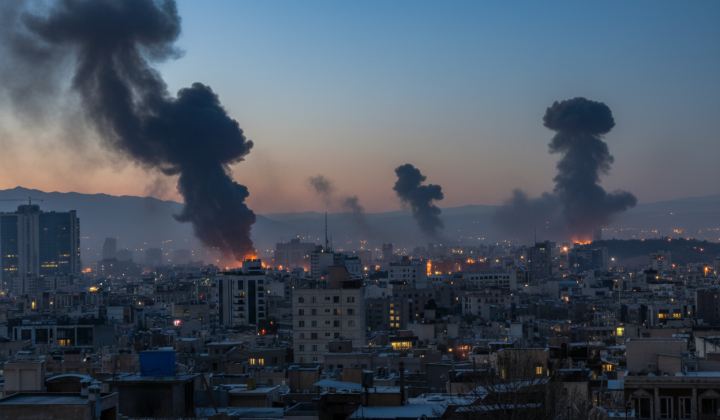
Potential Paths for Iran's Future
According to ХВИЛЯ: International policy expert Ilia Kusa, speaking on political analyst Yuriy Romanenko's broadcast, outlined four possible scenarios for Iran following the death of Supreme Leader Ali Khamenei. Kusa described a range of outcomes, from the complete disintegration of the state and top-down reforms to a consolidation of power or a protracted stalemate, often referred to as the 'Venezuela option'.
Kusa noted that Khamenei's death marks a pivotal moment, signaling a new phase in international politics.
"We are discussing the assassination of a head of state. In standard international practice, one state killing the leader of another is considered a taboo and poor form, yet we see the United States has crossed that threshold,"
the expert emphasized. He further stated that events in Iran could precipitate a forceful change in government, either through external intervention or strikes amid internal protests.
Four Scenarios for the Conflict's End
Kusa detailed four potential conclusions to the conflict in Iran:
- The end of the Islamic Republic project via external intervention or internal rebellion (the Syrian scenario).
- Reforms from above, leading to a managed transition of power.
- A strengthening of the current regime, societal mobilization, and the rise of radicals.
- A frozen conflict with no clear victor (the Venezuela option), resulting in a stalemate.
The expert added that the war could result in a forceful power shift, which he described as
"leading to a negotiated change in government, a managed transition."
He stressed that the situation is reaching an impasse, with the United States, Israel, and Iran pulling back from confrontation, effectively freezing the conflict until the next social explosion within Iran, where internal power struggles continue unabated.
Kusa also commented that the modern tactics employed by states constitute asymmetric warfare, aimed at inflicting maximum damage on an external enemy to force them to the negotiating table.
"Their actions are designed to maximally widen the escalation, so to speak, to draw in as many players as possible, increasing the costs until everyone is exhausted and the price becomes so high that they begin to exert pressure,"
he noted.
Consequently, the situation in Iran remains tense and unpredictable, with potential outcomes that could drastically alter the region's political landscape. The death of Ali Khamenei may act as a catalyst for new political processes both domestically and internationally, underscoring the critical importance of monitoring developments in this strategically vital nation. Iran's role as a key regional power and its influence on global energy markets make its internal stability a matter of international concern.

Read also