EU Considers Slashing €1.5 Billion in Funding to Serbia Over Democratic Concerns

Democratic Deficits in Serbia
According to Главком: The European Commission is weighing a potential reduction of up to €1.5 billion in funding for Serbia. This review is driven by significant concerns regarding the country's democratic standards, judicial independence, media freedom, and its foreign policy alignment. Serbia holds candidate status for EU membership, but its path to accession is now under strain. The upcoming opinion from the Venice Commission, expected by late April, is a key factor in this assessment.
EU Commissioner for Enlargement, Márta Kacs, highlighted the troubling situation:
“From laws that undermine the independence of the judiciary, to the crackdown on protests and interference with the work of independent media.”
These issues could prove decisive for future EU financial support. Serbia has already received over €586 million in EU grant aid between 2021 and 2024, but unlocking the additional €1.5 billion is contingent on implementing necessary reforms.
Foreign Policy and Economic Cooperation
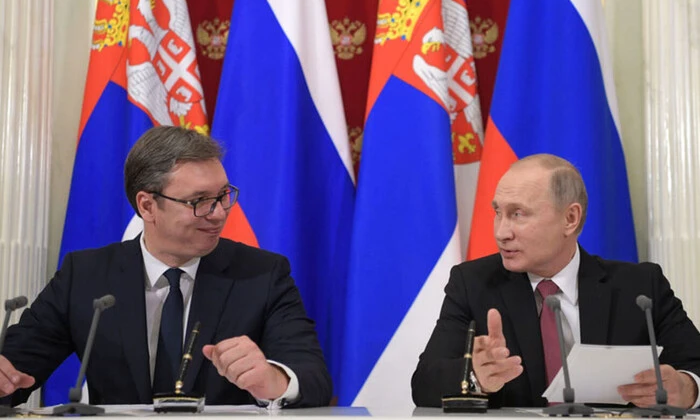
Serbia's foreign policy has also raised questions. President Aleksandar Vučić did not attend the EU-Western Balkans summit in December 2025. Furthermore, in a joint article with Albania's president in February, he suggested pursuing deeper economic cooperation as an alternative to full EU membership. Four senior EU officials are now actively engaged on the enlargement question. Serbia's ambassador to the EU and chief negotiator, Danijel Apostolović, has sought to reassure, stating, “it will not come to that.”
The primary concerns for the EU are:
- Legislation that weakens judicial independence;
- A crackdown on public protests;
- Interference in the operations of independent media;
- A reluctance to align its foreign policy with the EU;
- Statements perceived as anti-European.
Adding to the tension, Serbia has agreed with Russia to extend a key gas supply contract for an additional three months, a move that could further complicate its relationship with the European Union. This decision highlights the balancing act Serbia faces between its EU aspirations and other geopolitical partnerships.
In light of these developments, the future of EU funding for Serbia remains uncertain. The findings of the Venice Commission are likely to be a critical factor in shaping the EU's subsequent policy towards the country. The situation underscores the complex challenge Serbia faces in reconciling its internal political dynamics with the stringent democratic criteria required for European integration.
As the EU grapples with Serbia's democratic challenges, it is also considering major reforms in its foreign policy decision-making process. The ongoing debate about potentially ending the unanimity rule in foreign policy, spurred by the Ukraine crisis, highlights the urgency for EU member states to adapt to new geopolitical realities. For a deeper understanding of these discussions and their implications for EU member relations, read more about the debate on foreign policy reforms.

Read also