EU rejects joint army proposal over NATO compatibility concerns

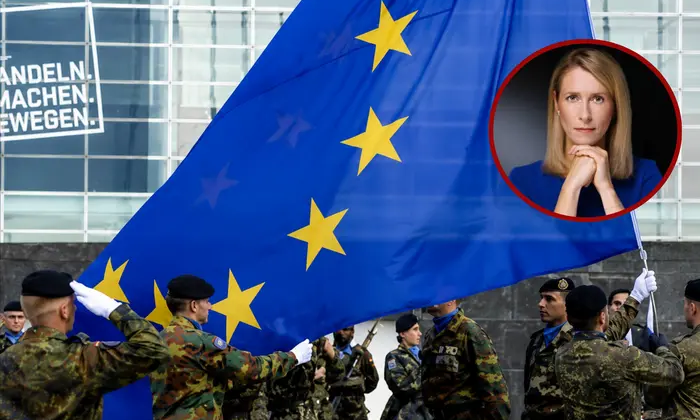
Kaja Kallas outlines stance on EU military integration
According to Главком: During a press conference on June 8 following an informal gathering of EU defense ministers in Cyprus, the European Union's High Representative for Foreign Affairs and Security Policy, Kaja Kallas, made clear her opposition to establishing a unified EU army. She argued that defense remains a national responsibility and warned that such a move could undermine coordination with NATO. Kallas emphasized that
“defense is a national competence. We are trying to encourage member states to act more collectively, because when they are strong, the European pillar within NATO is also strong.”
Ukraine support and new sanctions package
The ministerial meeting also addressed ongoing assistance to Ukraine amid its conflict with Russia. Kallas reported that sanctions imposed on Moscow have cost Russia between $1.2 trillion and $1.5 trillion. Her team has prepared over 80 new sanctions targeting individuals and entities linked to Russia's military-industrial complex. Additionally, €6.6 billion from the European Peace Fund was unlocked after Hungary lifted its veto.
Discussions also covered funding for drone procurement, including an initial tranche of €5.9 billion from a €90 billion credit facility. Kallas stated that the time for negotiations between Russia and Ukraine has not yet arrived, and the EU remains committed to a policy of strategic patience. She cautioned against pressuring Kyiv into concessions, noting that
“if you hand over your army to NATO, you cannot use it elsewhere. You cannot just create another one-a parallel one. That is why it is crucial not to build structures that create confusion.”
In summary, the EU's defense policy continues to navigate a complex landscape, balancing national sovereignty with collective support for Ukraine amid the crisis. Kallas's remarks underscore the bloc's commitment to preserving member states' autonomy in defense matters, which may affect strategic alignment with NATO. At the same time, robust backing for Ukraine and the introduction of fresh sanctions against Russia highlight the EU's determination to counter ongoing aggression and maintain regional stability.
As the EU grapples with its defense policy, Kaja Kallas also outlined the conditions for potential negotiations with Russia. This context highlights the delicate balance the EU seeks to maintain between national defense responsibilities and collective security commitments, particularly in light of ongoing tensions in Eastern Europe.

Read also