European Far-Right Parties Reassess Ties to Trump Following Orbán's Defeat

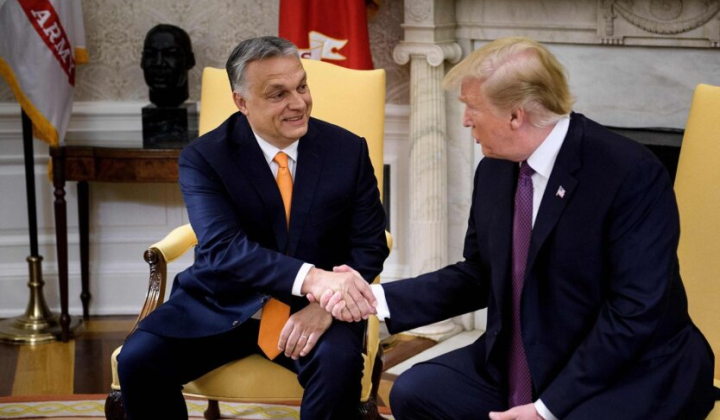
European Far-Right Parties Reconsider Their Alliances
According to ХВИЛЯ: Following Viktor Orbán's recent election loss in Hungary, far-right parties across Europe are reassessing their connections to Donald Trump's political orbit. Prominent figures are now seeking to distance themselves from the former U.S. president, whose unpopularity in Europe and the associated political risks were highlighted by the Hungarian outcome. This shift reflects a broader strategic recalibration within Europe's nationalist movements.
Viktor Orbán's defeat in Hungary served as a critical warning signal for other far-right parties in Europe. In the wake of these events, the main Dutch nationalist party dissolved in 2025, and Geert Wilders exited the governing coalition in the Netherlands. These developments underscore the mounting challenges facing far-right politicians, compelling them to rethink their strategies.
Military Actions and Political Calculations
The Trump administration continues to pursue active military engagements, including the war against Iran and operations in Venezuela. However, despite Trump's attempted show of support for Orbán during the elections, his popularity in Europe remains deeply questionable. Theo Francken, Belgium's Minister of Defence, pointed out that
'MAGA really needs to stop campaigning internationally, because everyone and everything they support loses elections.'
In light of these events, major far-right parties such as:
- France's National Rally,
- Germany's AfD,
- Italy's Brothers of Italy,
- and Belgium's New Flemish Alliance
now face the urgent task of convincing voters of their ability to protect economic and social interests. As noted by Martha Lorimer, a politics lecturer at Cardiff University,
'Trump has become a liability for far-right parties. They realize Trump is not particularly popular with European voters, so they have almost nothing to lose by distancing themselves from his politics.'
Furthermore, France's upcoming presidential election in 2027 is likely to influence the trajectory of far-right parties in the region. Their primary challenge is to prove to voters that they can not only defend their interests but also potentially serve as competent rulers. As Louis Aliot, Vice-President of the French National Rally party, stated, 'Everyone must defend their national interests, and our interests do not always align with those of the United States.'
Consequently, Orbán's defeat may act as a catalyst for a strategic overhaul among Europe's far-right, as they attempt to adapt to new conditions and a shifting political landscape. These changes could impact future elections and political alliances across the continent, as parties seek to boost their appeal by shedding unpopular associations and exploring new policy approaches. The processes unfolding in Hungary may serve as a cautionary example for other nations where far-right parties are striving to establish themselves amid a volatile political climate.
As the political landscape shifts in Hungary, the implications of Orbán's defeat extend beyond national borders. Understanding how this outcome could affect relations within the EU and its approach to Ukraine is crucial. For a deeper analysis of the potential consequences of this political change, see our article on Hungary's evolving role in European politics.

Read also