Rare Quantum Phase Transition in Erbium Tritelluride Is Detected by MIT Physics Researchers


How Two Electronic Phases Coexist in Erbium Tritelluride
According to НВ — Техно: On August 20, 2023, a team of physicists at the Massachusetts Institute of Technology published a study showing that two distinct arrangements of electrons can arise simultaneously in the rare-earth compound erbium tritelluride. The results appeared in Nature Physics. This unusual dual organization reflects the complex quantum processes taking place inside the material.
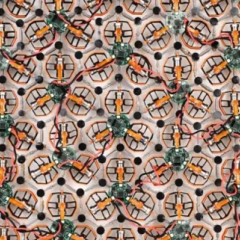
The experiments revealed that cooling samples to -8 °C makes electrons organize into a charge-density wave. Further cooling to -113 °C causes a second wave pattern to form at a right angle to the first, resulting in an atomic-level electronic checkerboard. To examine this behavior, the researchers cooled the specimens to roughly -230 °C and then destroyed the electronic ordering using two synchronized laser pulses.
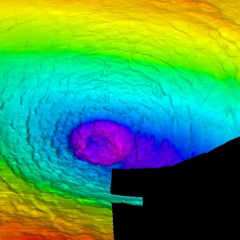
After the disruption, the dominant charge-density wave regenerated uniformly throughout the material, while the weaker secondary phase appeared in isolated regions, similar to ice crystals growing in water. This pattern points to a rare quantum phase transition of the first kind. The illustration accompanying the study was created by Xinyue Lu, and the paper carries DOI 10.1038/s41567-026-03382-5.
The MIT investigation opens fresh opportunities for studying electron phase transitions in materials that could influence the development of quantum technologies and next-generation electronic devices. Understanding how electrons interact in such complex systems may ultimately help engineers build more efficient materials, with potential benefits for computing and energy applications.
In light of these groundbreaking findings, it is worth noting that researchers have also made significant strides in observing electron behavior in other complex materials. For instance, a recent study has successfully captured the motion of electrons within a Wigner crystal, providing crucial insights into quantum phenomena. To explore this fascinating development, you can read more about it here.

Read also