IAEA Chief Warns Nuclear Catastrophe Risk Has Reached Cold War Levels

NPT Review Conference: Stakes and Challenges Ahead
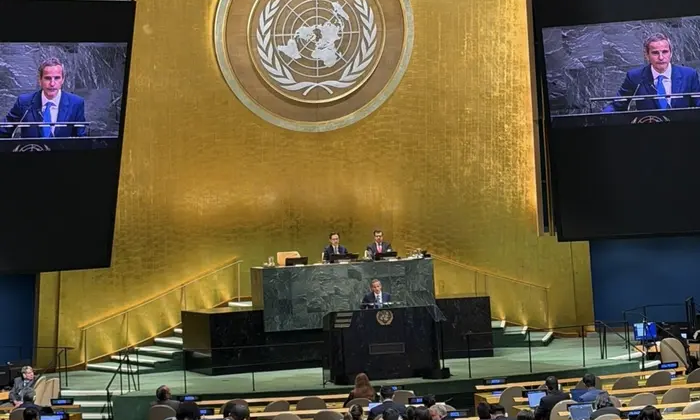
According to Главком: Rafael Grossi, Director General of the International Atomic Energy Agency (IAEA), has underscored the significance of the upcoming 11th Review Conference of the Treaty on the Non-Proliferation of Nuclear Weapons (NPT), set to take place in New York. According to Grossi, the danger of a nuclear disaster has escalated to heights not seen since the Cold War era. He pointed out that the multilateral frameworks designed to preserve peace and security are now under severe strain due to intensifying global conflicts.
The NPT, which has been in force for over fifty years, brings together 191 nations. Grossi also highlighted that while nuclear science and technology offer substantial benefits to humanity, the field currently faces a host of serious challenges. The 2026 NPT Review Conference is scheduled to run from April 27 to May 22, 2026, in New York.
Geopolitical Tensions and Nuclear Safety Concerns
Recent developments reveal large-scale construction of strategic nuclear facilities in China's Sichuan province. As Beijing expands its arsenal, an entire settlement was reportedly demolished, with residents told their eviction was due to state secrets. Amid escalating tensions involving the United States, Israel, and Iran, the World Health Organization (WHO) has ramped up preparations for a potential nuclear incident.
Grossi stressed that 'this is a very particular moment,' noting that 'war has returned to Europe and the Middle East.'
The growing risk of a nuclear catastrophe, as highlighted by Grossi, reflects the complex geopolitical landscape unfolding across the globe. Heightened friction among major powers, particularly surrounding nuclear programs, poses a serious threat to international security. The 2026 NPT Review Conference may serve as a critical platform for addressing these urgent issues and pursuing strategies to reduce nuclear dangers.
As the global landscape becomes increasingly volatile, the implications of nuclear advancements extend beyond terrestrial borders. The ongoing competition for space supremacy highlights a new dimension of security concerns, with nations like Russia and China enhancing their military capabilities in orbit. Understanding these developments is crucial in grasping the broader context of international tensions and their potential impact on nuclear safety.

Read also