Giant Kangaroo Species Survived in New Guinea Until 6,000 Years Ago

New Findings on the Giant Kangaroo Protemnodon Tumbuna
According to НВ — Техно: July 12, 09:02
Recent research led by Dr. Lucas Kungulos from the University of Western Australia suggests that the extinct giant kangaroo species Protemnodon tumbuna persisted in northern New Guinea until roughly 6,000 years ago. This discovery challenges earlier evidence that all seven species of Protemnodon disappeared from Australia around 41,000 years ago. The findings offer new insight into the survival of large marsupials in isolated environments.
The study relies on fossil remains that confirm the presence of Protemnodon tumbuna across different time periods, including:
- At the Nombe rock shelter, where fossils indicate the animal lived as recently as 22,000 to 27,000 years ago;
- In Lachitu Cave, where a tooth dating back at least 18,000 years was discovered;
- Remains from Taora, uncovered during archaeological digs in 2004, which show the species existed as late as 6,800 years ago.
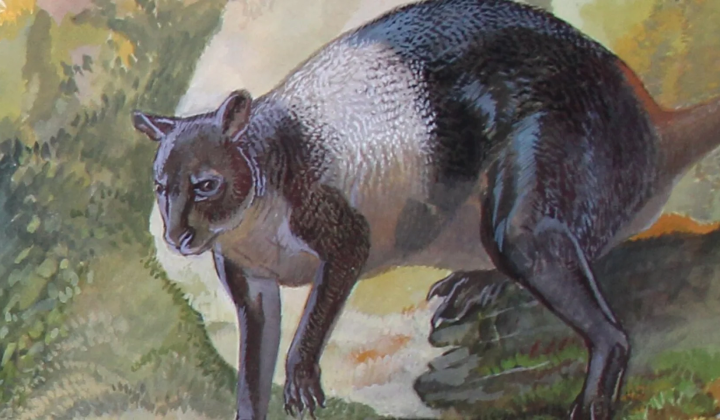
Protemnodon tumbuna was first documented by Western science in 1983. This species was roughly the size of a modern red kangaroo and moved primarily on all fours. Earlier estimates placed its extinction between 20,000 and 50,000 years ago, but the new evidence points to a much more recent survival. The average home range of a Protemnodon individual from Central Queensland was about 11.6 km², highlighting the diversity among these giant kangaroos.
Implications for Studying Ancient Species
Dr. Kungulos' research not only broadens our understanding of kangaroo evolution but also opens fresh avenues for studying ancient species. In 2024, scientists from Flinders University in Australia announced the discovery of three new species of ancient giant kangaroos, including Protemnodon viator, which was twice the size of modern kangaroos and capable of fast, long-distance jumps. This work underscores the need for continued research and a revision of current theories regarding the extinction of prehistoric species.
This kangaroo outlasted its own species by millennia (Photo: Peter Schouten).
These new discoveries highlight the complexity of evolutionary paths among ancient species and point to potential shifts in how we understand the ecosystems of Australia and New Guinea. The study emphasizes the importance of ongoing archaeological excavations and paleontological research to uncover fresh evidence about ancient species, which could lead to a rethinking of extinction timelines. Additionally, these insights may inform conservation efforts for modern species in the face of climate change and human environmental impact.
As researchers continue to uncover the mysteries of ancient species, the recent findings on Protemnodon tumbuna highlight the significance of ongoing paleontological studies. This is reminiscent of the recent discovery of a new sauropod dinosaur in Thailand, which sheds light on the diversity of prehistoric life. To learn more about this exciting revelation, explore the details in our article on the new dinosaur species found in Thailand.

Read also