Computer tomography of the dodo skull revealed its sensory world

Secrets of the extinct dodo
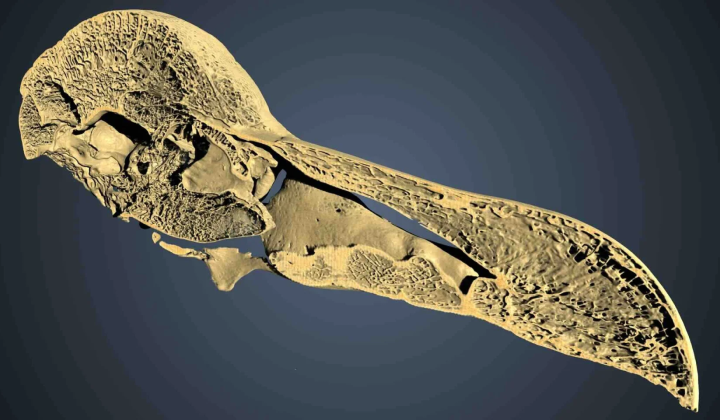
According to НВ — Техно: Computer tomography of the skull revealed the sensory world of the bird. Scientists from the University of Lethbridge in Canada and the Natural History Museum of Denmark conducted a computer tomography scan of one of the two preserved complete dodo skulls. The study showed that the bird had a flexible daily rhythm, a developed sense of smell, and heightened tactile sensitivity in its beak, and it was no less cognitively capable than modern columbiformes.
Research methods
The research was conducted by an international group of scientists using one of the two preserved complete dodo skulls in the world. The specimen from Copenhagen underwent high-resolution computer tomography, which allowed for the creation of an accurate three-dimensional model of the extinct bird's cranial cavity. This model was compared to the second surviving skull stored at the University of Oxford.
The analysis also included comparisons with the parameters of modern closest relatives of the dodo - pigeons and doves. The results showed that the dodo had a more flexible daily rhythm, enabling it to be active at dawn and dusk. The bird possessed a more developed sense of smell compared to modern birds, and the massive upper beak of the dodo could perceive a large volume of tactile information.
The study found no signs of decreased cognitive abilities in the dodo compared to modern columbiformes. The analysis also showed a high level of evolutionary adaptation of the dodo to its isolated island life. The results of this research will be presented in new permanent galleries of the Danish Natural History Museum, the opening of which is scheduled for 2027.
This study is an important contribution to the study of bird evolution, as it allows for a better understanding of extinct species' adaptations to their environment. Revealing the sensory characteristics of the dodo may provide new insights into its behavior and way of life, as well as the ecological conditions in which it lived. Continuing research in this field may help in understanding the mechanisms of evolution and the survival of birds in changing environmental conditions.
- The importance of understanding adaptations of extinct species.
- New insights into the behavior and lifestyle of the dodo.
- Significance for modern birds in vulnerable ecosystems.
As researchers continue to uncover the mysteries of extinct species, the recent findings about the dodo's sensory capabilities highlight the complex adaptations of island fauna. Similarly, another fascinating discovery reveals that a massive kangaroo species thrived in New Guinea until just 6,000 years ago, showcasing the rich evolutionary history of isolated ecosystems.

Read also