DNA Analysis Reveals the ‘Giant Crane’ Was Actually an Oversized Gray Crane

Tracing the Origins of the So-Called Giant Crane
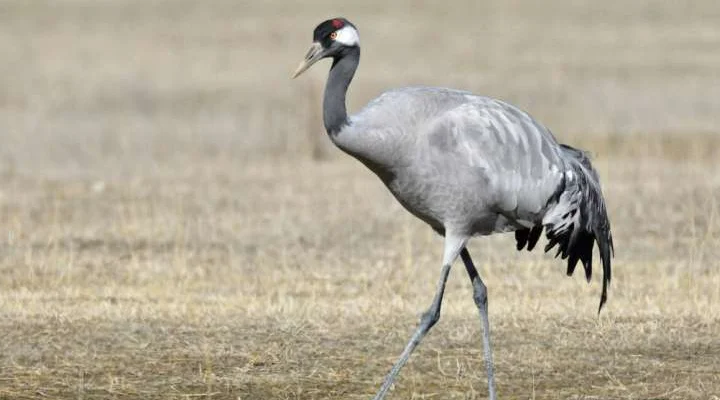
According to НВ — Техно: Researchers from Bournemouth University have overturned the long-standing belief that the giant crane was a distinct extinct species. Instead, new genetic evidence shows these large birds were actually unusually big individuals of the modern gray crane. This conclusion is based on DNA extracted from 18 ancient crane bones unearthed across England, Wales, France, Germany, and the Balearic Islands. The study was led by Dr. John Stewart, a professor of evolutionary paleoecology at Boston University, in collaboration with the Paleogenetics Center in Stockholm, Sweden.
These crane bones, dating back to the end of the last Ice Age, demonstrated that what were thought to be remains of a separate giant species actually come from larger members of today’s gray crane population. Dr. Stewart explained:
'We suspected these enormous cranes never truly went extinct but were simply larger versions of the common European gray crane.' Dr. John Stewart
The team also noted changes in crane size over time, which may be linked to human impact and environmental shifts. Dr. Stewart added:
'Our next challenge is to understand why crane sizes have decreased. We believe this is related to the draining of wetlands and changes in land use caused by humans, but further research is essential to confirm this.' Dr. John Stewart
In a related discovery from 2019, a giant penguin measuring 1.6 meters tall and weighing 80 kilograms was found in New Zealand, dubbed the “monster penguin.” Paul Scofield, senior curator at the Canterbury Museum, described it as 'one of the largest penguin species ever discovered.' This finding marked a significant advancement in the study of Southern Hemisphere avian species.
The Significance of This Research
Unraveling the true identity of the giant crane sheds light on bird evolution and their responses to environmental changes. By linking extinct and living species, scientists gain deeper insights into how human activities influence biodiversity. Moreover, this study highlights the critical role of advanced techniques like DNA sequencing in unlocking the secrets of fossil records and deepening our understanding of the natural world.
This new understanding of crane evolution adds to the growing body of research reshaping our knowledge of ancient species. Similarly, the recent findings regarding the massive marsupial Pampaluctor calibar highlight how discoveries can significantly alter our perceptions of prehistoric life in regions like South America.

Read also