Citizenship of Latvia: how to obtain and conditions for registration

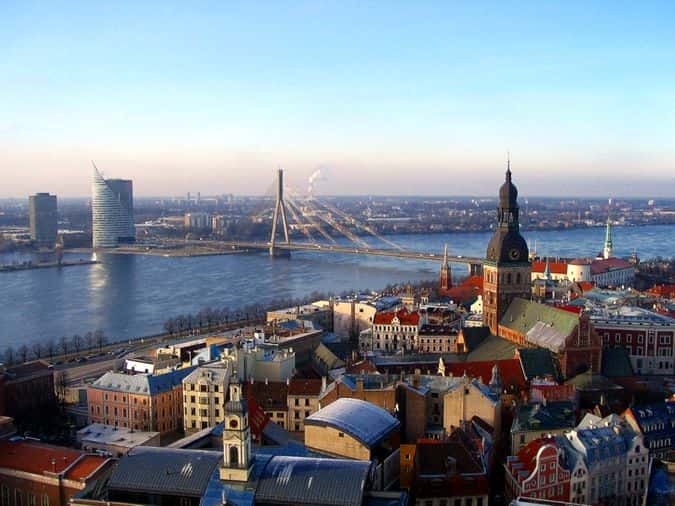
Latvia is a fairly popular country for living and working. Therefore, the question of how to obtain citizenship of Latvia and what needs to be done remains relevant.
What citizenship of Latvia provides
Citizenship of Latvia allows individuals to have full legal status as a citizen of a European Union state and to enjoy the political, social, and other rights provided by the law. At the same time, obtaining Latvian citizenship does not only involve long-term residence in the country. Separate rules are established for different categories of applicants, and the procedure depends on the basis on which a person claims civil status.
The main ways to obtain citizenship include birthright citizenship, registration of citizenship by descent, and naturalization. In each case, the requirements for the applicant, the list of supporting documents, and the application review procedure differ. For individuals without Latvian parents or confirmed Latvian descent, the most common option is naturalization. This involves residing in Latvia for a stipulated period, confirming a lawful source of income, knowledge of the Latvian language, and understanding the basics of the Constitution, history, and culture of the country.
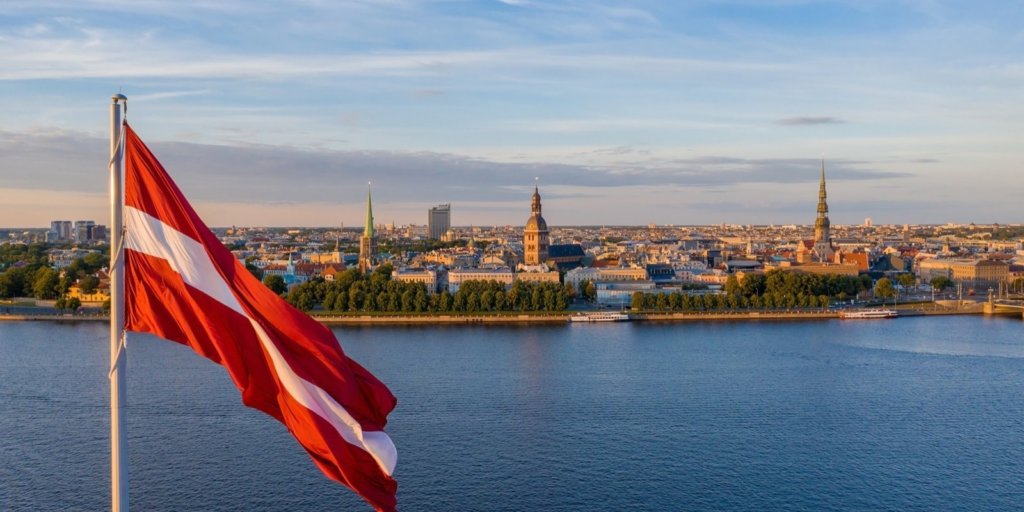
As of 2026, the general rule for naturalization requires at least five years of permanent residence in Latvia, with the possibility of documented confirmation of this period. EU citizens, European Economic Area citizens, and Swiss citizens are required to meet the five-year permanent residence period as EU citizens, while citizens of other states must have appropriate permanent residency status in Latvia. Additionally, the candidate must meet other requirements of the Citizenship Law.
It is important to consider that Latvian citizenship and the right to reside permanently in the country are different legal statuses. Having a residence permit does not, in itself, mean automatic acquisition of citizenship. After fulfilling the necessary conditions, a person submits documents, undergoes required checks, and the final decision on citizenship by naturalization is made by the Cabinet of Ministers of Latvia.
Latvian citizenship establishes a full legal connection of the individual with the Republic of Latvia. A citizen has not only the right to reside in the country without restrictions related to residence permits but also enjoys political rights that belong specifically to citizens. In particular, citizenship matters for participation in elections, access to certain governmental positions, and the realization of other rights that legislation establishes a requirement to have Latvian citizenship.
The Latvian passport also has practical significance for travel and for confirming status as a citizen of an EU member state. Through Latvian citizenship, a person simultaneously acquires EU citizenship, which is associated with certain rights in EU countries. Among them, the possibilities for free movement and residence within the European Union in accordance with EU rules are of particular importance.
Citizenship differs from temporary or permanent residence permits in that acquiring it does not require the regular renewal of residence permits. A citizen has the right to return to Latvia regardless of the duration of stay abroad. At the same time, citizen status entails not only rights but also certain legal obligations, including the necessity to comply with the legislation of the state.
For families, citizenship can also be significant in matters of children's status. The legislation provides for separate mechanisms for minors to acquire citizenship based on parents' citizenship, place of birth, and other circumstances. Therefore, in a specific family situation, it is necessary to determine the basis for acquiring citizenship separately for each individual.
Latvian citizenship should not be confused with European Union citizenship as a separate document. There is no separate EU passport instead of the national passport: EU citizenship arises as a result of holding the citizenship of a member state. Thus, an individual who receives Latvian citizenship also acquires the status of a citizen of the European Union.
Main ways to obtain citizenship
Latvian legislation provides several legal mechanisms for acquiring citizenship. The choice of a specific procedure depends not on the applicant's desire but on the actual circumstances. If an individual has a Latvian father or mother, the issue may be resolved according to the rules of citizenship by birth. If there are documents confirming Latvian descent, the procedure for registering citizenship by descent may be applicable. For other foreigners, the main path is naturalization.
The distinction between these procedures has practical significance. Naturalization requires fulfilling a number of conditions, including residence in Latvia and passing exams. In contrast, a person who already has the right to citizenship by descent does not need to undergo naturalization just to confirm the right arising from their family or historical links to Latvia.
By birth
Acquiring citizenship by birth is one of the basic ways to obtain Latvian citizenship. If at the time of birth both parents are citizens of Latvia or one of the parents is a citizen, the child may have Latvian citizenship according to the established law rules. Thus, the presence of Latvian citizenship in the father or mother is fundamentally important.
This mechanism differs from naturalization. A child does not need to live in Latvia for five years and take a language test just to realize the right associated with the parents' citizenship. The main task of the procedure is to confirm the relevant family circumstances and register citizenship.
To register, it is necessary to have documents that confirm identity and the fact of birth. In relevant cases, documents about the parents' citizenship are submitted. If the documents were issued by a foreign state, there may be requirements for their translation into Latvian and legalization depending on the issuing state and the type of document.
If along with an adult, a child under 15 years of age acquires citizenship, the documents for the child are submitted by their legal representative. For older children, separate rules regarding personal participation and application submission may apply.
Particular attention should be paid to situations when a child has or may have citizenship of another state. In this case, the issue of dual citizenship is determined according to Latvian rules regarding permissible foreign citizenships. The mere fact of being born outside Latvia does not exclude the possibility of having Latvian citizenship if there is a corresponding legal basis through the parents.
By descent
A separate mechanism is provided for individuals who can confirm Latvian descent. This is important for people whose family ties to Latvia were established several generations ago but who themselves were born or reside outside the country.
One of the key conditions is the presence of an ancestor who lived in the territory of Latvia from 1881 to June 17, 1940, within the territory defined as of June 17, 1940. In addition to the historical connection to the territory, it is necessary to confirm belonging to Latvians or Livonians and knowledge of the Latvian language at the established level.
Documentary confirmation of descent is of particular significance. The applicant may need to prove the family chain from themselves to the ancestor who meets the established requirements. For this, birth certificates, marriage certificates, change of name documents, archival documents, and other official materials are used. If the surname differs in various documents, it is necessary to have documents explaining the respective change.
In cases where documents are issued abroad, their formalities may require translation into Latvian and legalization. For documents issued in countries that have rules for exemption from legalization, corresponding exceptions apply. For example, for certain public documents from EU member states, the European Economic Area, the UK, and Switzerland, legalization is not required for use in Latvia.
For persons who acquire citizenship as Latvians by registration, there are separate rules regarding dual citizenship. Under this procedure, existing citizenship can be retained. This fundamentally distinguishes this path from some cases of naturalization, where the applicant may be required to renounce their previous citizenship.
Naturalization
Naturalization is the procedure by which a foreigner can be granted citizenship of Latvia upon fulfilling the legally established conditions. As of 2026, applications under this procedure can be submitted from the age of 15. One of the main requirements is permanent residence in Latvia for the past five years with the ability to confirm this period with documents.
Merely being physically present in the country is insufficient. Documents regarding work, study, receipt of social security, conducting economic or financial activities, and other materials that allow establishing actual residence during the specified period can be used to confirm residence.
The candidate must also have a lawful source of income. This can be confirmed by a certificate from the place of work, documents regarding pensions or social payments, a bank statement showing a positive balance, a scholarship document, and other prescribed evidence.
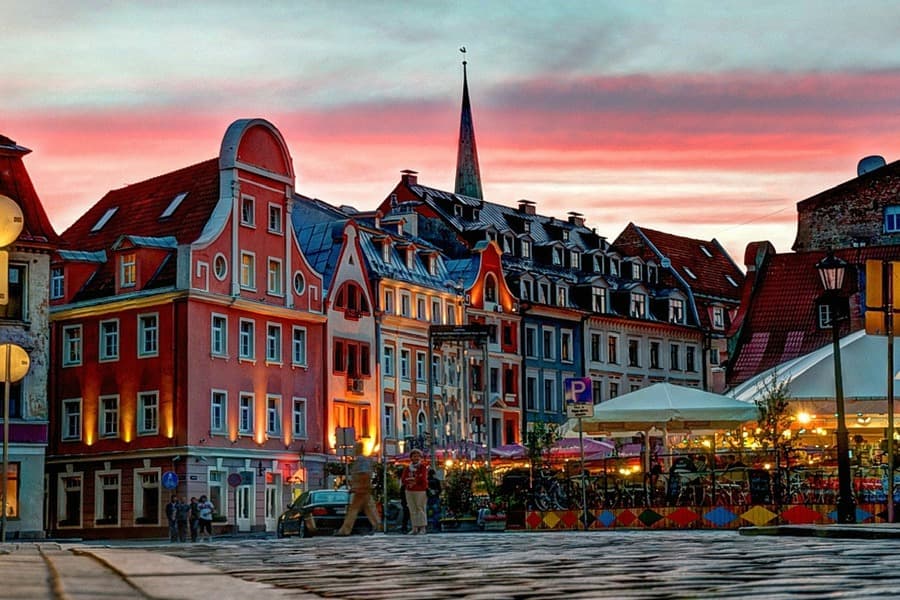
In addition, the applicant must know the Latvian language, the basics of the Constitution of Latvia, history, and culture of the country, and the text of the national anthem. Legal restrictions may apply to persons with certain convictions, links to terrorist or criminal activities, anti-state organizations, or unfulfilled obligations to the state.
After passing the necessary checks and fulfilling all conditions, the applicant makes a solemn oath of allegiance to the Republic of Latvia. The final decision to grant citizenship by naturalization is made by the Cabinet of Ministers. After a positive decision, an individual can begin processing documents for Latvian citizenship.
Who can submit an application
An individual who has a corresponding legal basis can submit an application for citizenship. For naturalization, age, duration of residence, legal status in Latvia, language knowledge, and knowledge of the socio-legal foundations of the state are of key significance.
The applicant must usually meet the following main criteria:
- reach the age of 15;
- reside in Latvia for at least the established five-year period;
- confirm the necessary residence period with documents;
- know the Latvian language;
- know the main provisions of the Constitution of Latvia;
- know the basics of the history and culture of the country;
- know the text of the national anthem;
- have a lawful source of means of existence;
- fulfill other requirements of the Citizenship Law;
- in specified cases, resolve issues regarding previous citizenship.
Age is significant specifically for naturalization. Children under 15 can be naturalized under certain conditions together with their parents if their permanent residence is in Latvia. A separate document submission process is established for such a child, and no additional state fee is charged for the child under 15 during simultaneous naturalization with the father or mother.
Not every person residing in Latvia for a long time can automatically become a citizen. The law establishes restrictions for certain categories of people. For example, certain criminal offenses, involvement in terrorist or criminal activities, actions against the Latvian state, non-fulfillment of tax and other mandatory payments, and other circumstances provided for in the legislation may hinder naturalization.
For individuals applying for citizenship by descent, the criteria are different. Here, the main point is not the five-year residence but the documentary confirmation of the relevant family connection and adherence to the conditions of the specific procedure. Therefore, before submitting an application, it is crucial to determine which specific basis most closely matches the applicant's situation.
What documents need to be prepared
The list of documents depends on the method of acquiring citizenship. For naturalization in 2026, the basic package includes an application, an identity document, confirmation of permanent residence in Latvia for the past five years, a document confirming a lawful source of means of existence, a photograph, and confirmation of payment of the state fee. For foreign citizens, a certificate of no criminal record from the competent authority of the state of citizenship is also required unless relevant exceptions apply according to the law.
The certificate of no criminal record for a citizen of another state must be issued no earlier than six months before the application is submitted. If the document is issued by a foreign institution, the rules of legalization and translation into Latvian may apply. For specific states and documents, exceptions to legalization apply.
Documents proving five years of residence must show the person's actual connection to Latvia during the required period. Evidence may include information about employment, education, social insurance, economic or financial activities in the country. It is important that the documents cover precisely the period that needs to be confirmed.
A document about lawful means of income is necessary to demonstrate that the applicant has legal means for maintenance. Depending on the circumstances, this can be confirmed by an employer's certificate, a pension certificate, information about social payments, a bank statement, or a document from an educational institution regarding a scholarship.
For citizenship by descent, the document package will be different. Materials that confirm the right to citizenship are needed. If the basis is related to Latvian descent, particular attention is given to documents of birth, marriage, change of name, and family ties with an ancestor who meets the legal requirements.
Foreign documents usually must be translated into Latvian. Additional requirements for legalization may apply for documents of birth, marriage, and change of personal data. However, for some public documents issued in the EU, EEA, UK, or Switzerland, special rules may apply under which legalization is not required.
As of 2026, the basic state fee for submitting an application for naturalization is 28.46 euros, while for individuals entitled to a reduced rate, it is 4.27 euros. The specific payment amount and right to a concession must be checked concerning the applicant's category at the time of registration.
How the registration procedure takes place
The naturalization procedure consists of several sequential stages. First, the applicant must ensure they meet the main requirements. It is especially important to verify the duration of residence, the presence of the necessary residence status, a lawful source of income, and the absence of restrictions that may hinder acceptance for citizenship.
After preparing the documents, an application for naturalization is submitted. The Citizenship and Migration Affairs Office of Latvia accepts the documents. If documents are sent by mail, special rules regarding copies and notarization apply to certain documents. Originals can be returned according to the established procedure.
After the application is accepted, the authority checks the documents and determines whether the applicant meets the established requirements. A separate stage involves verifying knowledge of the Latvian language and necessary information about the state. According to the information from the Citizenship and Migration Affairs Office, after submitting the application, the person is appointed to take the relevant exams within the established procedure.
After successfully passing the checks, the applicant must fulfill other legally required conditions, including making a solemn promise of loyalty to the Republic of Latvia. If all requirements are met and there are no legal obstacles, the question of citizenship acceptance is sent for decision-making by the Cabinet of Ministers.
After a positive decision, a person acquires Latvian citizenship and can prepare a document establishing their citizenship of Latvia. The Citizenship and Migration Affairs Office indicates that after being granted citizenship, the citizen must prepare a document confirming their status within the established time frame.
According to the Latvian authority, the typical review duration for the naturalization procedure is approximately six to twelve months. The actual duration may vary, including due to the need for document verification, examination completion, or resolution of issues regarding previous citizenship.
If the applicant holds citizenship of a state with which Latvia does not allow dual citizenship for the relevant procedure, there may be a need to provide a document confirming the termination of the previous citizenship. This can affect the overall processing time, as the procedure for renouncing another state’s citizenship depends on that state’s legislation.
Exam on knowledge of the Latvian language and Constitution
The exam is one of the main components of naturalization. Its purpose is not only to formally check knowledge of specific words or grammar rules. The legislation requires verification of the applicant's ability to use the Latvian language for everyday and public communication and knowledge of the fundamental principles of the state structure and key historical-cultural information about Latvia.
During the procedure, several areas of knowledge are assessed. The applicant must demonstrate proficiency in the Latvian language, knowledge of the main provisions of the Constitution of the Republic of Latvia, the text of the national anthem, and basic facts of the country's history and culture. Such requirements are explicitly set for acquiring citizenship by naturalization.
The language portion has a practical nature. The candidate is expected to be at a level that allows understanding of everyday and official information, communicating in Latvian, and answering questions on ordinary everyday topics. In other words, the verification relates not only to theoretical knowledge of the language but also to the ability to use it in real life.
Verifying knowledge of the Constitution, history, and culture also holds practical significance. A candidate must understand the basic principles of government, know key provisions of the Constitution, orient themselves in the main historical and cultural facts of Latvia. Knowledge of the text of the national anthem is assessed separately.
Certain categories of persons may be exempted from some exams or their parts according to legislation. There are also instances when the applicant can qualify for difficulties in fulfilling the examination conditions. For example, according to information from the Latvian authority, confirmation of a certain score on a centralized exam in Latvian language obtained within a stipulated period may serve as grounds for exemption from a specific language assessment.
Preparation for the exam should ideally cover all directions, rather than focusing solely on Latvian grammar. It is necessary to work through basic vocabulary for everyday communication, language usage rules, key provisions of the Constitution, national symbols, historical events, and cultural specifics of Latvia.
Is dual citizenship allowed?
Latvia permits dual citizenship, but not for every combination of citizenships. The law establishes a list of countries whose citizenship can be retained along with Latvian citizenship. This list includes EU member states, member states of the European Free Trade Association, NATO, as well as Australia, Brazil, and New Zealand. Specific cases may be linked to international agreements or special decisions.
For the applicant, this means that before starting the naturalization process, it is essential to check not only Latvia's requirements but also the citizenship regulations of the state to which they already belong. If the existing citizenship falls into the category of those for which Latvia allows dual citizenship, it is generally not necessary to renounce it during naturalization.
If the foreign citizenship does not belong to the permitted category, the individual may need to renounce it. A document confirming the termination of previous citizenship is submitted within the procedure according to established rules. Such a document, issued by a foreign state, must be duly formalized and translated into Latvian in relevant cases.
Separate rules apply to citizens of Latvia who, after acquiring Latvian citizenship, obtain citizenship of another state. A Latvian citizen is obliged to inform the Citizenship and Migration Affairs Office of acquiring citizenship of another country. If the other citizenship belongs to a state with which dual citizenship is permitted, it can be retained in accordance with the rules.
If a citizen of Latvia acquires citizenship of a state with which dual citizenship is not allowed, there may be obligations regarding the termination of one of the citizenships. However, the law provides for certain exceptions, including situations related to important national interests, automatic acquisition of another citizenship through marriage or adoption, and some cases involving minors acquiring citizenship.
A special rule applies to persons acquiring Latvian citizenship by descent. Within this procedure, they can retain existing foreign citizenship. This is one of the key distinctions between registering citizenship by descent and naturalization, where the question of previous citizenship depends on the specific state.
Conclusion
Obtaining citizenship of Latvia primarily depends on the legal basis on which an individual claims this status. If citizenship arises from the parents' citizenship, the rules for acquiring by birth apply. In cases of confirmed Latvian descent, the procedure for registering citizenship by descent may be used. For foreigners who do not have such foundations, the main path remains naturalization.
Naturalization in 2026 involves a number of mandatory conditions: reaching the established age, the required period of permanent residence in Latvia, knowledge of the Latvian language, basics of the Constitution, history, and culture, knowledge of the national anthem, possessing a lawful source of living means, and the absence of legal restrictions provided by law. After submitting documents, the applicant undergoes checks, takes required examinations, fulfills the solemn promise requirement, and awaits the decision regarding citizenship acceptance.
An important issue remains dual citizenship. Latvian legislation allows it under established circumstances, particularly for citizens of EU countries, NATO, EFTA, Australia, Brazil, and New Zealand. For other states, renouncing previous citizenship may be necessary during naturalization. Therefore, the specific registration process must be determined considering the applicant's citizenship, descent, age, documents, and legal status in Latvia.
Overall, it is possible to obtain citizenship of Latvia, but it is not always a simple task. Therefore, one will have to gather a package of documents and exercise patience.

Read also