Romanian Citizenship — How to Obtain It, Documents, and Benefits for Ukrainians

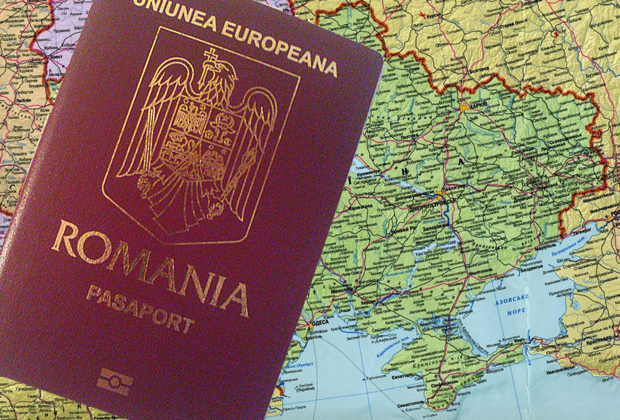
Romania has become even more attractive to migrants in recent years. Therefore, questions about how to obtain Romanian citizenship or how to quickly process Romanian citizenship for Ukrainians remain relevant.
In general, the question of how to obtain Romanian citizenship is not simple. One must consider not only how to get Romanian citizenship but also what permits and documents need to be arranged afterwards.
What Romanian Citizenship Gives to Ukrainian Citizens

Romania is one of the few countries in the European Union that offers simplified citizenship acquisition for individuals of Romanian descent. For Ukrainians, this path is particularly relevant, as a significant portion of the population in western Ukraine, particularly in Bukovina and Transcarpathia, has historical and familial ties to Romania.
A Romanian passport opens visa-free access to most countries around the world, the right to reside and work in any EU state, as well as access to quality healthcare and education. The document processing procedure is clearly regulated; however, it requires careful preparation, collection of archival documents, and patience. In 2026, the rules remain stable, but the practice of applying certain norms may change depending on internal decisions of the Romanian authorities.
It is impossible to answer simply how to obtain Romanian citizenship or how quickly the process occurs. There are many nuances in this process. However, it is essential to know what Romanian citizenship offers and what advantages the documents for Romanian citizenship provide.
Obtaining a Romanian passport for Ukrainians is not just a change in legal status but also the opening of vast opportunities for personal and professional growth within the European Union.
Firstly, this grants the right to travel without a visa across all Schengen countries, allowing travel without additional permits for an extended period. Romanian citizens can freely choose their place of residence in any EU country, legally employ themselves without the need to obtain work visas and residence permits.
Children gain access to the European education system under favorable conditions, which opens up prospects for studying at leading universities in Europe. Medical services in Romania and other EU countries are provided according to standards that significantly exceed the level of many post-Soviet countries. Social protection includes pension provision, unemployment assistance, and support for large families. Having a Romanian passport significantly simplifies opening bank accounts, obtaining loans, and investing in European real estate. Furthermore, it provides the right to participate in elections to the European Parliament. Romanian citizens also have the right to consular protection in countries where there are no Ukrainian representations. Thus, this document is the key to a European way of life.
Bases for Acquiring Romanian Citizenship

Romanian legislation provides several legal grounds for acquiring citizenship, each having its own conditions and implementation procedures. The primary ground is descent, meaning having ancestors who were born or permanently resided in territories that were part of Romania in various historical periods. Naturalization is the second path, which requires permanent residence in Romania for eight years based on a residence permit. Marrying a Romanian citizen allows one to apply for citizenship after three years of cohabitation in the country.
Adopting a Romanian citizen child also provides the right to obtain a passport. Restoration of citizenship is possible for individuals who previously held Romanian citizenship but lost it. Citizenship may also be granted for special merits to the country; however, this is an exceptional case. Children born in mixed marriages can acquire citizenship through a simplified procedure. Each of these grounds requires the submission of different document packages. The choice of method depends on the individual situation of the applicant. It is important to understand that not all grounds are equally accessible.
Obtaining Romanian Citizenship by Descent
This method is the most popular among Ukrainians, especially residents of Chernivtsi and Transcarpathia, where there is a significant number of ethnic Romanians. The procedure requires proving that the applicant has Romanian descent in a direct line, meaning that the parents, grandparents, or great-grandparents were Romanians. To do this, it is necessary to collect archival documents, such as birth and marriage certificates confirming the family relationship. It is important that the ancestor was born in an area that, at the time of birth, was part of Romania. This could be modern-day Romanian territories or historical regions. The applicant must possess basic knowledge of the Romanian language. They must also pledge allegiance to Romania.
The procedure does not require permanent residence in the country. The application is submitted to the consular office. The review period may take up to one year. Success depends on the quality of the collected evidence.
How to Obtain Romanian Citizenship: Application Procedure
The process of obtaining Romanian citizenship consists of a series of sequential steps, each requiring attention and adherence to established deadlines. First, it is necessary to gather a complete package of documents that confirm identity and descent, including archival certificates, birth certificates, and their notarized translations into Romanian.
After this, the applicant submits the application to the consular office of Romania in Ukraine or directly to the migration authority in Romania if they are in the country. Next, a verification of the submitted documents is conducted, which may take from several months to a year. In the case of a positive decision, the applicant takes the oath. Then they receive a certificate of acquisition of citizenship. Based on this, a national ID card and a foreign passport are issued.
Documents Required for Obtaining Romanian Citizenship
To successfully obtain a Romanian passport, it is necessary to prepare a significant package of documents confirming identity, family relations, and compliance with established requirements:
- The main document is a valid foreign passport. A birth certificate of the applicant is also required. Certificates of birth for all direct relatives must also be provided.
- Marriage certificates are also mandatory.
- Archival certificates confirm the birthplaces of ancestors.
- All documents must be translated into Romanian. The translation must be notarized.
- A police clearance certificate is required.
- A residency certificate is also needed.
- If the applicant is married, the consent of the spouse is required.
- For minor children, parental consent is required. Passport photos are also needed.
The process of gathering documents takes a lot of time, so it is advisable to be patient.
Review Periods and Passport Issuance
The procedure for reviewing an application for Romanian citizenship is multi-stage and can take anywhere from several months to a year, depending on the complexity of the case, the workload of consular establishments, and the completeness of the submitted documents. The longest stage is the verification of archival data, which involves sending requests to the registration authorities of Romania and other countries to confirm birth facts and family ties. After verification, the documents are submitted to a special commission that makes a final decision on granting or denying citizenship.
If the decision is positive, the applicant receives a notification and an invitation to take the oath, which takes place at the consulate or directly in Romania. After taking the oath, a certificate of acquired citizenship is issued, which serves as a basis for issuing national and foreign passports. The processing time for the passports usually does not exceed two to three weeks; however, during periods of high demand, this period may increase. In cases where the application is submitted through the consulate, additional time may be needed for sending documents to the central authorities in Romania.
Applicants with a complete and properly prepared document package can expect a faster review. Delays often arise from the need for additional clarifications. Therefore, it is recommended to check all requirements in advance. It should be noted that in some cases, the procedure can be expedited. However, this depends on the specific circumstances. It is important to be aware of possible changes in the regulations. Timely responses to requests speed up the process. Overall, the average period from application submission to passport issuance is eight to twelve months. For some applicants, this term may be shorter. Success largely depends on preparation. Each case is individual. It is advisable to allocate additional time for unforeseen delays. In general, the procedure is predictable but requires patience.
Common Reasons for Denial
Despite relatively favorable conditions for individuals of Romanian descent, Romanian migration authorities frequently deny applicants, and most of these decisions have typical, foreseeable reasons related to shortcomings in document preparation. The most common ground for denial is inadequate proof of descent when the applicant cannot provide a continuous chain of birth, marriage, or name change certificates that confirm family ties with a person born in Romanian territory. Very often, archival certificates contain discrepancies in the spelling of surnames, inaccuracies in dates or geographical names, which causes the commission to doubt the authenticity of the provided information. Insufficient knowledge of the Romanian language is the second most frequent reason for denial, as during the interview, the applicant must demonstrate the ability to understand questions and provide meaningful answers without the help of a translator.
Having a criminal record, even if expunged, or being under investigation automatically makes a positive decision impossible, as Romanian legislation requires impeccable reputation from citizenship candidates. Submitting knowingly false information or fraudulent documents is punished not only by denial but also by being blacklisted with a prohibition on reapplication for several years.
If an archival certificate confirms that an ancestor was born in a territory that has never been part of Romania, the application is rejected regardless of other circumstances. Incorrectly prepared document translations, lack of apostilles or notarization are also formal barriers that cannot be overcome to continue the procedure. Missing the established deadline for submitting additional documents after a request from the consulate often results in the case being closed without the right to immediate renewal.

Attempting to hide the existence of another citizenship or providing incomplete information about the family composition raises distrust towards the applicant and may serve as grounds for denial even in the presence of all other confirmations. Lack of consent from one parent for a minor child to obtain citizenship also halts the procedure until this obstacle is removed. Non-payment of the state fee or an error in bank details during fund transfer may lead to the application not being accepted for consideration. If the applicant fails to appear for an interview without valid reasons, this is regarded as a loss of interest in the procedure.
An incorrectly filled application form listing wrong addresses or contact details makes communication with the consulate impossible. Sometimes denial is related to the fact that family ties are proven only through the female line, and there are no documents in the archives regarding surname changes after marriage. The commission may also reject the application if it believes that the applicant is insufficiently integrated into the Romanian cultural environment, showing no interest in the language or history of the country. It should be noted that many denials could be avoided if applicants had turned to professional lawyers at the initial stage. Carelessness in document preparation significantly prolongs the process or makes it impossible.
Challenging a denial in court is a complex and lengthy process. Therefore, the best strategy is to carefully check all documents before submitting the application.
In general, despite the difficulties, Romania remains a country that many Ukrainians aspire to migrate to.

Read also