Ukraine's Military Intelligence Publishes 3D Model and Specs of Russian 'Knyaz Veshchiy Oleg' Spy Drone

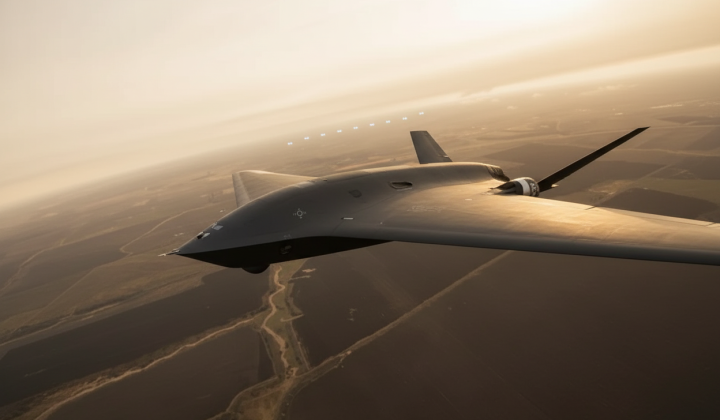
Interactive 3D Model of the 'Knyaz Veshchiy Oleg' Drone
According to Главком: Ukraine's Defence Intelligence Directorate (GUR) has released an interactive 3D model of the Russian 'Knyaz Veshchiy Oleg' reconnaissance drone on its War&Sanctions portal, within the 'Weapon Components' section. This unmanned aerial vehicle (UAV) was developed and manufactured by the Russian Scientific and Production Center 'Ushkuynik', which is also responsible for creating fiber-optic FPV drones like the 'Knyaz Vandal Novgorodskiy' and 'Osoyed' interceptors.
Drone Specifications
The 'Knyaz Veshchiy Oleg' drone features the following technical characteristics:
- Wingspan: 2.8 meters
- Maximum takeoff weight: 11 kg
- Operational range: up to 45 km
- Flight endurance: up to 3.5 hours
- Maximum speed: up to 130 km/h
- Operating altitude: up to 3,000 meters
The UAV is equipped with two cameras: a forward-facing IP camera from China's Shenzhen Zhongxi Security and a gyro-stabilized optical system, the D-80AI, also from China. The D-80AI system incorporates a three-axis gimbal, a wide-angle Full HD camera, and a camera with 10x optical zoom. It also provides night vision capabilities and uses artificial intelligence for real-time target detection and tracking.
The drone's flight controller is built on microcontrollers from the Swiss brand STMicroelectronics-manufactured in China and Taiwan-along with components from China's CUAV Technology. Navigation is handled by a four-channel CRP antenna, while propulsion comes from two Chinese-made SunnySky electric motors. It is noteworthy that the manufacturer, NVC 'Ushkuynik', is currently under sanctions from Ukraine, the European Union, and Switzerland, but remains unsanctioned by other coalition countries.
In related developments, Russian forces continue to build infrastructure for launching 'Shahed'-type attack drones near the Ukrainian border. This activity underscores the intensifying drone warfare in the conflict, a domain where both sides are rapidly innovating. The public disclosure of such detailed technical intelligence is a modern tactic aimed at countering adversary systems and informing defensive strategies.
The evolution of drone technology in military conflicts, particularly in Ukraine, highlights the critical need for continuous adaptation and technological advancement. Releasing detailed information on new UAVs, their capabilities, and their supply chains can aid in planning defensive measures and applying diplomatic pressure. While sanctions on the manufacturer may hinder Russia's access to some components, they also indicate the potential for further drone development in countries not enforcing these restrictions.
In addition to the insights on the 'Knyaz Veshchiy Oleg' drone, understanding the international components used in Russian UAVs is crucial. Recent revelations by Ukraine's Intelligence Agency highlight the foreign-made parts in drones like the 'Lancet' and 'Scalpel', showcasing the complex supply chains involved. For a deeper look into these components and their implications, read more about it here.

Read also