Ukraine's Intelligence Agency Exposes the Foreign-Made Components in Russian 'Lancet' and 'Scalpel' Drones

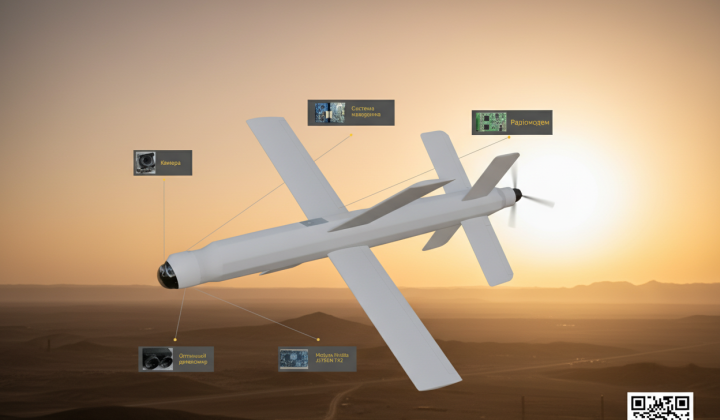
Data on Russian Loitering Munitions
According to Главком: Ukraine's Main Directorate of Intelligence (GUR) has released a detailed report on the components and manufacturing sources for Russian loitering munitions, specifically the 'Lancet' and 'Scalpel' models. These findings highlight Russia's continued reliance on foreign technology for its weapons systems. The 'Lancet' drone, also known as 'Izdeliye-51', is one of the most frequently deployed attack UAVs by Russian forces and is produced by the Zala Aero Group, a company linked to the Kalashnikov concern.
According to the intelligence data, debris from a UAV shot down over Kyiv on March 16 was identified as a 'Lancet'. The 'Scalpel' drone, developed by the 'Vostok' design bureau, features an X-shaped wing design and is often referred to as the 'Lancet's' smaller sibling. Both types of UAVs are operator-guided in real time.
Technological Advances in Weaponry
Russia is attempting to integrate autonomous targeting elements into the 'Lancet' using artificial intelligence modules. These AI modules are reportedly based on Nvidia Jetson solutions, similar technology having been found in other Russian UAVs like the V2U model. In total, 62 electronic components have been identified within the 'Lancet' and 'Scalpel', with the majority being of foreign origin from countries including the United States, Switzerland, and China.
The GUR further noted that despite international sanctions, Russia retains access to critical technologies and continues to refine its arsenal. 'Even such technological products as modules for AI-based solutions remain available to it,' the intelligence report states.
The report also indicates that Russian occupation forces have begun using 'Italmas' ('Izdeliye-54') attack drones. In response, Ukrainian defense forces are also deploying similar kamikaze drones, mirroring the capabilities of the Russian 'Lancet'.
This intelligence underscores the technological progress Russia has achieved in drone manufacturing despite sanctions. The sustained access to advanced components, such as AI modules, allows Russian military units to continually enhance their operational capabilities. This presents ongoing challenges for Ukrainian defenders, who are simultaneously implementing comparable technologies in their own drone fleets, marking an escalation in the technological arms race within the modern battlefield.
As the conflict evolves, the integration of advanced technologies into weapon systems becomes increasingly apparent. Notably, the use of AI-driven targeting modules in Russian drones, such as the captured 'Molniya', underscores a broader trend in military innovation. For a deeper understanding of how these technologies are reshaping the battlefield, you can read more about AI target recognition in Russian UAVs.

Read also