Roman Settlement Excavations in Redsdale Uncover Rare Gold Chain and Remarkable Artifacts

Discoveries from the Redsdale Archaeological Excavation
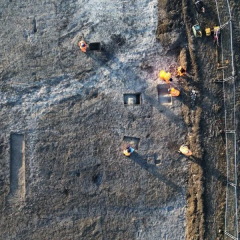
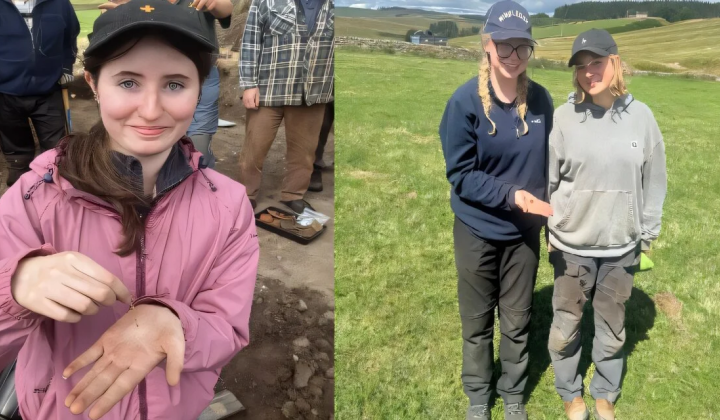
According to НВ — Техно: During the summer of 2026, an archaeological dig took place in Redsdale, Northumberland, England, focusing on an ancient Roman settlement. This excavation involved 52 first-year university students, offering them hands-on experience as part of a long-term project examining life along the northern frontier of the Roman Empire. The students were split into two teams, each working for two weeks under the supervision of The Archaeological Practice Ltd and volunteers from the Redsdale Archaeological Group (RAG).
Exceptional Finds Unearthed
Among the remarkable discoveries was a fragment of a Roman gold chain approximately 7 cm long, uncovered on the first day by student Eliz Zallu. Crafted using the intricate "loop-in-loop" technique from pure gold, such chains were typically associated with high-ranking officers and their families. Dr. Eric Turini from Newcastle University emphasized the significance of this find:
“Many archaeologists never encounter a gold artifact throughout their careers. For a first-year student to uncover a well-preserved Roman gold chain on the very first day in the trench is truly extraordinary.” – Dr. Eric Turini
Additional noteworthy objects included a lead sheet bearing traces of Latin inscriptions, likely a commercial seal or curse tablet, found by student Shannon Wood. On the second day, Megan Potter discovered Roman cavalry equipment-a peltata pendant with gilded details. Other artifacts uncovered by the students encompassed:
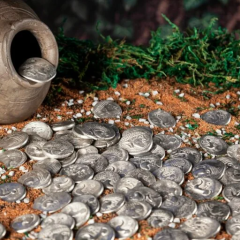
- Roman coins
- Javelin tips
- Clothing accessories
- Ceramics
- Pottery inscribed with Roman graffiti
In the final week, students Maisie Watmough and Zoe Yuille uncovered a carnelian intaglio engraved with the image of Jupiter. This marks the fourth intaglio found at the site; two were discovered in 2025 and one dates back to the 19th century.
Earlier in 2026, a separate excavation in Colchester revealed a Roman female burial dating from the 3rd to 5th centuries. The burial contained a lead coffin decorated with intricate designs, rare glass vessels, jet pins, and remnants of incense and gypsum. The incense originated from distant regions, and the gypsum mixture was likely applied to the body before burial-a ritual associated with Roman elite funerary practices.
Reflecting on her discovery, Eliz Zallu shared:
“Finding the gold chain felt surreal, especially on the very first day of my first excavation. I never imagined I’d come across something like this in my entire career, so it was a complete surprise. I’m incredibly grateful that studying archaeology at Newcastle has given me the chance to gain such valuable experience, which I believe will benefit me greatly in the future.” – Eliz Zallu
The Redsdale dig not only enriches understanding of Roman history but also provides invaluable practical training for emerging archaeologists. The artifacts recovered highlight the strategic importance of the Roman Empire’s northern boundary and open new avenues for future research. This project stands as a significant milestone in exploring Britain’s Roman heritage.
The discoveries in Redsdale are reminiscent of other significant archaeological finds across the Roman Empire, such as the recent revelations in Mérida, where remarkable wall paintings were unveiled, enhancing the understanding of Roman domestic life. Such parallels underscore the ongoing importance of archaeological research in shedding light on the complexities of ancient civilizations.

Read also