Twelve No-Cost Employee Assessment Templates Released by HR Professionals

Free Employee Performance Evaluation Templates
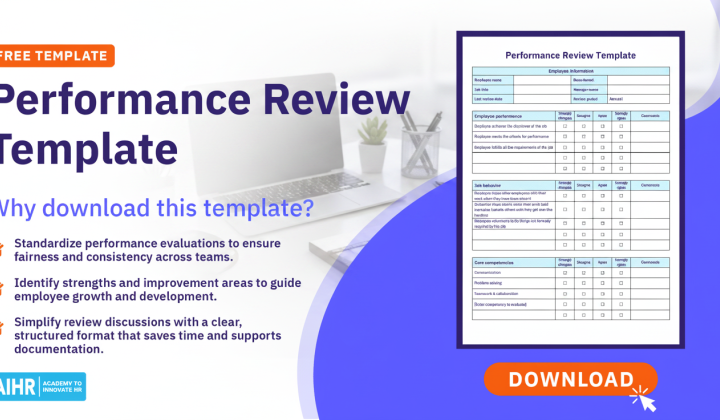
According to AIHR: For HR teams and managers, the AIHR article offers twelve employee performance review templates that can be put to practical use. The package includes a free set of Word documents plus a career progression framework. According to the HR Research Institute, 85% of organizations already run either a fully structured or combined performance review process. Gallup’s findings likewise stress that regular feedback boosts employee engagement and productivity. Performance reviews are a core part of talent management, and ready-made templates make it easier to keep evaluations consistent across an organization.
Twelve Template Types
The resource covers twelve distinct review formats:
- annual reviews
- quarterly reviews
- 360-degree feedback
- employee self-evaluations
- employee appraisal forms
- competency-based assessments
- basic review forms
- manager evaluations
- self-assessment templates
- development planning
- performance improvement planning
- career advancement frameworks
Review cycles usually happen once a year, twice a year, or quarterly. When a quarterly cycle is used, the same template as the annual one can be applied, but the emphasis shifts to shorter-term objectives.
What an Evaluation Form Typically Includes
A standard review form brings together key components such as:
- details about the employee and the reviewer
- evaluation criteria
- rating scale
- open comment sections
- notes on strengths
- goal setting
- training needs
- self-assessment input
- overall rating
- signature blocks
A performance improvement plan (PIP) should be treated as a development tool, not a disciplinary one. It typically includes a description of the issue, supporting evidence, clear and measurable goals, actions expected from the employee, a timeline, resources and assistance available, and consequences or next steps if expectations are not met.
AIHR also supplies a career progression framework featuring job titles, levels, position profiles, core competencies, readiness criteria for promotion, and example career paths. The main advantages of working from templates are consistency, higher-quality feedback, clearer expectations, more reliable documentation, and stronger performance overall.
For the best results, templates should be tailored to a company’s business goals. Managers also need training on how to use them, and the materials should serve as flexible guides rather than strict scripts.
A well-organized evaluation process gives employees a visible path for growth. Using templates makes objectives and feedback more transparent, which supports motivation and alignment.
Adopting structured performance review methods is a major step in organizational development. Templates help standardize reviews and make the process fairer and more transparent while keeping employees motivated. With 85% of companies already using some form of structured review, refining these materials to fit each organization’s unique context can be a key driver of productivity and team engagement.
As organizations strive to enhance employee retention, understanding the importance of feedback becomes crucial. The recent findings reveal that a significant portion of Gen Z workers are considering leaving their jobs due to a lack of constructive feedback. This highlights the need for effective performance evaluations, making the implementation of regular reviews even more vital for maintaining a motivated workforce.

Read also