Historian Challenges the Myth of the 'Executed Renaissance'

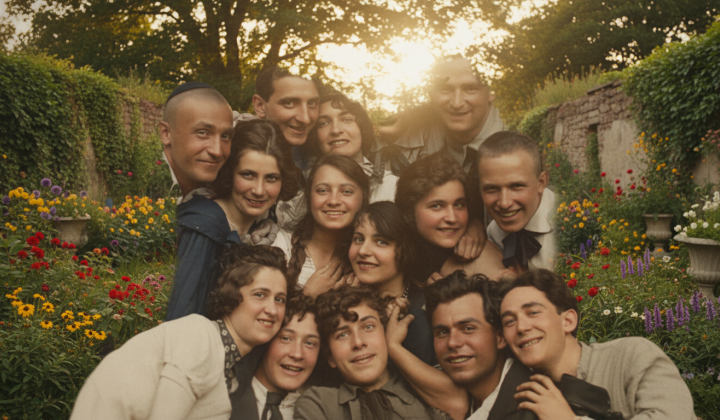
Re-examining the 'Executed Renaissance'
According to ХВИЛЯ: In an interview with political analyst Yuriy Romanenko, historian Serhiy Udovyik argued that many artists of the 'Executed Renaissance' era were active proponents of left-wing radical ideas and supported communist ideology, rather than being merely passive victims. This period in the early 20th century was marked by exceptional creative activity. However, Udovyik suggests the common perception of these figures as innocent casualties of executions may be a myth.
Udovyik points to a persistent stereotype surrounding an 'un-executed renaissance,' which claims that if these artists had not been repressed, Ukraine would have been ahead of the rest of Europe.
"A whole mythology has been created around this renaissance-the idea that if this 'un-executed renaissance' had not been shot by the damned Bolsheviks, then we would have been ahead of all Europe and the entire world," he noted.
This narrative overlooks the fact that many working in that era genuinely dreamed of and agitated for profound revolutionary change.
"Everyone lived in anticipation of such great changes, awaited changes, and everyone wanted revolutionary changes," added Udovyik, emphasizing the mood of the times. Yet, upon closer historical analysis, he observes that
"when you start to look at all these processes, at these people, you see that things didn't quite turn out that way."
This casts doubt on the traditional view of the artists as helpless victims, as many of them actively championed communist ideals. The 'Executed Renaissance' refers to the Soviet repression of Ukrainian cultural figures in the 1920s and 1930s, a tragic chapter that remains central to the nation's historical memory.
A New Understanding of the Era
Consequently, Serhiy Udovyik's perspective opens a new viewpoint on the 'Executed Renaissance' and its participants, which could alter our understanding of this crucial period in Ukrainian history.
These remarks underscore the need to reconsider the artists' role in the social and political processes of that time. Their active support for communist ideas may reshape the perception of Ukraine's history, allowing for a deeper analysis of the work and legacy of those who operated in an era fraught with both hope for revolutionary transformation and ultimate tragedy.

Read also