An Italian Industrialist Built a Fairy-Tale Town for Workers, Complete with Electricity

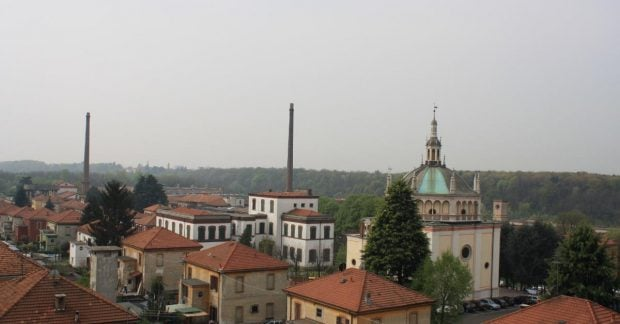
The Village of Crespi d'Adda
According to УНІАН — Туризм: Located in Lombardy between the Adda and Brembo rivers, the village of Crespi d'Adda was constructed in the late 19th century by Italian textile magnate Cristoforo Benigno Crespi. It became one of the first settlements in Italy to be illuminated by electric lighting. This unique community was designed specifically for the workers employed at his factory. The village featured:
- houses with gardens
- schools
- a church
- a public laundry
- sports fields
- a hospital
These amenities reflected the founder's commitment to social responsibility.
Each worker's family was given their own home with a garden, demonstrating a clear effort to ensure comfort and well-being. The settlement also received power from its own hydroelectric plant, a major milestone in infrastructure development. At its peak, the factory operated 1,200 mechanical looms and employed roughly 4,000 people. The founder's son, Silvio Benigno Crespi, continued his father's legacy, but the Great Depression and the economic policies of the fascist regime forced the family to sell the entire complex in 1929.
Modern Status and Significance
In 1995, Crespi d'Adda was designated a UNESCO World Heritage site, recognizing its historical and cultural importance. The factory ultimately closed in 2004, marking another chapter in the story of this significant industrial site. Today, some residents are descendants of the original factory workers, preserving the memory of their heritage.
Crespi d'Adda stands as a vital example of late 19th-century industrial architecture and social infrastructure. Its history illustrates how entrepreneurial social initiatives can shape the lives of workers and their families. The UNESCO designation highlights the village's importance not only to Italy but also to global cultural heritage, as it embodies the development of industrialization and social responsibility within a historical context.

Read also