North Korea Removes Reunification Language from Its Constitution

Constitutional Amendments in Pyongyang
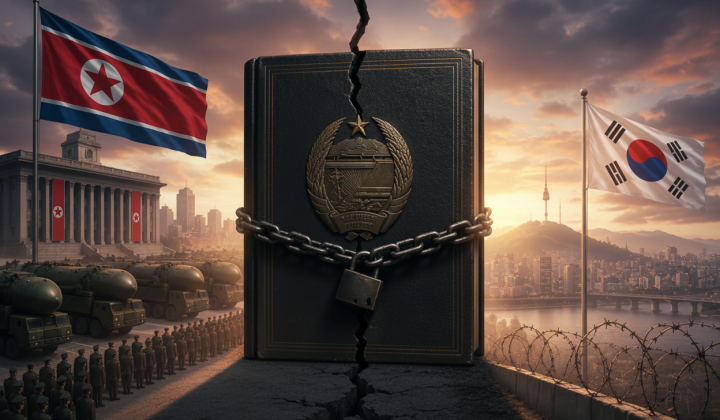
According to Главком: North Korea has amended its constitution, eliminating all references to a potential reunification with South Korea. The country’s leader, Kim Jong Un, has been granted expanded powers, including authority over the state’s nuclear forces. These changes were approved during a March session of the Supreme People’s Assembly, signaling a consolidation of Kim Jong Un’s control within North Korea’s political system.
Under the revised constitution, North Korea defines its territory as bordering China, Russia, and South Korea. Terms such as 'peaceful reunification' and 'great national unity' have been removed from the text, reflecting a shift in official rhetoric regarding relations with the South. For the first time, Kim Jong Un has been formally designated as head of state, with his status elevated above the Supreme People’s Assembly. The North Korean leader has also been granted the authority to command the country’s nuclear forces and to delegate those powers.
Historical Context and Shifts
The constitutional amendments also reduce mentions of Kim Jong Un’s predecessors, Kim Il Sung and Kim Jong Il. The conflict between North and South Korea spans more than half a century, originating from the division of the Korean Peninsula into Soviet and American zones of influence after World War II. The Korean War, which began in 1950, ended with an armistice in 1953, but a formal peace treaty was never signed. Technically, both nations remain in a state of war, separated by a demilitarized zone.
During a Youth League congress in Pyongyang, Kim Jong Un announced new mobilization priorities. For the first time, North Korea’s ruling party officially linked the ideological loyalty of young people to the involvement of North Korean troops in combat operations alongside Russia. The North Korean constitution declares that the country 'will never tolerate any violation of its territory,' underscoring its stance on external threats.
These constitutional changes in North Korea not only reflect a strengthening of Kim Jong Un’s domestic power but also indicate a deterioration in relations with South Korea and a potential rethinking of the country’s foreign policy. Amid the ongoing conflict on the Korean Peninsula, the new ideological directives could influence Pyongyang’s future military and political actions, particularly in the context of its relations with global powers. The amendments may also signal North Korea’s intent to adapt its policies to new geopolitical realities.
As North Korea shifts its focus away from reunification rhetoric, the regime is also strengthening ties with regional allies. In a recent announcement, Kim Jong Un expressed his commitment to enhancing collaboration with China, coinciding with the reopening of transport links between Pyongyang and Beijing. This move highlights the evolving geopolitical landscape in the region and underscores North Korea's strategic partnerships. For more details on Kim's support for China and the implications for North Korea's foreign relations, see our coverage here.

Read also