Former NBU Expert Weighs In: What's Next for the Dollar and Gold Markets

Currency Market Dynamics and Gold Price Fluctuations
According to Главком: In a recent interview, former National Bank of Ukraine expert Vitaliy Shapran analyzed the current state of the currency market and the volatility in gold prices. He explained that the USD/EUR exchange rate is heavily influenced by trade negotiations between the US and the EU, which became more complex in 2026. Shapran noted a cyclical pattern in the dollar-euro dynamic due to the interconnectedness of these markets.
"In other words, the dollar cannot remain weak against the euro forever," the expert emphasized.
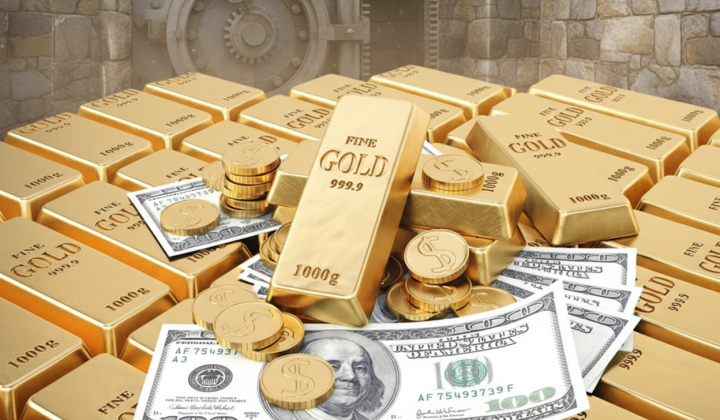
Regarding gold, Shapran reported that on February 17, 2026, prices fell to their lowest level in over a week. Spot gold dropped by 1.5% to $4,918.65 per ounce, while US gold futures for April delivery declined by 2.2% to $4,937 per ounce. This followed a previous loss of over 10% after a period of rapid price appreciation. These movements highlight gold's continued sensitivity to global monetary policy shifts.
Shapran pointed to the interest rate differential between the US Federal Reserve (Fed) and the European Central Bank (ECB) as a key driver of gold's price swings.
"A strong euro poses a problem for economies like Germany's, so I don't believe the ECB takes pleasure in a strong euro-quite the opposite," he stated.
The expert argued that in the modern world, gold no longer serves as a stable measure of value due to its price volatility. "You could have bought gold at $5,400, only to see it crash to $4,900. Conducting large-scale industrial settlements in gold or in gold-pegged stablecoins is simply not feasible," Shapran noted.
He also addressed the People's Bank of China's gold purchases, interpreting them as building a reserve for potential global economic downturns. "The PRC is heavily dependent on exports and trade with the US and the EU. While China's actions are often attributed to political motives, the move away from the dollar and toward gold is underpinned by clear economic calculus," he underscored.
Forecasting the Future Price of Gold
Looking ahead, Shapran forecast that a warming of relations between Washington and Beijing could push gold into a price range of $3,000 to $4,000 per ounce. He added that for long-term investors who view gold as a counter-cyclical asset, the relevant planning horizon spans 30 to 50 years. This perspective is crucial for investors accustomed to shorter market cycles.
Shapran's commentary underscores the importance of monitoring currency exchange rates and gold prices amidst ongoing global economic realignments. The interplay between trade negotiations and currency values can significantly impact economic stability for both the EU and the US. Given China's strategic gold acquisitions, it is evident that nations are adapting their financial strategies in response to global challenges, which will likely shape the future of international financial markets and influence investment decisions for both private and state actors.

Read also